Keani Rawlins-Fernandez grew up in Molokai, Hawaii, and now is a local council member. Keani Rawlins-Fernandez
Keani Rawlins-Fernandez grew up in Hawaii and has seen tourism increase over the years.
Now a local council member, Rawlins-Fernandez says locals can feel overrun by tourists.
She said her advice for tourists is to be respectful and not entitled.
This as-told-to essay is based on a conversation with Keani Rawlins-Fernandez, a vice chair of the Maui County Council, about how tourism has affected her life in Hawaii. The following has been edited for length and clarity.
The tropical islands of Hawaii have long been a dream destination for tourists, drawn by the pristine beaches, vibrant culture, and an „aloha“ free spirit. But for me it’s home.
Many economic, social, and financial issues arise with unrestricted tourism, and I don’t know how Hawaii will continue to cope with these numbers.
I grew up in Molokai, the only island of Hawaii where the economy is not reliant on tourism. Here, agriculture and farming are our main industries.
As a policymaker, I use my platform to fight against unrestricted tourism, counteract our current housing crisis, and campaign to protect our ocean and reef health.
It’s my responsibility to advocate for my local community
When I was growing up, big corporations fell in love with the white-sand beaches, canoes, and divers and transformed our land into a shoreline of resorts like Waikiki in Oahu. They attempted to do this in Molokai, but the community fought it.
I went to law school to become a policymaker because it was my kuleana — responsibility — to advocate for my community the same way my elders did.
I was inspired by the work of Uncle Walter Ritte, a Native Hawaiian activist and educator who protested the military bombing practices on Kaho’olawe and won its eventual return to Native Hawaiian control from the US military.
I hold the County Council seat for the Molokai residency area and am part of the Efficiency Solutions and Circular Systems Committee, where I can discuss high-level budgets and allocation of resources to solve economic inequality that has been around for generations.
Rawlins-Fernandez is a vice chair of the Maui County Council. Keani Rawlins-Fernandez
Tourism has displaced Native Hawaiians by driving up costs
The number of tourists in Hawaii is overwhelming the local population and threatening the islands‘ cultural heritage.
Native Hawaiians, already displaced from their lands during colonization, are experiencing a housing crisis. When houses become available, they are bought by tourists instead of locals.
People are buying our land as investment properties, so our Kanaka ‚Ōiwi — locals — are forced to move further out, and they can’t maintain their local traditions or routines. Basically, they need to start over and make a new place their home.
During COVID, there was no tourism, and their jobs were the first to go. My island in Molokai fared better because the model is to cater to local businesses and local patrons instead.
We can’t commute easily because tourists are getting their sunset pictures
A large part of Hawaii’s economy is reliant on tourism, but in popular tourist areas, overtourism is placing huge strains on the infrastructure and environment — especially when the number of visitors exceeds the resident population.
For example, famous sights like Waikiki Beach and Diamond Head on Oahu draw crowds of tourists for sunrise or sunset views. This clogs up our highways during the hours when locals are trying to commute or drop their kids off at school.
The state Department of Transportation wants to create more parking spots or widen highways. Instead, people should consider group trolley systems like the ones in Zion National Park in Utah, which I recently visited, to manage tourists. This makes more sense than allowing tourists to rent their own car for the duration of their visit.
Locals feel like their home is a theme park — and it can be dangerous
Our locals feel like their homes are treated like a theme park and there’s no more privacy.
We’ve heard stories of tourists trespassing on properties for photo opportunities. But they need to understand that unlike television or social-media posts, this is real life.
There aren’t always safeguards and railings at places like our waterfalls or volcanoes. Tourists have passed away or become severely hurt. It puts our emergency responders at risk if tourists are trespassing in dangerous places.
Our beaches and reefs are being degraded for the sake of tourism
Excessive tourist activity is also taking a major toll on Hawaii’s fragile island ecosystems.
For instance, the natural sand dunes in Hawaii enable a cyclical restoration of the white-sand beaches. However, the construction of resorts and hotel chains on the dunes disrupts this cycle, preventing the beaches from replenishing lost sand. With the dunes unable to supply fresh sand, the beaches steadily erode away.
I’ve seen temporary seawalls being built in front of condos and resorts which interrupt the natural cycle of sand migration. We see how degraded our coral reefs, essential for marine wildlife, are in the face of pollution, sunscreen toxins, and careless snorkelers.
We are islands, and we don’t have that much land to bury trash in landfills, so excessive rubbish ends up in our waters and damages the ecosystem.
Tourism has perks, but it needs to be managed better
There are some positives to the steady increase in tourists, like those tourists who volunteer with the Red Cross. However, extractive tourism needs to stop. I also want our community to rely on other jobs, because tourism ebbs and flows.
My message to tourists is to visit responsibly, respect local culture, and minimize one’s footprint. Support local businesses over chain restaurants, go on tours instead of taking your own or a rented vehicle, make sure you’re staying at a legitimate Airbnb or VRBO, and come with respect and gratitude, not entitlement.
A huge, uncertain problem will affect all of Earth’s humanity in the next few years if we do nothing now.It’s about Japan, where they started releasing the radioactive water from Fukushima into the Pacific for 24 hours/day, 7 days/week, 365 days/year for 30 years.Nobody should tell me that long-term research has been carried out here and that it is harmless.It’s just a matter of resolving a problem as quickly as possible without incurring major costs.Out of sight out of mind.It’s about profit from a few individual people who use their wealth to benefit the entire world population.I already know enough of these statements about it being harmless, including in other topics, and what happened?One environmental disaster after another.
If it is safe, then the very people who claim this should use this water as their drinking water from now on until the end of their lives!Apparently it’s supposed to be harmless.Bottom up!Do we really want to destroy the beauty of the earth and nature within a very short time, just because of the greed of individual people?It is our only home on earth and I was taught to keep order and cleanliness.When will the vultures of money learn that you cannot conquer nature?Nature is learning us and we must finally understand that we can only live with nature.That’s why this contaminated water must never be poured into the Pacific!Wake up people!!It doesn’t just affect the people of Japan or all the people of the Pacific, it also affects you and me far away from that.We are all connected!In my opinion, Japan, which has already made false statements, must not decide on its own and we must not leave Japan alone with this problem.We only have to help by working together and supporting each other, regardless of which country the problem comes from.This is the only way the radioactive water can’t be washed into the ocean.That’s why I wrote to Greenpeace on August 25th.Here are two excerpts:
Geneva, Switzerland – Indigenous Alaskans andHawaiian nationals are raising the alarm over the potential harms caused by wastewater released from Japan’s Fukushima nuclear plant, which could worsen precarious environmental conditions resulting from generations of US colonial occupation.
Japan has stoked controversy with its recent decision to release radioactive water from its Fukushima Daiichi Nuclear Power Plant into the Pacific Ocean – just 12 years after the country experienced its worst-ever nuclear disaster following an earthquake and tsunami in 2011.
The Japanese government has already begun discharging the contaminated water. The release is set to take place in stages over 30 years, although experts warn it could take even longer.
The International Atomic Energy Agency has stated that the process meets safety standards and that the effects on people and the environment will be „negligible,“ but many scientists and impacted communities disagree. They argue there has not been enough research made available to assess the potential consequences.
Among those raising concerns are Hawaiian nationals and Indigenous Alaskans, who fear that ocean currents will carry the radioactive material to their waters and wreak havoc on local ecosystems and subsistence lifestyles.
„As protectors of this ocean, as the people who have lived here for millennia, we do not accept this kind of offhand declaration without any real proof or evidence that this is safe,“ His Excellency Leon Kaulahao Siu, foreign minister of the Hawaiian Kingdom, said during a Friday news conference at the Geneva Press Club.
„We just are outraged that this discharge of this contaminated water is going to affect all of us. It may be small at first, but it is going to affect all of us.“
US colonialism drives environmental exploitation in Alaska and Hawaii
The potential devastation the Fukushima wastewater could unleash in Alaska and Hawaii would exacerbate conditions wrought by decades of United States occupation.
Alaska has been under US colonial rule ever since the government „purchased“ the territory from the Russian Empire in 1867, despite Russia having no claim over the land. The US went on to impose an apartheid regime which has deprived generations of Indigenous Peoples their right to self-determination.
The Hawaiian Kingdom, an independent nation still recognized in formal treaties with over 170 countries, saw its rightful government overthrown in an unlawful, US military-backed coup in 1893.
The United Nations (UN) recognized Alaska and Hawaii as territories under US colonial occupation until 1959.
Their designations only changed after illegitimate statehood referendums in both places which allowed white colonists and US military members to vote, in violation of international standards.
Today, Indigenous Alaskans and Hawaiian nationals are marginalized on their own lands and suffer stark racial disparities in wealth, housing, health, food access, and the criminal legal system.
Indigenous Alaskans and Hawaiian nationals fear further contamination
Longstanding racist policies have left Native peoples more vulnerable to the ravages of the climate crisis, as the US government and American businesses continue to extract Alaska and the Hawaiian Islands‘ rich natural resources for their own profit.
Fossil fuel production, the commercial fishing industry, and US nuclear weapons testing have led to gross levels of environmental destruction in Alaska and made it hard for many Indigenous Peoples to maintain their traditional subsistence activities.
Ambassador Ronald Barnes, the official representative of Indigenous Alaskans at the UN, recalled how a 1971 underground nuclear blast on Amchitka Island resulted in higher cancer levels in his Bristol Bay fishing community and mysterious holes and sores in the salmon.
Barnes said analyses show ocean currents will carry the Fukushima wastewater from Japan to Alaska before it moves out into the Pacific. He worries that nuclear contamination could once again hurt whales, wild-stock salmon, and other traditional food sources and have negative health effects for Indigenous Peoples.
Hawaii, meanwhile, has seen US commercial agriculture businesses gobble up enormous swaths of terrain for sugar and pineapple plantations, leveling forests and poisoning the stolen land with harmful herbicides and pesticides. Today, Hawaii imports around 90% of its food, which is both unsustainable and unnecessary given how fertile the ground is.
On Oahu, activities on US military facilities – which occupy 22% of the island – have left drinking water contaminated, all while endangering the national security of the Hawaiian people. The mega-tourism and real estate industries have only made matters worse across the islands.
The influx of wastewater from Fukushima is raising fears of increased damage to Hawaii’s beaches and marine wildlife as well as the health of its people.
Lack of scientific data raises concerns over potential environmental harms
Long victim to environmental exploitation by foreign occupiers, Hawaiian nationals and Indigenous Alaskans are now being told to trust the Japanese government’s Fukushima safety assessment – without substantive evidence to back it up.
Many scientists and human rights experts have joined Alaskan and Hawaiian representatives in sounding the alarm.
„Our concern with Fukushima and the discharge of contaminated water is that we don’t know exactly what is going to happen,“ said Alfred-Maurice de Zayas, the first UN Independent Expert on the promotion of a democratic and equitable international order.
De Zayas noted that under the Convention on the Law of the Sea, Japan and other states have the obligation not only to avoid irreparable harm to the oceans but also to take proactive measures to protect and preserve marine environments.
Releasing potentially unsafe, radioactive water into the Pacific could have disastrous results for people and wildlife. Waiting to prosecute crimes of ecocide after the fact isn’t good enough, de Zayas added, because by then, „the damage is already done.“
Hisashi Saito, who represents the sustainable development educational organization iuventum at the UN, also expressed concerns about the scientific difficulties in determining whether future environmental harms trace their roots to the Fukushima wastewater. This could make it even harder to hold those responsible accountable for the damage.
„They do this because they know it won’t be traced so easily,“ Saito explained. „In the future, they will dump worse and worse nuclear fraction from Fukushima, and they will dump worse and worse stuff from other nuclear facilities – and not just Japan, but the entire world.“
„As a Japanese citizen, I feel ashamed that this happened, and I really have to say sorry,“ he added.
Indigenous Alaskans and Hawaiian nationals demand a seat at the table
The real dangers posed to Indigenous Alaskans, Hawaiian nationals, and Pacific Islanders make it all the more urgent that they have a say in deciding whether or not to release the radioactive wastewater.
„We just really stand in solidarity with the rest of the Pacific, and we are making an appeal to Japan to stop the discharge of the water until there is actual proof – verifiable proof – that the water is actually safe,“ Siu said. „Without that, we oppose the discharge of these contaminated waters in the Pacific Ocean.“
Representatives of Indigenous Alaskans and the Hawaiian Kingdom are working together to win proper recognition at the UN as sovereign peoples under illegal colonial occupation.
Doing so is ultimately an existential fight, as the threat of ecocide looms from powerful nations that do not take seriously the health and safety of Native communities.
„This is a deep concern to us,“ Barnes insisted. „That’s why we assert that we need to be sitting at the table equally as high-contracting parties. We need to be in the decision-making process, and we do not need hegemonic, gun-boat diplomacy […] where they tell us what’s good for us whether we like it or not.“
„We want more data. We want more input. We want to have our scientists say what is right or wrong.„
The tragedy in Lāhainā continues to unfold. A century and a half of reckless resource management, especially land use and water allocation, in favor of commercial greed — first, massive plantations, then massive tourism, then massive developments and land speculation — have put much of Hawaii in grave danger of not only what transpired in Lāhainā, but in other serious ways as well.
Add to that the real-time bureaucratic mentality of state officials who put strict obedience to rules and orders before common sense and people’s lives, and you have a formula for disaster.
Under the U.S. system, money is the measure of importance. Corporations and companies that generate money are highly favored and receive first priority, even when it comes to law. Ordinary people like you and me are not seen as living, breathing human beings. We are taxpayers, whose labor and energy are revenue streams to feed the system.
In that system, nature is something to be exploited, not cared for. Original languages and cultures are only allowed if they have commercial value. (Ironically, our songs, the hula, and our language, like the word Aloha, survived because they were money-makers for the tourism industry)
This is the colonial system that has permeated practically every nook and cranny of the world. Not only has it disrupted, polluted and disfigured native habitats, destroyed native economies and social systems, it has altered what we eat — unhealthy processed and ʻjunkʻ food causing catastrophic health problems among native people. Then there is the perilous dependency on importing what we eat.
Ninety percent of the food consumed in Hawaii is shipped in from the States. That means, only ten percent is grown in Hawaii. If shipping was to stop, after two weeks, Hawaii will run out of food and things will get very ugly.
Hawaii will never be truly independent, unless we can feed ourselves.
For the past 20 years those who have been aware of Hawaii’s vulnerability have been sounding the alarm and some progress is being made in planting more food crops. There are many who are answering the call of back to the ‘aina to plant for our future.
But there needs to be a concerted effort to not only grow more food, but to change the diet habits of our people to eat the fantastically nutritious traditional foods that our ancestors brought in their canoes, like Kalo (Taro)…ʻUlu (Breadfruit)…Maiʻa (Banana)…ʻUala (Sweet Potato)…Niu (Coconut)…
Taro – field
Most of the Pacific Islands and island nations around the world are in the same vulnerable, food dependency situation as Hawaii. I spent the past week in Rarotonga (in the Cook Islands) attending meetings about the urgent need to revive the farming and consumption of local traditional foods. One highlight was the Global Breadfruit Summit. It was extremely inspiring to see this new Pacific-wide movement of farmers, researchers, organizations and communities coming together to assist and encourage each other in saving and strengthening our peoples by connecting them to the same foods that our ancestors grew in harmony with our ʻāina… Kalo…ʻUlu…Maiʻa…ʻUala…Niu…
“Love of country is deep-seated in the breast of every Hawaiian, whatever his station.”— Queen Liliʻuokalani
Last month, at the Federal Archives of the Swiss Confederation in Bern, Switzerland, I came across a letter of protest, written by Walter M. Gibson the Foreign Minister of the Hawaiian Kingdom on behalf of King Kalākaua and the Hawaiian people. It addresses our European treaty partners, protesting their colonial activities in Polynesia, beginning with the following eerily prophetic sentence:
“Whereas His Hawaiian Majesty’s Governmentbeing informed that certain Sovereign and Colonial States propose to annex various Island and Archipelagoes of Polynesia does hereby solemnly protest against such proposals of annexation as unjust for a simple and ignorant [uninformed] people and subversive in their case of those conditions for favorable national development, which have been so happily accorded to the Hawaiian Nation.”
It is a beautifully written protest by which King Kalākaua exercised his prerogative as the King of a Sovereign Nation to stand in support of the sovereignty of the Polynesian nations who were being forcibly subjected to colonial takeover by European powers. Although Kalākaua’s Protest was ignored by the colonial powers, it was a sincere, noble and righteous act.
Little did he know, that ten years later, his country would be forcibly hijacked by the United States.
If one were to do even a cursory search, Kalākaua’s Protest and other documents of Hawaii’s active engagement in international discourse (such as neutrality during the Crimean War, the immediate emancipation of slaves who touched Hawaii’s shores, etc.) can be found in the archives of many, if not all of our treaty partners in Europe, Asia and the Americas.
The irony is, today in 2023, the picture is flipped. Most of the Pacific nations are independent or autonomous nations, but Hawaii is being held captive as the fake U.S. “State of Hawaii”, a situation to which the UN was manipulated into being an unwitting accomplice. Fortunately, today the United Nations and the international community in general, are inclined to take questions about sovereignty more seriously.
Thus, we have been speaking to our Pacific Family of Nations to ask them to assist in bringing the UN’s attention to the situation of the hijacking and usurpation of the Hawaiian Islands.
The beauty is, these nations would not have to jeopardize themselves by directly confronting the United States or the ʻmissing-in-action’ European treaty partners who abandoned us at every step since 1893.
All it would take is for a few UN members from our Pacific Family to submit a resolution to the United Nations General Assembly requesting for the UN to conduct a procedural review of its Resolution 1469 of December 12, 1959.
This is the resolution that erroneously endorsed the fake narrative and deceitful illusion that the Hawaiian Islands is an integral part of the United States.
If the members of our Pacific Family were to shine a light on the statehood illusion by calling for a review of Resolution 1469, the U.S. claim of dominion over Hawaii would quickly be exposed and rejected, and the Hawaiian Kingdom would be peacefully reinstated.
“Love of country is deep-seated in the breast of every Hawaiian, whatever his station.”— Queen Liliʻuokalani ——— Ua mau ke ea o ka ʻāina i ka pono. The sovereignty (life) of the land is perpetuated in righteousness.
—— For the latest news about our progress at the United Nations and other international venues, tune in to Free HawaiiNews at 6 PM, the first Friday of each month on ʻŌlelo Television, Channel 53. —–
Since Leon Siu, Foreign Minister of the Hawaiian Kingdom, was in Zurich and Geneva at meetings and at the UNO for human rights, I took the opportunity to show Leon Siu the trade and friendship treaties between young Switzerland and the independent Hawaiian Kingdom. So I made an appointment at the Federal Archives in Bern to show him the contracts and to see all the other documents. Hawaii Kingdom had not only concluded a friendship treaty with Switzerland, but also with many other states. On my website, I’m currently working on my little project to create a listing of the Hawaiian Kingdom’s friendship contracts with background information.contracts.
For the past week I have been in Switzerland, first in Zürich to speak at an event, then Bern, to visit the Swiss Federal Archives and now in Geneva to attend the 53rd Session of the UN Human Rights Council.
The United Nations has several headquarters: the main one in New York wiht which most people are familiar; the much larger one is in Geneva, the location of the Human Rights mechanisms as well as the World Trade Organization, the World Health Organization, the World Intellectual Properties Organization, the International Labor Organization and numerous others. Then there are headquarters in Vienna and in Nairobi.
I found out something interesting. This year, Switzerland is celebrating the 175th anniversary of its 1848 Constitution, which is the official start of the current, modern-day Swiss Confederation. That means the Hawaiian Kingdom became a constitutional government eight years before Switzerland did, and the Hawaiian Kingdom was officially recognized as a modern sovereign state by the Anglo-Franco Proclamation of 1843, five years before Switzerland.
In talking about the Hawaiian Kingdom as a recognized sovereign state, we often refer to the treaties that our Kingdom had with the principal nations of the world, particularly those of Europe.
The reason I went to the city of Bern, which is the seat of the Swiss government, was to view the documents pertaining to the Swiss-Hawaiian Kingdom Treaty of 1864. It’s one thing to cite that we have a treaty and to show an image of the treaty. It is quite another thing to see the thick file of original, hand-written documents pertaining to the drafting, correspondence, discussions and ratification of the treaty. The huge files of supporting materials leading up to the treaty from the Swiss side are all there.
It is profoundly validating to know there are real documents from real people from a real country who made a real treaty with the real Hawaiian Kingdom. And that there are corresponding treaty-documents like these in the archives of other European capitals. Not only that, if one were to dig further, one would find trade records and diplomatic communications from the 137 Hawaiian Kingdom embassies and consulates from all over the world.
But, what is not in the Swiss Confederation file on the Hawaiian Kingdom Treaty is a document of notification terminating the treaty. And it would be safe to say, no such terminating document exists in the possession of any of our other treaty partners’ archives.
When we say the Hawaiian Kingdom Treaties were never terminated, abrogated, repealed, revoked, rescinded, retracted, annulled, abolished… it’s really true. The Hawaiian Kingdom actually exists in the indelible records of its treaties.
And the one treaty upon which the United States stakes it claim to Hawaii… does not exist! The so-called, “Treaty of Annexation”.
“Love of country is deep-seated in the breast of every Hawaiian, whatever his station.” — Queen Liliʻuokalani
Der Flug ging von Honolulu nach Kona reibungslos. Dort das bereit stehende Mietauto entgegen genommen und nach Hilo auf der Route 200 welche zwischen Mauna Kea und Mauna Loa führt, gemütlich gefahren. Als ich in die Nähe kam, hielt ich natürlich Ausschau nach dem Lavastrom, von dem man in den letzten Tagen soviel aussergewöhnliche, fantastische Bilder gesehen hat. Ich habe nur die National Guard gesehen. Ein glühender, fliessender roter Lavastrom habe ich leider nicht entdecken können, den er ist kurz vor meiner Ankunft zum erliegen gekommen. Gottseidank ist der Lavastrom zum Stillstand gekommen, den die Flussrichtung war genau auf diesen Highway wo ich nun benutze, ausgerichtet gewesen. Ansonsten hätte ich um die Südinsel fahren müssen, welches die längere Strecke wäre. Die ganze Insel von Big Island ist mit Lava übersäht, von uralter bis sehr junger Lava. Von roter, schwarzer und glänzender in allen Formen und Farben.Es verändert die Landschaft stetig, Strassen, Häuser und schöne Buchten mit Stränden welche in den Landkarten noch eingezeichnet sind, aber in Wirklichkeit von Pele weggefressen, überschüttet, überströmt, einfach weg readiert.
Hilo ist die „Hauptstadt“ von Big Island mit um die 440‘000 Einwohnern. Ist die grösste Stadt auf dieser Insel und hat sich seit meinem letzten Besuch extrem mit Häusern erweitert.
Hilo hat auch eine sehr vielseitige History, welche ich später auf meiner Webseite http://www.TalesofHawaii.net einen Bericht veröffentlichen werde.
Wie ich so bin, gehe ich nicht unbedingt dem Touristenstrom mit und gehe lieber in Gegenden, wo nur die Hawaiianer sich aufhalten. Entweder die besonderen Buchten und Beaches oder aber auch diese alten, einfachen Shopping-Läden, welche nur die Hawaiianer einkaufen gehen. Man darf nicht erschrecken, wenn man die Armut der Leute sieht. Obwohl auch wir in der Schweiz dieses Problem haben und stetig grösser wird, sieht man es nicht so offensichtlich und öffentlich. Man spricht gar nicht oder sehr ungern über die Randständigen in der Schweiz.
Ich habe ab und zu, mit diesen Leuten Zeit aufgebracht um mit ihnen zu reden und hatte dabei lustige, spannende Diskussionen. Öfter mal habe ich auch den von eigenen Land vertriebenen, unschuldigen Eingeborenen, auf der Strasse lebend, ein paar Dollar zu gesteckt.
Man muss definitiv unterscheiden in Hawaii, ob die Armen und Streetpeople die unfreiwilligen Ureinwohner Hawaii’s sind oder die modernen aggressiveren „Aussteiger“ vom Festland USA, welche mit einem stattlichen One-way Flugticketrüber geflogen werden.
Mittlerweile war ich in der Stadt mit den unterschiedlichsten bunten alten Gebäuden, welche auch von der Architektur unterscheiden. Die meisten Gebäude sind aber um ende des 19Jh. erbaut.
Ich ging in mein lieblings Buchladen um ein bestimmtest und von einer bestimmten Person zu kaufen. Ich wusste schon vorweg, in welchen Ecke ich gehen muss, um dieses Buch zu finden. Mein Problem war nur, dort hat es so viele wirklich alte Bücher und Raritäten…. Kaum habe ich ein Buch von meinem Schriftsteller entdeckt und heraus zog um darin zu blättern, sah ich noch ein weiters und hier ist auch noch eines welches mir gefällt…. Ich habe mir einen kleinen Stapel auf den Boden zusammen gelegt und habe mich auf einen Hocker in der Ecke hingesetzt und begonnen zu lesen. Innert kürzester Zeit war ich um die 150 Jahre zurück geworfen und habe nichts mehr in der heutigen Welt um mich realisiert. Ich war gefangen in der Geschichte von Robert Louis Stevenson, wo er über Hawaii und der Prinzessin Victoria Kaiulani erzählt.
Ich weiss nicht, wie lange ich in der anderen Welt ich mich aufhielt, ich musste dringend diese Bücher zurück legen. Ich kann nicht wieder wie letztes mal den ganzen Stapel kaufen und nach Hause senden. – Neben all den “ möchte gerne haben Bücher“ war dieses Buch, wonach ich Ausschau hielt. Es ist ein sehr spannendes, provokatives explosives Buch welches dir für immer ein anderes denken über Hawaii gibt. Es verändert dein Denken massiv, über die USA, Europa und den Pazifik. Es ist von meiner ehemaligen Kollegin, Aktivistin, Professorin Haunani-Kay Trask geschrieben.
„From a Native Daughter“; Colonialism and Sovereignty in Hawai‘i.
Wenn dich wirklich die ehrliche Geschichte von Hawaii interessiert, bitte lese dies Buch. Ich finde, es gehört zur Allgemeinbildung und ist auch so spannend wie ein Krimi geschrieben! Eigentlich ist es ein politischer, kultureller Krimi.
Es ist zwar schade, aber ok, wenn du immer noch an deine ehemalige Schulausbildung glaubst und denkst, dass Hawaii 1959 der 50zigste Staat der USA wurde. Aber ist es so? Wer sagt es und wie ist es dazu gekommen? Du hast es nie hinterfragt und Nachforschungen betrieben. Zeige mir einen Vertrag, wo das hawaiianische Königreich und die Bevölkerung zugestimmt hat. Genau dasselbe erleben wir nun in einer scheinbaren moderneren heutigen Welt, wo Russland einfach Gebiete der Ukraine annektiert und sagt, dies ist nun Russland. Genau dasselbe wie dazumal die imperialistische USA und Hawaii! (Ist echt eine spannenden Geschichte… und erklärt so viele heutige Probleme…) Sind wir aber ehrlich, der Ursprung kommt von Europa her wie England, Frankreich, Spanien, Portugal und leider auch Holland.
Was viele Schweizer auch nicht wissen ist, dass 1864 die Schweiz mit dem hawaii’anischem Königreich einen Freundschaftsvertrag mit Bundespräsidenten Jakob Dubs ( 26.Juli. 1822- 13.Januar 1879; Wohnhaft in Affoltern am Albis) unterzeichnet haben. – Auf meiner Webseite findest du in dem Bezug paar Beiträge und Interviews.
Vor der Corana-Zeit habe ich mich in der Schweiz darauf vorbereitet, wieder neue Interviews und Updates für meine Webseite zu produzieren. Während meiner langen Vorbereitungszeit und Researchs, sind leider im 2020 und 2021 mein guter Freund, mein hawaii’anischer Bruder und Onkel Willie K, sowie eine tolle Kollegin Haunani-Kay Trask, gestorben. Durch diese beiden riesengrosse Verluste habe ich mich gefragt, soll ich mit den aufwendigen Interviews weiter machen? Nach langem hin und her, habe ich mich entschlossen, nur mich aus zu ruhen, mich finden, meine Gedanken ordnen und nichts tun……. gross lach.
Meine liebe Leser*innen, entschuldig mein gedanklicher weiter Ausflug.
In Hilo, von meinem Hotel aus, machte ich eine Umgebungsexkursion. Forschte neue Gebiete aus durch Abnutzung meiner Schuhsohlen.
Gerade in meiner Nähe lag der fast 98’000 m2 grosse Queen Lili‘uokalani Park welcher 1917-1919 von Japan gebaut wurde. Dazumal war es der grösste Garten ausserhalb Japans.
Es ist ein wunderschöner Park, mit riesigen Bäumen, welcher dich zur Entspannung und Picknick einlädt. Weiter lief ich dem extrem befahrenen Highway entlang, um in ein bekanntest hawaiianische „Brocki“ zu gehen. Vielleicht finde ich ja dort ein Marken Aloha-Hemd „Made in Hawaii“ und nicht die billigen „Made in China“. Von dort aus lief ich zur grossen Sport-Halle, wo jährlich das im Frühling statt findende Merry Monarch Festival ausgetragen wird. King David Kalakaua hatte eine Vorliebe zur Musik, Hula und zur Kunst. So hatte er schon in seiner Amtszeit jährlich jedes Jahr ein Festival der Künste veranstaltet. Dieses Merry Monarch Festival wurde weiter getragen und istist nun DAS FESTIVAL in ganz Hawaii zum Gedenken an King David Kalakaua.
Von dieser Halle lief ich durch Hinterstrassen im Industrieviertel und entdeckte dort ein spezielles albrundes Gebäude. Es war dazumal um 1900 der Endpunkt und eine Drehscheibe der Eisenbahn-Lokomotiven. Die Zuckerrohrplantagen- Besitzer bauten von 1899 – 1946 von ihren Fabriken zum Hilo Schiffshafen mehrere Eisbahnlinien für den Zuckerrohr-Transport. Gewaltige Holzbrücken mussten dazumal zur Überbrückung der Schluchten gebaut werden. Wenn man heut zu Tage mit dem Auto die Strecke abfährt und Ausschau nach der alten Eisenbahnstrecke hält, sieht man kaum etwas bzw. man merkt nicht, dass der heutige Küsten Highway mit Asphalt und Betonbrücken die alten Eisenbahngeleise und Holzbrücken ersetzt hat. Dazumal ein architektonisches und technisches Meisterwerk, heute fährt man bequem und mit gekühltem Auto die Strecke ab ohne zu wissen, welchen Aufwand und Kosten diese Strecke kostete.
Als ich vor dem Gatter des Kreishauses stand, fährt gerade ein stinkender alter Grosstruck vor, hält an und ein Riese von Mensch fragt mich, ob ich jemanden suche?
Nein, nein, antwortetet ich. Ich schaue mir nur das Gebäude an…. Wir kamen ins Gespräch und er erzählte mir die ganze Geschichte von diesem Gebäude. Durch ihn habe ich auch erfahren, das in Laupahoehoe ein Zug-Museum gibt. Er hat mir auch erlaubt, aufs Gelände zu gehen…… wenn nur nicht der grosse Monsterhund dort stehen würde und mich so schelmisch anschauen würde! Ich verzichtete ausnahmsweise mal und schaute zu meiner Gesundheit.
Am nächsten Tag fuhr ich zu diesem Train Museum. Was für ein tolles kleines Museum. Es ist ein kleines „Wohnhaus“ mit allerlei Informationen, alte Fotos, alte Dokumente, hochspannend! Es ist ein MUSS dies zu besuchen, wen man ein paar Tage in Hilo verbringt. Die Privatführung welche ich erhalten habe, war einfach toll, ein echtes Erlebnis!
Ein weiteres Erlebnis war, als ich in den Urwald ging. Das Auto parkierte ich auf der Seite der Strasse und ging einfach mal ins Grüne rein. Diese Farbenpracht, diese XXXXXL grösse der Pflanzen und überdimensionalen Bäumen, was wir in Europa überhaupt nicht kennen. Die Geräusche und gezwitscher der Tiere und Vögel. Wenn man diese Schönheit der Natur sieht, ja da würde man liebend gern Botaniker werden.
Nach dieser grünen Hölle-Wanderung, ging ich danach in den botanischen Garten…. einfach unbeschreiblich schön!
Die Blüten, die Muster, eine überfüllte Palette von Farben, das Licht, der Duft….. Mehr als ein Meisterwerk der Natur!
Ich hätte noch viele Geschichten von Hilo zu erzählen, lassen wir mal ein paar weg…. grins!
Von meinem 17. Stockwerks meines gewohnten Hotels, habe ich eine tolle Aussicht auf den berühmten Diamond Head, auf den angenehmen geräuschvollen Zoo sowie auf den Ozean.
Kaum eingeschlafen, wurde ich durch diverse Geräusche auf der Strasse geweckt. Es waren Vorbereitungsarbeiten für den Kamehameha Marathon Lauf im Gange, welcher ich auch ein Teil später von meinem Balkon mit beobachtet habe, ohne im Gedränge zu stehen.
95% der Touristen reden von Honolulu und meinen dabei, die ca. 1,4 km lange edle Einkaufstrasse. Ein Meile von weltbekannten Marken in Abwechslung mit billigen ABC-Stores, Bars und Restaurants. Die Waikiki Beach, welcher Strand künstlich immer wieder aufgeschüttet wird, ist das Fleischbad der Amerikanern und Japanern.
Ich verkehre lieber in den Aussenquartieren und in der wirklichen Altstadt von Honolulu. Aber da muss man sich auskennen und auch etwas Mut haben. Hier sieht man noch die Spuren der Vergangenheit, ist auch eine ganz andere Welt, als die Konsumerwelt.
Am nächsten Tag lief ich zur nah gelegener Busstation, welche mich in meine Aussenquartiere von Honolulu bringt. Ich wartete auf meine Bus-Nr 2 und half anderen Natives wie den unbeholfenen Touristen in die richtige Richtung zu fahren. Manchmal bei gewissen Touristen kam mir schon ein Wunsch auf, eine andere Buslinie zu sagen….
Diesmal wollte ich ins Art Museum gehen und wie gewohnt, als mein Bus kam, bezahlte ich meine $7.50 für mein Day Pass. Ich schob fleissig meine Dollars in das geldfressende Monster neben dem Driver. Er, der Busfahrer, ein Koloss von Mann , welcher definitiv ein zu kleinen unbequemen Fahrersitz hatte und sich hinter dem Steuer einquetscht war, sah mich nur staunend an. Als ich fertig war die 1Dollarscheine rein zu schieben und nach meinem DayPass fragte, gab er mir ganz einfach zu verstehen, dass sie dies nicht mehr haben. Sie haben sich in der Zwischenzeit auch etwas modernisiert und machen nun alles elektronisch.Grandios!! Konnte er mir dies nicht vorher sagen, statt einfach zu zu sehen, wie ich die grünen Papierscheine verfütterte!?
Ich fragte ihn: Und was machen wir jetzt? Wie komme ich zu meinem Schein? Wie kann ich diese Strecke welche ich vorhabe, zurück fahren?
Mit einem warmherzigen fröhlichen Lächeln im Gesicht, sagte er mir einfach, ich soll Platz nehmen, in der Zwischenzeit wird er die Zentrale informieren und anfragen……
Es war eine laute, holprige Fahrt durch Honolulu…. Ich amusierte und sprach mit den Eingeboren, wo die paar Touristen, ob sie es wollten oder nicht, ihre unbeholfenheit zeigten, die Busstationen zählten um nur nicht zu weit zu fahren. Nur keine Risikos eingehen…
Das gute in Honolulu ist, auch wenn man mit dem Bus zu weit fährt, irgendwann kommt man doch wieder an den gleichen Ort, denn es ist eine Insel und die Buse fahren nur rings herum.
Als ich beim ArtMuseum ankam, ging ich zum Driver nach vorne und fragte ihn, wie es nun mit meinem Geld oder dem Fahrschein aussehe!
Leider musste er mir mitteilen, dass er kein Geld mehr zurück geben kann…..
Jetzt an dieser Busstation fing ein humorvolles, interessantes Gespräch an zwischen dem Fahrer und mir. Wir redeten und redeten. Draussen standen Leute in Linie um ein zu steigen und drinnen die Leute, die weiter wollten. Die Hawaiianer in dem Bus sind es gewohnt zu warten, teil haben sich sogar an der Diskusion mitbeteiligt.
Nur die Touristen haben sich bemerkbar gemacht und reklamiert!
Da hat der Busfahrer eine freundliche Ansage gemacht und denjenigen Leuten folgendes mitgeteilt: Der Bus fährt weiter, wenn er weiter fährt, ansonsten gibt es noch die Möglichkeit zu Fuss zu gehen!
Leider war das Museum für ein Privatanlass für die Öffentlichkeit geschlossen gewesen. So bin ich zum Iolani-Palast und um diese Gegend spaziert. Bin zum Aloha-Tower runter…. Es hat sich sehr viel verändert während der Corona-zeit. Viele Restaurants, Bars sowie Einkaufläden gibt es nicht mehr. Auch sieht man sehr viel mehr arme Leute auf der Strasse. Aus dem Nobelviertel von Honolulu werden die Streetpeople weg geschickt und das Problem verlagert sich nur nach ausserhalb.
Ich sitze im Kapi’Olani Park in Honolulu mit der Aussicht auf den pazifischen Ozeans und den japanischen Surfneulingen die ihr erstes Glück „die Welle“ zu reiten versuchen. Es sind ganz kleine Wellen, aber da haben sie schon ihre Mühe. Für mich natürlich das beste Unterhaltungsprogramm…..
Heute ist schon der dritte Tag meiner Reise. Am 9. Dezember 2022 ging um 7:00h morgens mein Wecker ab und ich musste aus meinem Tiefschlaf rauskommen… Die Decke weg und ich konnte nicht glauben, was ich draussen sah. Es schneite und heut ist mein Tag, wo ich nach langem warten und ersehnen endlich wieder mal nach Hawaii zu meiner Familie und Freunde fliegen kann.
Kaffee zubereiten und in der Zwischenzeit duschen, frühstücken und dabei innerlich nochmals alles durchgehen, ob ich alles habe. Letzter Rundgang durch die Wohnung, Lichter löschen, Rucksack auf den Rücken schnallen und den kleinen Koffer packen. Wohnungstüre abschliessen und zur Busstation gehen, wo ich nicht lange in der Kälte warten musste bis der Bus gesichtet wurde.
Nach einer Stunde Fahrt durch Zürich, bin ich am Flughafen angekommen, wo meine Tochter zur gleichen Zeit von einer anderen Richtung her eintraf. Sie begleitete mich beim Prozess des Checkin meines kleinen Koffers, der eigentlich als Handgepäck durch gehen würde. Mit all den unnötigen Gegenstände, welches ich noch so kurzfristig gepackt hatte, kam ich auf stolze knapp 13 kg Gepäck anstatt auf die erlaubten 21kg. Kaum der Koffer abgegeben, musste ich los aufs Gate gehen. So verabschiedete ich mich herzlich von meiner Tochter und beide gingen Ihre Wege.
Der lange Flug
Endlich mit über 1/2 Std Verspätung hob Flug LX 038 nach San Francisco ab. Durch das Schneegestöber taucht unser Flieger in die grauen Wolken ein und erklimmt langsam immer mehr an Höhe. Wir fliegen über ein unglaubliches, majestätisches, fantasie und mystisches Wolkenland mit deren Wolkenfabelwelt von Kriegern, Göttern und Tieren.
Nach 13 Std. Flug, endlich die Küste von Californien und der Stadt San Francisco. Normalerweise bleibe ich immer eine Weile in SF und besuche meine Freunde*innen. Diesmal lasse ich es aus, weil durch Corona San Francisco wirklich runter gekommen ist. Die einstige Perle hat ihren Glanz verloren. Auch der Preis für ein StoppOver dort,…. na ja…leider habe ich in keinem Geldgewinnspiel gewonnen.
Kaum gelandet musste ich mich sputen um mein Anschlussflug zu erreichen. Es ist der letzte Flug dieses Abend nach Honolulu. Zuerst durch Immigration, Koffer holen, durch den Zoll und ins andere Gebäude rennen. Unglaublich wie alles sehr schnell ging. Obwohl mit Verspätung war ich noch frühzeitig am neuen Gate.
Kurz darauf wurde geboardet in Flug UDAL 030. Mein Platz im hinteren Teil des Flugzeug gefunden, mich bequem gemacht, sofern es überhaupt geht, angeschnallt und warte, dass wir los fliegen, kommt die Mitteilung des Piloten, dass wir auf zwei weitere Gäste warten, welche Verspätung mit ihrem Flug haben. …. Super dachte ich… warum beeilte ich mich so…
Nach weiteren 5 Std Flug in der Nacht, tauchen die Lichter von Honolulu auf. Endlich da !! Wir fliegen der Waikiki-Beach entlang bis der Flieger eine scharfe rechts Kurve dreht, dabei mein Gesicht ans Fenster drückt, und gleich darauf hart auf der Landebahn aufsetzt. Wir haben es geschafft !!
During my researches on the internet, I found this exciting article from „Collectors Weekly“ which I would like to share with you.This article is packed with so much exciting information about fascinating hula books, Hawaiian music and famous people that it will take you to another world and make you lose track of time.With a few additional links that I have added, this report is rounded off.
CW Collectors Weekly: By Lisa Hix — March 22nd, 2017
You’ve seen her hanging around tiki bars, swiveling her hips seductively but woodenly indifferent to the scene around her. She’s often found bobbing and playing ‘ukulele on the dashboard of cars, dangling from key rings, lounging under palm trees on matchbook covers, and thanklessly holding up lampshades. Often scantily clad or topless, her uniform may include a grass skirt, a coconut bra, bright floral fabrics, and flowers in her hair. She beams from Hawaiian tourism brochures, and her most modest incarnation meets travelers arriving by plane or ship, lovingly placing a lei around their necks.
“To be sexually adept and sensually alive was as important to ancient Hawaiians as having sex to produce offspring.”
She’s the comely Hula Girl, the ever-present icon beckoning Westerners to Hawai‘i—and she’s about as grounded in reality as Disney’s Enchanted Tiki Room. Certainly, the hula is an actual ancient Hawaiian dance form, which has shifted and morphed during 200-plus years of Western contact. But popularized images of female hula dancers have deviated far from their origins, perpetuating stereotypes that have had devastating impacts on perceptions of Hawai‘i.
“Before contact with the West, hula was this incredible esoteric tradition,” Constance Hale, the author of the 2016 book The Natives Are Restless: A San Francisco Dance Master Takes Hula Into the Twenty-First Century, explained to me as we sat in her office. Both men and women performed hula, chanting atonally and dancing topless—the men wore loincloths and the women wore skirts made of barkcloth—to heavy percussion sounds pounded with sharkskin drums, sticks, bamboo rattles, gourds, stones, and pebbles.
Top: A topless hula girl offers a Washington apple on a 1950s crate label. Universal Fruit & Produce Company, based in Seattle, owned the Hula Apples brand. Above: Kawaili‘ulā, led by Kumu Chinky Māhoe, took fourth place in the 2016 hula kahiko, or ancient hula, competition at the 2016 Merrie Monarch Festival. (Via MerrieMonarch.com)
“It was an intense dance, fierce and elemental,” Hale told me. “There were hulas that were very spiritual. Some were performed in temples; some were not. Other hulas, like the mele ma‘i, which celebrates the chief’s genitals, are also very sexual.”
In ancient hula, the movements were secondary to the poetry or songs being chanted, which were known as mele. “Hula was the history book, children’s literature, and sacred text of a people with no written language,” Hale writes in The Natives Are Restless. “It maintained the relationship between gods and mortals. It preserved the greatness of the chiefly lines. It honored the race and encouraged procreation, and it traced the subtleties of the natural world: the rolling of waves onshore; the tumbling of waterfalls; the distinctions between tropical mists, showers, and rains.”
According to Hale, the hula “is said to have originated with the goddess Laka, who is identified with hula, fertility, the forest, and various blossoms and ferns.” Before performing their ritual, the dancers would build an altar to Laka in the spaces known as a hālau, long meeting houses Hawaiians would also use to study canoe-making, featherwork, and other traditional arts.
This 1822 hand-colored lithograph “Female dancers of the Sandwich Islands” by Jean Augustin Franquelin is based on a drawing by Louis Choris, the artist aboard the Russian ship Rurick, which visited Hawai‘i in 1816. (Via WikiCommons)
“Before the altar, students pray to Laka for inspiration,” Hale writes in The Natives Are Restless. “Hula dancers must find a way to bring Laka’s ambiguous presence to life in order to invest power and meaning in the dance.”
“You had American girls dancing these silly dances that had no content to them. It’s the image of hula that, for some reason, got set in the popular imagination.”
At the end of the 18th century, Laka’s idyllic reign was disrupted, thanks to a pattern happening all over the globe: In the Age of Exploration (1500s-1700s), European captains set sail on the ocean to look for fertile lands with resources their countries could exploit. Once contact was established, seafaring merchants would set up trade with the native inhabitants while whalers would plunder their seas. Then, sometime later, the missionaries would arrive and settle in the exotic place. The new inhabitants would set about teaching the locals their home language, converting them to Christianity, and replacing their “savage, heathen” ways with a “respectable” Western capitalist lifestyle.
In 1778, English explorer and Royal Navy captain James Cook and his crew were the first Westerners to land in the Hawai‘i archipelago, which they dubbed “The Sandwich Islands,” after the Earl of Sandwich. “Shortly after their arrival on the island of Kaua‘i, his crew was treated to a performance,” writes Jim Heimann in his 2003 book Hula: Vintage Hawaiian Graphics. “They fell instantly for the sight and returned to Europe with illustrations of the sensual dance and the bronzed dancers.”
This late-19th-century photo of topless hula girls in grass skirts was probably shot to be erotic art for Western men, as American missionaries demanded Hawaiian women cover up in the 1820s.
But Cook’s love affair with Hawai‘i didn’t last long. When Cook came to Kealakekua Bay on the Big Island of Hawai‘i in early 1779, he was greeted warmly by the islanders, but after several weeks, he got into a dispute with them over blacksmithing tools and a canoe, and then he attempted to hold King Kalaniʻōpuʻu for ransom. Seeing their king in peril, the Hawaiians attacked, and even though the sailors had the advantage of muskets, the islanders managed to kill Cook and four others.
“All the fierceness and scary shit that used to be in hula was subsumed in this big PR campaign.”
The rest of Cook’s crew and his journals made it back to the continent. Despite the mutual violence, their stories painted a Western fantasy of an exotic, beachy locale where it’s always summer, populated with beautiful brown-skinned women who were sexually liberated and free from the constraints of “proper” society. They echoed the previous descriptions written by Louis Antoine de Bougainville, the first Frenchman to circumnavigate the world, who had journeyed to nearby Tahiti in the 1760s. These tropical visions captivated the imagination of Americans and Europeans beaten down by the stress and smog of the Industrial Revolution and inspired more Westerners to hit the high seas.
In Hula, Heimann writes, “In art, printed matter and even tattoos …, it was common to confuse the imagery of South Sea island women with that of female Hawaiian hula dancers. Sailors’ accounts, as well as those of various writers and artists, described the dances of Polynesia as a series of sexually charged movements performed by topless dancers, which presumed relaxed sexual mores on the part of the native population. Thus, accounts of Hawaiian hula girls often blended with those from other South Pacific archipelagos and a muddled stereotype of the hula girl emerged.”
These vintage Hawaiiana souvenir salt-and-pepper shakers depict hula girls in grass skirts and coconut bras—garments that are not native to Hawai‘i.
In his journal, Captain Cook described the Hawaiians’ hula: “Their dances are prefaced with a slow, solemn song, in which all the party join, moving their legs, and gently striking their breasts in a manner and with attitudes that are perfectly easy and graceful.”
In The Natives Are Restless, Hale explains, “To be sexually adept and sensually alive—and to have the ability to experience unrestrained desire—was as important to ancient Hawaiians as having sex to produce offspring. The vital energy caused by desire and passion was itself worshiped and idolized.”
Cook and his men—and the merchants, whalers, artists, and writers who followed—mistook the hula’s sexually charged fertility rituals as a signal the Hawaiians’ youngest and loveliest women were both promiscuous and sexually available to anyone who set foot on their beaches. In her 2012 book Aloha America: Hula Circuits Through the U.S. Empire, historian Adria L. Imada explains how natural hospitality of “aloha” culture—the word used as a greeting that also means “love”—made Hawaiians vulnerable to outside exploitation. To Westerners, the fantasy of a hula girl willingly submitting to the sexual desires of a white man represented the convenient narrative of a people so generous they’d willing give up their land without a fight.
Native Hawaiians gave British explorer Captain James Cook this featherwork cloak. It’s now part of the collection at The Australian Museum in Sydney. (Via WikiCommons)
Contrary to this fantasy, the people populating the eight islands of the Hawaiian archipelago weren’t so submissive. In fact, the chiefs reigning the islands of Mau‘i and Hawai‘i had been attacking and raiding each other since the 1650s. But contact with the Western world was something they were unprepared for, and the introduction of Western diseases like smallpox and measles began to weaken and decimate the islands’ native populations.
“In the 1970s, there was a tremendous desire among Native Hawaiians to go back in time, and learn and preserve authentic forms and traditions.”
Cook’s 1779 skirmish with the islanders also impressed upon a young Kamehameha I, the nephew of King Kalaniʻōpuʻu, the power of muskets in battle. When Kalaniʻōpuʻu died in 1782, Kamehameha defeated his cousins, Kalaniʻōpuʻu’s sons, to become king of the island Hawai‘i. Kamehameha also conquered Mau‘i shortly thereafter. With the help of Westerner traders and two British sailors who settled on the islands, Kamehameha and his soldiers adopted canons, muskets, and Western warfare techniques, which helped him defeat Oʻahu, Molokaʻi, and Lānaʻi by 1795. The king, who took dozens of wives, demanded that a Western-style brick palace be built in his honor.
In 1810, the final two islands of Kauaʻi and Niʻihau willingly joined Kamehameha’s Kingdom of Hawai‘i, and he established the archipelago’s first united legal system. To remain independent, he banned non-Hawaiians from owning property in his kingdom, and collected taxes for trade with Europe and the United States. When Kamehameha died in 1819, his 22-year-old son, Liholiho (a.k.a. Kamehameha II) ascended to the throne, but Kamehameha I’s favorite wife, Queen Kaʻahumanu, maintained political control of the archipelago as Queen Regent.
Young Calvinist pastor Hiram Bingham and his wife Sybil Moseley Bingham, seen in an 1819 Samuel Morse portrait, took a dim view of the ancient hula when they arrived in Hawai‘i in 1820. (Via WikiCommons)
Devout Christians, particularly Protestants in New England, had heard stories from traders and marines about perpetually sun-kissed beaches of the Sandwich Islands and its bare-breasted women who supposedly welcomed strangers into their grass huts. But they were not so charmed by these tales. They saw all the people of the South Seas as inferior pagan savages who needed to be Christianized and assimilated into Western values. The American Board of Commissioners for Foreign Missions determined they should organize a mission to Hawai‘i—led by 30-year-old Calvinist pastor Hiram Bingham, his new bride Sybil Moseley Bingham, and his fellow preacher, Asa Thurston, and his wife, Lucy Goodale Thurston—setting sail from Boston on October 23, 1819. Their group also included two teachers and their wives, a doctor and his wife, a printer and his wife, and a farmer and his family.
When Bingham and company arrived in Hawai‘i in 1820, they were disgusted by the hula. “The appearance of destitution, degradation, and barbarism among the chattering, naked savages, … was appalling,” Bingham wrote in his journal. “This was a dark ruined land whose people were filled with unrighteousness, fornication, wickedness, murder, debate, deceit, malignancy—whisperers, backbiters, haters of God … without natural affection.”
A 2005 hula kahiko performance at the hula platform in Hawaii Volcanoes National Park. (Photo by Ron Ardis, WikiCommons)
Immediately, the Christians shamed the women for their exposed breasts and persuaded them to cover up. The American wives made lightweight, floor-length, high-necked dresses called “holokū,” which became the standard Hawaiian wardrobe. Underneath the holokū, the women wore a short, loose-fitting dress called “mu‘umu‘u,” which took over as a staple of casual dress in the mid-20th century.
In the 1820s, the newcomers sought to Christianize the ali‘i, or the royal court, starting by
converting Queen Ka‘ahumanu, who was baptized in 1823, along with six of her high chiefs. “The missionaries were succeeding in convincing some Hawaiians that the hula was lascivious and scandalous—and so it was suppressed,” Hale told me. “The women were dancing topless, the dance was very sexual, and that appalled the missionaries. But also, the dances were praising the wrong gods. The missionaries objected to the actual spiritual content of the music and the dance. They were trying to break the Hawaiians away from their gods.”
A 1946 souvenir decal shows how the myth of the hula girl loomed large for American servicemen throughout the 20th century.
The missionaries convinced Queen Ka‘ahumanu to outlaw the hula in 1830, as well as prostitution and drunkenness, much the chagrin of the Westerner traders and sailors who looked to the islands for hedonist escapism.
The missionaries settled permanently in the Hawaiian islands, starting schools for the islanders and their own children. When 27-year-old Kamehameha II was visiting London in 1824, he and his favorite wife contracted the measles and died. His 12-year-old brother, Kauikeaouli, became King Kamehameha III, while their stepmother remained Queen Regent. Meanwhile, Asa Thurston and the schoolteachers had been working on a written version of the spoken Hawaiian language, another way to replace the oral-history tradition of hula. Thurston translated the Bible into Hawaiian and the instructors started to teach islander students how to read it. “Kamehemeha III was one of their first students,” Hale writes. “Not only did the young king quickly learn to read and a write, but he chose to make universal literacy part of his legacy.”
As a young man, the king established a Western-style government and Constitution that was recognized by the United States and many countries in Europe and, in fact, rebelled against the missionaries, allowing for a public hula performance. By 1840, the American Board of Commissioners for Foreign Missions had ordered the Binghams to return to America, and in 1851, Kamehemeha III’s government enacted a statute that created a regulated system for public hula that required performers to pay heavy licensing fees.
But many Native Hawaiians continued to practice the rituals behind closed doors and passed it down to subsequent generations. Because they loved the four-part harmony of the hymns the missionaries taught them, they started to incorporate those sounds into their hulas. “When Westerners came, Hawaiians took very readily to the musical change,” Hale said. “They went from atonal chanting to four-part harmony easily.”
King David Kalākaua, a.k.a. “The Merrie Monarch,” pictured in 1882, sought to revive ancient Hawaiian arts the American missionaries suppressed, including the hula. (From the Hawaii State Archives, WikiCommons)
The genesis of the hula we recognize today actually began in 1874 with the election of King David Kalākaua. The king, Hale writes, “cut a figure Shakespeare would have loved. Think Hawaiian Falstaff—erudite, ribald, proud, and ‘party hardy.’ Both his critics then and his partisans now called him the Merrie Monarch, and he came by the moniker honestly. Critics cite his political weakness and bad decisions, but as a cultural force he was indeed merry and monumental. He … sponsored glee clubs, choral groups, and the Royal Hawaiian Band.”
Around 1879, three Portuguese men who happened to know how to play and make a four-string instrument called the machete arrived on the islands. Before long, the Hawaiians adopted the machete before creating the taro-patch fiddle and ‘ukulele. Then, in 1885, Joseph Kekuku, a musician and composer from Lā‘ie, developed the first steel guitar. As with the harmonies of the Christian hymns, Hawaiians readily integrated these new musical sounds into their hulas.
“In the 19th century, a syncretic form of hula with beautiful music evolved,” Hale told me. “As guitars and ‘ukulele changed the music, the hula became more fluid, and that became known as hula ku‘i, ku‘i means ‘to tie’—it was this idea of two traditions tied together. King Kalākaua saw hula as a way to reinforce Hawaiian nationhood, so he brought it back. It was the flowering of what they call the First Hawaiian Renaissance.”
Kalākaua’s sister Lili‘uokalani wrote the hymn-like song “Aloha ‘Oe (Farewell to Thee)” between 1878 and 1883. In the 20th century, its chorus played on slack-key guitar was used in “Looney Tunes” cartoons and film to signal Hawai‘i and hula dancing. This sheet-music cover is from 1890, the year before Liluokalani became Queen of Hawai‘i. (Via WikiCommons)
A musician and composer himself, Kalākaua hired court dancers and musicians. Fluent in English and Hawaiian, he also traveled the world in 1881 to recruit Asian and European workers for Hawai‘i’s sugarcane plantations. He encouraged his court performers to combine Western dances like the minuet and Western poetry and costuming with that of the ancient Hawaiian tradition. Ti-leaf skirts became part of the public hula dress. Some ancient dances remained so sacred that they only took place in the hālau.
“The hula girls’ job was to be sexy and exotic—breaking some taboos that were present on the United States mainland, but at the same time, paradoxically, make Hawaii feel accessible and attractive.”
Kalākaua became a student of the suppressed ancient Hawaiian culture, collecting artifacts and consulting with elders. Hale writes, he “encouraged the practice of traditional arts—whether the Hawaiian martial art of lua, the sport of surfing, or the reciting of genealogical chants like The Kumulipo. He was famous for parties at his boathouse, Healani, but he also showcased hula on the palace grounds. Kalākaua didn’t do all this just out of love for his culture. He was intentionally defying the abstemious missionaries by fortifying his own rule, stoking pride among his subjects, and offering a new national narrative.”
Three of his siblings—Queen Lili‘uokalani, Princess Miriam Likelike, and Prince William Pitt Leleiohoku II—were also composers. Lili‘uokalani wrote “Aloha ‘Oe (Farewell to Thee)” between 1878 and 1883, and it remains one of the most famous Hawaiian songs. (In the mid-20th century “Looney Tunes” composer Carl Stalling used the chorus of “Aloha ‘Oe,” played as a slack-key guitar riff, to signal every Hawaiian-themed cartoon gag, cementing the song as the soundtrack of Hawai‘i in mainlanders’ minds.) Leleiohoku also wrote a love song called “Kāua I Ka Huahuaʻi,” or “We Two in the Spray,” in the 1860s that later became appropriated by Westerner composers as “The Hawaiian War Chant.” Together with Kalākaua, who wrote the current state song “Hawai‘i Pono‘ī” in 1874, the musical brothers and sisters became known as as Nā Lani ‘Ehā (“The Royal Four”).
Kini Kapahu, a.k.a. Jennie Wilson, (right) and her colleague played music and danced the hula at the Midway Plaisance at the World’s Columbian Exhibition, Chicago, in 1893. They chose to wear flowers and grass skirts to play into stereotypes of Hawaiian identity.
“For his 50th birthday jubilee in 1886, King Kalākaua brought hula out that had been pushed into the far corners of the islands into the mainstream,” Hale said. “Dancers from all over the kingdom performed their own hulas.” In her book, she writes that, “As many as 60 people performed at a time—chanting, singing newly composed tunes, and dancing rare temple hula.”
“Ancient Hawaiians did not wear grass skirts. And so many of those women in grass skirts are depicted as topless, but Hawaiian women stopped being topless in the 1820s.”
Hula was also a daily occurrence at King Kalākaua’s boathouse, the Healani, where his royal seven-member Hui Lei Mamo hula troupe danced for and draped leis on his international guests in the afternoon. While the descendants of the missionaries complained bitterly about Kalākaua’s “sinful” indulgences, the court dancers on the Healani learned to speak English with their guests, and often wore long Western-style dresses while they danced. Kini Kapahukulaokamāmalu (often shortened to Kini Kapahu), who joined the court troupe she was just 14 years old, was the king’s favorite.
During the second half of the 19th century, amid the blossoming of the First Hawaiian Renaissance, more and more Westerners were traversing the South Seas. Writers like Herman Melville, Pierre Loti, Robert Louis Stevenson, and Mark Twain wrote romanticized tales based on their experiences in Polynesian locales like the Marquesas, Samoa, and Tahiti, as well as Hawai‘i. French impressionist artist Paul Gauguin became obsessed with Tahiti, painting beautiful nude brown-skinned women and writing about his life there. All of these stories became enmeshed in the West’s collective fantasies about Hawai‘i.
A sideshow tent at a 1920 circus in Salt Lake City boasts, “Hula Hula Girls, ” “Honolulu Entertainers,” and “Celebrities of Hawaii.” (By Harry Shipler, via WikiCommons)
Unfortunately, King Kalākaua passed away while visiting San Francisco in 1891. “His sister, Queen Lili‘uokalani, moved onto his throne after his death, but in trying to shore up some of the power her brother had ceded to them, she ran afoul of a crowd of missionary sons, American settlers, and white merchants eager for stronger ties to the United States,” Hale writes. “In a sham revolution of 1893, planned by leaders of this group, the queen was overthrown.”
While U.S. servicemen had helped the missionaries and white businessmen and sugar planters jail Lili‘uokalani in 1893, it wasn’t until 1898 that Congress approved the invasion of Hawai‘i to secure Pearl Harbor as a key U.S. military base in the Pacific. During the Spanish-American War on August 12, 1898, American armed forces occupied the islands, and Hawai‘i became annexed as a U.S. territory. From then on, American servicemen streamed to the archipelago as dozens of military bases were erected and Americans set up English-only schools to indoctrinate the Native Hawaiians into U.S. culture.
In the 1890s, “English replaced Hawaiian as the language of the government, the courts, and the school,” Hale writes. “The political power of the Hawaiian people was suppressed. The more ancient and sacred forms of hula went underground and were taught only within some families and a few hālau, or they vanished.”
Traveling hula performer Kini Kapahu, a.k.a. Jennie Wilson, wears “proper” Western ladies dress in 1895. (Via WikiCommons)
Even as the hula was, again, on the verge of suppression in Hawaii, an American entrepreneur named Henry Foster saw an opportunity to cash in on every Westerner’s favorite fantasy: A gentle, alluring Polynesian woman who gives a welcoming smile as she shimmies her hips. According to Adria Imada in Aloha America, in 1892, just before the U.S.-supported overthrow of the Kingdom of Hawaii, he convinced Kini Kapahu and two other women who’d been in Hui Lei Mamo to join the first-ever touring hula ensemble.
As their country’s government crumbled, for four years, the seven-member group performed what was billed as the “naughty naughty hula dance” across North America and Europe, often for a five-cent entry fee, at dime museums and vaudeville theaters. Kini Kapahu—who later changed her name to the American-sounding Jennie and took her husband’s last name, Wilson—“toured Europe, performing in Paris at the Folies Bergère, in Germany for Kaiser Wilhelm II, and in Russia for Tsar Nicholas II,” Hale writes in The Natives Are Restless. In photos, you see that, offstage, the female dancers had adopted “modern,” often modest dress, so when they wore leis and grass skirts for the 1893 Chicago World’s Columbian Exposition, they did so to play into American stereotypes of Hawaiian identitiy.
Of course, not everyone on the American mainland had the opportunity to see a real hula girl. Promoters with no qualms about cultural appropriation hired white burlesque dancers to play “hula girls” for their circus sideshows and erotic tease acts. Around the same time, the vaudeville composers of grossly caricatured “coon songs” about African Americans wrote similarly insulting slapstick ragtime tunes stereotyping Hawaiians. Songs like “Ma Honolulu Queen” (1896), “My Gal from Honolulu” (1899), “Ginger Lou” (1899), and “The Belle of Honolulu” (1902) weren’t about Hawaiian culture but ogling exotic hula girls over ordinary mainland women.
An ad for The Vine Theater in the November 8, 1921 edition of “The Democratic Banner” in Mount Vernon, Ohio, promotes “Makalika in Her Famous Hula Hula Dance With Manaku’s Royal Hawaiians.” (Via WikiCommons)
Because more and more mainlanders traveled to Hawai‘i on new steamships at the turn of the century, the U.S. government funded the Hawai‘i Promotion Committee, which was put together by local merchants and leaders in the hospitality industry in 1903. In addition to producing travel brochures, promotional material, and souvenir postcards, this committee continued to send Jennie Wilson, as well as other all-female hula troupes, also known as “hularinas” and “hula queens,” around the country to dance and play music for Americans.
“The turn-of-the-century was the beginning of the hula-girl thing,” Hale told me. “This exotic country of brown-skinned people had just been annexed into the United States. According to some scholars, there was a very self-conscious desire to make Hawai‘i comfortable and familiar. The government wanted white Americans to see Hawaiians as welcoming lovely people that the United States wanted to bring in, not as naked ‘savages’ or Indians.”
The scholar who wrote Aloha America, Adria Imada, writes that the shows were designed to depict Hawai‘i as “an eroticized and feminized space, a space disposed to political, military, and tourist penetration.” Hale concurs that “Hula helped create an image of the islands as a safe sanctuary in which Hawaiians freely gave aloha and Americans eagerly accepted the hospitality.” But the hula girls also reminded Americans “that Hawaiians were a distinct people with their own sacred and secular culture.”
When Jennie Wilson and her cohorts performed hula for Americans, Imada writes, their audiences were blithely unaware of the dance’s content—whether it was praising ancient deities or celebrating Hawaii’s royal lineage or the phallus of a chief—a fact that endowed the dancers with subversive power, even as they maintained their gentle image.
“Their job was to be sexy and exotic—some of the sexualized stuff was actually emphasized more—breaking some taboos that were present on the United States mainland—but at the same time, paradoxically, make Hawai‘i feel accessible and attractive, like ‘The Land of Aloha,’” Hale told me. “All the fierceness and scary shit that used to be in hula was subsumed in this new idea of hula as a big PR campaign.”
While their talents and sex appeal were employed for this larger publicity agenda, on an individual level, the first hula dancers were liberated in a way Hawaiian women had never been before. “Adria Imada sees these women almost as suffragettes,” Hale said. “The first hula girls figured out a way to travel, make money, and have interesting lives. Imada sees that as very empowering and feminist.”
A 1955 brochure, “Matson Lines to the South Pacific,” shows steamships arriving as a hula girl, surrounded by Hawaiian flora and fauna, admires a tropical bird.
Even as early as 1899, American recording companies such as Thomas Edison, Victor, American, and Columbia traveled to Hawai‘i to capture the sounds of the islands’ leading musicians. In the 1900s, the Hawai‘i Promotion Committee sent musical performers, including Toots Paka, Irene West, and Joseph Kekuku, to the States as well. Thanks to the tours and the 78s, America’s first mini-Hawaiian craze was for authentic island music, albeit hapa haole, or “half-white” music that had been influenced by 100-plus years of Western contact.
“If you look at ‘Iolani Luahine’s face in pictures; she’s not trying to be pretty. She’s not trying to be sexy. She’s channeling something else altogether.”
A prime example of the fruits of that contact can be found in the work of Hawaiian composer and performer Albert R. “Sonny” Cunha, who learned about American ragtime music when he was a student at Yale Law School in New Haven, according to Charles Hiroshi Garrett in Struggling to Define a Nation: American Music and the Twentieth Century. Cunha had a knack for fusing Hawaiian sounds and U.S. pop, slowing down the ragtime rhythm to “Tempo di Hula,” and writing English lyrics about attentive, carefree, and seductive island girls for his hapa-haole songs. His songs such as “My Honolulu Tomboy” (1905), “My Hawaiian Maid” (1916), and “My Honolulu Hula Girl” (1909) (who would “surely make you giggle … with her naughty little wiggle”) were sold as sheet music with covers depicting gorgeous island girls with flowers in their hair.
Hawai‘i also captured the imagination of an American playwright named Richard Walton Tully, inspiring him to pen “The Bird of Paradise” musical, which both played on popular stereotypes about tragic cross-cultural romance, and native religion, but also questioned the impact of Western colonization on the islands.
This ad for a touring production of “The Bird of Paradise” appeared in the Salt Lake City newspaper “Goodwin’s Weekly” on December 30, 1916. (Via WikiCommons)
Working with producer Oliver Morosco, Tully was determined to get the details about Hawaiian geography, history, and culture right. Together, they created an ornate set with grass huts, a cave, and a lava-spouting volcano. According to Garrett in Struggling to Define a Nation, the production also included five authentic Hawaiian musicians—W.K. Kolomoku, B. Waiwaiole, S.M. Kaiawe, A. Kiwaia, and W.B. Aeko—who performed onstage, playing ‘ukulele, steel guitar, and ipu, a double-gourd percussion instrument native to Hawaii. They became known as the Hawaiian Quintette, releasing nearly two dozen songs on Victor.
The only piece Tully and Morosco missed was what a hula dance actually looks like. A white actress named Laurette Taylor defined the role of the beloved island girl, and other than some coaching from Tully and the Hawaiian musicians, it fell to her to determine how to perform a hula dance onstage, even though she admitted she had little knowledge of Hawaiian culture. In the end, Taylor’s costume involved layers of beaded necklaces, a headband adorned with a flower, and a grass (not ti-leaf) skirt.
“The Bird of Paradise” went on to become the “Hamilton” of its day. The musical opened at Belasco Theater in Los Angeles on Sept. 11, 1911, and it was such a hit that it made its Broadway debut just a few months later, on Jan. 8, 1912, at New York City’s Daly’s Theatre. For the next 12 years it would tour the United States and Canada—after World War I, from 1918 to 1926, the production was also a favorite of European audiences. Central to the musical’s popularity at home and abroad was the standardized image it presented of the hula girl.
The song book for “The Bird of Paradise” musical shows Laurette Taylor in her definitive “hula girl” costume—hair flower, beads, and grass skirt. “Aloha ‘Oe” is a featured tune. (Via Library of Congress)
Thanks in no small part to “The Bird of Paradise,” Americans were suddenly wild for all things Hawaiian. Sears, Roebuck & Co, offered cheap American-made ‘ukuleles in its mail-order catalog, the Hawaiian Pavilion was the hit of the 1915 San Francisco Panama-Pacific Exposition, and the sheet-music publishing industry was pushing the genre hard on aspiring musicians. Indeed, two decades later, in 1937, critic J.C. Furnas was over it, complaining that “The Bird of Paradise” had “ineradicably imbedded the Hawaii-cum-South Seas tradition in the mass-mind of America,” causing “a nation-wide plague of Hawaiian acts.”
It’s true; the Polynesian dream was hard to escape. Revues such as the 1916 edition of the Ziegfeld Follies featured a Hawaiian act. More musicals and plays about tropical locales hit the stage, including “My Honolulu Girl” (1919), “Tangerine” (1921), and “Alma of the South Seas” (1925). “The Bird of Paradise” was revived onstage six years after it closed as a 1930 musical comedy called, “Luana.” Two movies even employed the same title, albeit altered plots: one by King Vidor in 1932 and one by Delmer Daves in 1951.
Don Blanding’s 1935 illustration, “Warrior.”
Artists also caught the hula bug. Moved by a touring of “The Bird of Paradise” in the 1910s, Oklahoma writer and illustrator Don Blanding packed up his things and migrated to Hawai‘i, where he made a living illustrating sheet-music covers, writing song lyrics and books such as The Virgin of Waikikiand Hula Moons, and spreading the fantasy of Hawai‘i’s tropical paradise.
Blanding wasn’t the only white artist to hijack the Hawaiian hula fantasy in the 1910s. Gene Pressler, a pin-up artist and devotee of Maxfield Parrish, began to paint white flapper girls as lei-and-grass-skirt wearing hula dancers. His lush works were reproduced on calendars and in ads for Pompeian skin cream. The famous sheet-music producers on Tin Pan Alley also started churning out Hawaiian-themed songs that often had little, if anything to do with Hawai‘i. College students learning to play light-hearted tunes on ukes—sure to be a hit at the next co-ed party—snatched them up.
Naturally, Tin Pan Alley songwriters reduced the Hawaiian language to its lowest common denominator. “The use and repetition of short syllabic sounds was understood by non-Hawaiians to be playful, primitive, and redolent of the exotic allure of the islands,” Garrett explains in Struggling to Define a Nation. “By exaggerating the lilting cadence of the Hawaiian language and the sensuality of this particular phrase, these songwriters transformed genuine Hawaiian terms like ‘Waikiki’ and ‘wikiwiki’ into a mishmash of nonsensical lyrics and comic song titles.”
The sheet-music cover for 1925’s “Ukulele Lady” has barely any traces of Hawai‘i on it.
“Once you get Tin Pan Alley involved, you get songwriters in New York writing songs like 1916’s ‘Yaaka Hula Hickey Dula,’ that has nothing the do with the Hawaiian language and nothing to do with hula,” Hale told me. “Then you had American girls dancing these silly dances that had no content to them. It’s the image of hula that, for some reason, got set in the popular imagination.”
A protégé of Sonny Cunha, Honolulu-born American composer and bandleader Johnny Noble moved to San Francisco in the 1920s, where he hosted a radio show promoting Hawaiian music and tourism to the islands, which helped popularize Tin Pan Alley hapa-haole tunes that also served to amplify the colonial fantasy that began with Captain Cook.
“American publishers began churning out sheet music about the fascination of white males for exotic Hawaiian females,” Garrett writes in Struggling to Define a Nation.“Though the visual imagery that accompanied these songs relied heavily on cultural and gendered stereotyping, certain song lyrics also underscored racial difference, as they used phrases such as ‘brown-skinned hula girl’ or ‘my little brown Hawaiian maid’ or ‘brown skin babies.’”
Guests on the Matson Line’s SS Mariposa from San Francisco and Los Angeles to Honolulu received a souvenir passenger list with a hula girl on the cover, like this one from September 1937.
While most hulas during this time period were set to hapa-haole songs, that doesn’t necessarily mean some weren’t the creative product of Hawaiians, Hale explains. “Just because a song was written in the 1920s using guitar, ‘ukulele, and Western forms of harmony that doesn’t mean it’s not Hawaiian, because Hawaiian music evolved,” she told me. “And there’s a differentiation between this super-kitschy, super-tourist oriented Americanized hula and the hula tradition, which is a syncretic tradition throughout time.”
In the mid-1920s, the Matson Navigation Company opened a pink-hued resort called The Royal Hawaiian Hotel at Waikiki Beach in Honolulu. Then, the company began sending passenger ships filled with well-to-do white tourists from San Francisco and Los Angeles to Waikiki more frequently; their Hawaiian flagship being the SS Lurline. At the time, Boat Day, or the day tourists landed, became a major event on the island. Native Hawaiians who would leave work early that day to welcome the travelers, waving, cheering, and throwing streamers. In the water, people in outrigger canoes and coin divers would cheer the ocean liner. The Royal Hawaiian Band would play, as pretty hula girls would greet each visitor by placing a lei around their necks. Then the hula girls would treat the guests to a performance.
Images of beautiful Hawaiian women with flowers in their hair were even used on Matson Line luggage tags, like this one from 1940.
More than ever, traveling to Hawai‘i was an aspirational fantasy, even for Americans too poor for the heavy ship tickets. Even though the different Matson Line ships—SS Lurine, Matsonia, Monterey, Mariposa, Maui, Diamond Head, and Manlolo—offered different tiers of luxury for a range of prices, they were still out of your ordinary American’s price range. The fantasy lives on today, as mementos from Matson cruises are sought-after by collectors—from magazine ads that anyone could save to luggage labels, souvenir playing cards, or matchbooks acquired onboard a ship.
As stories about Hawai‘i played on the radio and at the cinema—with Clara Bow in “Hula” (1927), Dolores Del Rio in “Bird of Paradise” (1932), and “Down to Their Last Yacht” (1934)— the Anglicized “hula girl” was all over the mainland. In Hula, Jim Heimann writes, “She appeared on greeting cards and calendars, on match covers and pin-up prints, aloha shirts and neckties. Along with sugar and pineapples, she had become the preeminent export of Hawai‘i.” The first hula dolls appeared in the 1920s, made of unglazed bisque or redware. These figures would be hand-painted and then dressed with fake grass skirts, floral halter tops, and cloth leis.
Roaring Twenties “It Girl” Clara Bow portrayed a very pale Hawaiian hula dancer in the 1927 silent film “Hula.”
While the grass skirt was a staple of hula dolls, and well, any hula kitsch, Hale told me, “Ancient Hawaiians did not wear grass skirts. Native people wear grass skirts on Cook Islands and some other islands, but never in Hawai‘i. And so many of those women in grass skirts are depicted as topless, but Hawaiian women stopped being topless in the 1820s. Missionaries covered them up, and that was it. Ancient Hawaiians also didn’t use coconut bras. I’m not even sure the extent they’re authentic in Tahiti, but they are used today in Tahitian dance. So those hula-girl images are really odd, when you think about it.”
For Californians and California tourists who couldn’t come up with the cash for a Matson ticket, two young entrepreneurs came up with the idea of creating pockets of Hawaiian fantasy in Los Angeles and Oakland. Ernest Gantt, who’d spent some years sailing to the Caribbean and the South Pacific, gathered so-called “beachcomber” detritus including Polynesian iconography, fishing nets, and pieces of shipwrecks, and used it to adorn an L.A. bar with a grass-hut-like interior he called Don’s Beachcomber Cafe, which opened in 1934. Victor Bergeron in Northern California had a similar idea when he opened his pub, Hinky Dink’s in Oakland that same year. Gantt’s pub later became Don the Beachcomber and Bergeron’s Trader Vic’s. These bars-turned-restaurants are credited with popularizing “tiki culture” in the United States, a kitschy fantasy of Hawai‘i and the South Seas that involves fake Polynesian gods and plenty of hula-girl figures. Gantt, who also rented out his ephemera to movie studios, was friends with Hollywood stars who dined at his restaurant and gave his dirty-bohemian concept a sheen of glamour.
Orchids of Hawaii—a restaurant-supply company based in the Bronx that distributed objects made in Japan—sold this hula-girl scorpion bowl to tiki bars around the United States starting in the 1960s.
Gantt and Bergeron created a whole genre of tiki and Hawaiian kitsch that’s now popular with collectors. But collecting authentic ancient Hawaiian objects is far more difficult. “The collectible stuff that’s authentic is museum quality, like featherwork, poi pounders, and calabashes—objects that were actually used,” Hale said. “Tiki gods are not Hawaiian; Hawaii’s wooden carved images were called ki‘i.”
For Americans flocking to tiki bars, authenticity wasn’t the point. Tiki Pop author Sven Kirsten told Collectors Weekly, “It became this escapist thing for urbanites to go to these places and feel bohemian for a while. If you look at 1930s photos of restaurants like Trader Vic’s or Don the Beachcomber, these places were full of jetsam and flotsam that didn’t exist in the normal, mid-century home at the time.”
In January 1935, famous female aviator Amelia Earhart made the first solo flight from the West Coast to Hawaii, and on November 22, 1935, Pan American Airways offered its first regular air-travel service to Hawaii, and also airmail between Hawai‘i and the mainland. At that time, traveling by plane was as price-prohibitive as traveling by ship. Nonetheless, this new development gave the tourism industry even more reason to ramp up its marketing.
Famous comic-hula dancer Hilo Hattie is pictured in 1941. She later opened her own Made-in-Hawai‘i kitschy souvenir company. (Via WikiCommons)
A Hawaiian singer by the name of Clarissa Haili introduced the world to comic hula in 1936. As a part of Louise Akeo’s Royal Hawaiian Girls Glee Club, she was among a group of performers on a cruise to Portland, Oregon, when the woman who was supposed to dance a “sexy hula” to the Don McDiarmid Sr. and Johnny Noble hapa-haole song “When Hilo Hattie Does the Hilo Hop” got sick. Haili, who insisted she had never had a hula lesson, danced in her place, doing a humorous routine instead. Haili was such a hit she changed her named to Hilo Hattie and made the comic hula her trademark. Hale remember seeing Hilo Hattie on TV in the 1960s, and feels a lot of affection for her antics.
“The government wanted white Americans to see Hawaiians as welcoming lovely people that the United States wanted to bring in, not as naked savages or Indians.”
Throughout the mid-century, Bing Crosby, like other popular white singers, recorded dozens of hapa-haole songs such as “Blue Hawaii,” “Sweet Leilani” and “Mele Kalikimaka (Hawaiian Christmas Song).” Noble also took a stab at adapting Prince Leleiohoku’s love song, “Kāua I Ka Huahuaʻi,” with English lyrics by Ralph Freed, written in 1936, as “Ta-hu-wa-hu-wai.” Recorded by Tommy Dorsey and released on Victor Records in 1938, it became known as “The Hawaiian War Chant.” It was a perpetually popular tune for recordings and live performances, also done by Andy Iona and His Islanders, comic musician Spike Jones, Hilo Hattie, and—later—The Muppets. Hale doesn’t love this song so much. “Prince Leleiohoku wrote an incredibly beautiful love song, and then someone bastardized it,” Hale says. “The so-called ‘Hawaiian War Chant’ went on to become this total cliché.”
With the introduction of Kodachrome color film in 1935, the vibrant colors of Hawai‘i—the green palm leaves, the deep red flowers and the royal blue ocean—were even more appealing to tourists and amateur photographers. In 1937, Fritz Herman, the vice president and manager of the Kodak Company’s Hawai‘i branch, debuted a free hula show to give travelers an opportunity to take souvenir photos in the daylight, promoting both his company’s film and island tourism at the same time. Before Herman’s show, so-called luaus were performed at hotels after dark. The first Kodak Hula Show, performed for an audience of 100, included five dancers and four musicians. Later, it expanded to include 20 female and six male dancers, 15 musicians, and two chanters.
This 1940s Clipper-Pack came with sheets of risqué hula-girl onion-skin stationery and airmail envelopes. It’s the sort of thing U.S. servicemen would buy in Honolulu to send notes to their friends.
The fragrant fantasy of Hawai‘i was already in the air—thanks to the 1940 hapa-haole hit “Lovely Hula Hands”—when Japanese forces bombed the U.S. Navy base in Pearl Harbor, Hawaii, on December 7, 1941. Now, young men who’d never left their hometowns would experience the Hawai‘i dream firsthand.
“Hawai‘i was flooded with American soldiers and sailors,” Heimann writes. “The islands were a jumping-off point for the Pacific battleground and the military personnel were usually young and naive. … The hula girl, already a familiar figure, was suddenly a tangible presence, albeit a stylized and packaged one.”
U.S. sailors also bought Hawaiian-themed souvenir pillow cases during World War II to send to their mothers, wives, or girlfriends back home.
While Hawai‘i and the dream of a Polynesian paradise has been popular before the war, the millions of men serving the Pacific Theater only amplified it. While many who served suffered from brutal battles among the heat and mosquitoes of the South Seas, the allure of island women offered them mental escape. Pin-ups and girlie magazines were popular morale-boosting gifts for young sailors. Servicemen at Pearl Harbor spent their wages on photo packets of topless hula girls they would have been too embarrassed to buy at home. They returned to the mainland with hula-girl lamps, playing cards, cigarette lighters, and pillow shams, making the caricature a nationwide fad.
The flow of sailors through Honolulu meant big business for former Navy man Norman “Sailor Jerry” Collins, who offered unique thick-lined tattoos of pin-ups, hula girls, and other Hawaiian themes at the arcades on Hotel Street. Collaborating with a Chinese tattoo artist, he launched Tom & Jerry’s tattoo shop during the war, where the two also ran a photo booth where servicemen could have a photo snapped with a “hula girl” played by Tom’s wife.
During World War II, U.S. Navy men would pay to pose with “hula girls” in Honolulu arcades.
After the war, “Aloha” Barney Davis opened a gallery in Honolulu after the war, where he sold velvet paintings of Polynesian women by Tahiti-based Edgar Leeteg, his protégé Charles McPhee, and Ralph Burke Tyree, who made similar paintings of women in Fiji and Samoa. Topless beauties from all over the South Pacific were conflated with Hawaiian women, and such paintings became a part of the blossoming souvenir market.
“The hula dances were praising the wrong gods. The missionaries were trying to break the Hawaiians away from their gods.”
At first, this market included high-quality hula dolls produced by deLee Art Company in Los Angeles, by Hawaiian artist Julene Mechler, and in the Hakata-doll tradition in the Fukuoka Prefecture of Japan. After the war, hula-girl dolls were supplanted by hula-girl nodders, or “dashboard dolls.” These plastic figures had magnets on their feet so they could attach to a car dashboard and springs in their legs so the doll would wiggle her hips as the car drove. The most common hula nodders are depicted holding a ‘ukulele or empty-handed with one hand place seductively in her hair. Surfers and beachgoers visiting Hawai‘i first picked up these souvenirs, and the craze spread across the United States like wildfire. The demand for hula-girl dashboard dolls was so high, factories in Japan began churning them out.
New materials developed during the war were repurposed for kitschy American party gear like plastic flower leis and cellophane grass skirts. Then, Oklahoma songwriter Jack Owens wrote “The Hukilau Song” in 1948 after he attended a hotel luau in Lā’ie, Hawai‘i. (Hukilau is the word for an ancient Hawaiian way of fishing.) Before long, this hapa-haole hit became associated with a luau routine, a phony Western interpretive line dance version of the hula where the dancer must pretend to throw and pull fishing nets, swim like a fish, and intimate the shapes of a sunrise and old Lā’ie bay. This dance was a favorite for white American women throwing tiki parties at home throughout the ’50s and ’60s and for Honolulu hotels catering to white tourists.
“If you go to a luau, they teach you this hula,” Hale says. “The song has got, like, four Hawaiian words in it, and the music is kind of Hawaiian-y. But that hula dance is made for haoles. Even into the ’60s, it persisted as the main hula routine even in Hawaii, and it’s almost a direct contradiction to the real hula.”
Around that time, air-travel improved, and flights to Hawai‘i became more frequent. Meanwhile, films like “Pagan Love Song” (1950), “Bird of Paradise” (1951), and “From Here to Eternity” (1953) further served to Anglicize the hula girl and the American dream of escaping to Polynesia for sun, surf, and romance. In 1959, Hawai‘i officially became the 50th state in the Union, which reinvigorated mainlanders’ obsession with all things Polynesian—a trend that might have otherwise faded after the war. After statehood, “Tourism and urbanization proved as devastating to hula as had the missionaries and the movies,” Hale writes. And the “skyrocketing cost of living drove many Native Hawaiians to the mainland.”
During the 1960s, surfboarding became the big craze with the youth of America. Even teens who didn’t live in Hawai‘i, California, or anywhere near an ocean dreamed of the laid-back beach lifestyle. Heartthrob rocker Elvis Presley made Hawaiian-themed surf movies, including “Blue Hawaii” (1961), “Girls, Girls, Girls” (1962), and “Paradise, Hawaiian Style” (1966). The Beach Boys soared on the charts with California-themed songs like “Surfin’ USA,” “Surfin’ Safari,” and “Surfer Girl.” Teens embraced surf jargon, beach clothing like bikinis, aloha shirts, and board shorts, and surf music like Dick Dale’s ripping guitar riffs. All this drove even more white tourists to invade the beaches of Hawai‘i and amped up the demand for hula-girl kitsch like nodders, hula lamps, and the wooden hula-girl sculptures found in ubiquitous tiki bars.
This ‘ukulele-holding hula nodder, or dashboard doll, was a typical souvenir of the 1950s.
At that point, the common image of a hula girl and hula dancing was completely divorced from the authentic sacred hula dance the ancient Hawaiians practiced. And Hawaiians, taught English in schools, were losing the ability to speak their native language at home. Fortunately, in the mid-to-late ’60s, though, movements for ethnic studies and increased awareness of racism made such stereotyping and cultural appropriation uncool. Native Hawaiians started to reclaim their sacred practice. To revive King David Kalākaua’s love of traditional Hawaiian arts, “The annual Merrie Monarch Festival started in 1964 in Hilo, becoming known as the Olympics of Hula,” Hale writes.
“‘The Hukilau Song’ persisted as the main hula routine even in Hawaii, and it’s almost a direct contradiction to the real hula.”
“A cultural reawakening swept the islands, inspired by the activism on the mainland in the ’60s and fueled by a potent mix of anti-development anger and ethnic pride,” Hale writes. “Interest in crafts like featherwork and musical composition surged. Traditional navigational practices were reinvigorated, and pride in Polynesian know-how swelled as the double-hulled canoe Hokule’a sailed to Tahiti in 1976. Elderly masters of the lua (martial arts) were tracked down and the training of warriors reborn. Students filled Hawaiian-language preschools and bilingual-immersion elementary schools. Hawaiian Language became the hot course at the University of Hawai‘i.”
While women performed hula ‘auana, “the wandering hulas” of the early 20th century, as well as cheesy hapa-haole dances for the white tourists, behind closed doors, families passed down the ritual drum-based hulas known as hula pahu that almost suffocated under the weight of white American culture. One of the champions of the late-’60s hula renaissance was ‘Iolani Luahine, who learned sacred hula from her aunt, Keahi Luahine, and opened her influential dance studio on Honolulu’s Queen Street in 1946. “‘Iolani Luahine was amazing,” Hale told me. “If you look at her face in pictures; she’s not trying to be pretty. She’s not trying to be sexy. She’s channeling something else altogether.”
‘Iolani Luahine became a pioneer in the movement to restore the hula to its ancient Hawaiian roots in the late ’60s and 1970s. (Via WikiCommons)
Another leader of the hula revival, Margaret “Maiki” Souza, who later became known as Aunti Maiki Aiu Lake, was born in Honolulu in 1925. When she was in high school in the 1940s, she and her friends established a Hawaiian Club, which would put on the type of hula ‘auana performances embraced by the tourism industry at places like Kilohana Gardens in Kane’ohe and Queen’s Surf in Waikiki. When Maiki learned of Lōkālia Montgomery, a woman who taught hula-pahu chanting and dancing in secret, she and a couple of her friends eagerly sought Montgomery’s instruction. Maiki received special one-on-one training and worked her way up through the traditional ‘ūniki to the sacred status õlapa, meaning “hula dancer.” Maiki even took lessons from Montgomery’s teacher, Kawena Pukui, who maintained knowledge of esoteric Hawaiian traditions through much of the 20th century. Maiki eventually achieved the top ‘ūniki level, teacher. Today, such culturally strict teachers are known as kumu, which means “source” or “foundation.”
“Starting in the ’60s with the civil-rights movement and ethnic awareness, we had what we call the Hawaiian Cultural Renaissance,” Hale told me. “It was really the second renaissance, because 100 years before King Kalākaua was saying ‘No, f— the missionaries, we’re taking our culture back.’ In the 1970s, there was a tremendous desire among Native Hawaiians to go back in time, and learn and preserve authentic forms and traditions.”
Aunti Maiki Aiu Lake, who became known as the Mother of the Hawaiian Renaissance, developed a way to teach hula to modern audience, and she influenced a crop of new teachers in the hula’s ancient ways. She brought back a traditional styles of known today as hula kahiko. “The dances—primal, percussive, sexual, and powerful—praise the gods, honor the chiefs, and express all kinds of love,” Hale writes.
Today, Hale and many other San Franciscans learn both the flowing hula ‘auana and the fierce and elemental hula kahiko from Kumu Patrick Makuakāne—and it looks nothing like the scantily clad hula girl on your kitschy bottle opener.
“Around me are dozens of other urbanites doing the same thing—my hula ‘brothers and sisters,’” Hale writes in the introduction to The Natives Are Restless. “Some are Native Hawaiian; some are Samoan. Some are Korean, Filipino, Japanese, and Chinese. Some are Mexican, some Caucasian. Many are a mix of two or more of these. They may be eighteen years old or they may be eighty, but most are ordinary mortals like me: fiftysomething, more lumpy than lithe, and definitely not fitting the stereotype of what a hula dancer is supposed to look like.”
In her office, Hale explained to me that Kumu Patrick has found a way to incorporate and subvert the Hawaiiana hula kitsch so many mainland Americans are familiar with.
“He’s taking the stereotypes and just playing with them,” Hale said. “He has a dance where the girls are wearing cellophane skirts. He has a dance that has grass skirts, only it’s the men who are wearing grass skirts. And they are super buff and gay, and they’re, like, dancing to techno music. He’s like ‘If you want your grass skirt, I’ll give you a grass skirt.’”
A 1950s United Airlines poster depicts a hula girl welcoming planes to Hawai’i.
Management of the reserve at the top of the Hawaiian volcano Mauna Kea is transferred to a commission of 11 representatives. 5 telescopes will be dismantled, but it is expected that the confrontation will stop and after 2033 the lease of land for scientific purposes will continue.
Telescopes on the top of Mauna Kea. Source: skyandtelescope.org
History of the telescope controversy
The Hawaiian volcano Mauna Kea has an altitude of 4205 meters above sea level. Due to its inherent cleanliness and low humidity, it is one of the best places in the world for astronomical observations. That is why, back in the early 1960s, the University of Hawaii built its first telescope with a mirror diameter of 2.2 m on top of it.
In 1968, the entire top of the mountain from 3505 meters and above was leased to this scientific institution for 65 years. A nature reserve was set up on the site, the land of which the university began to sublet to various scientific institutions for the construction of new telescopes. Over the past 60 years, a total of 13 have been built on the mountain.
UHIfA
However, Mauna Kea is a sacred place for the indigenous people of Hawaii. And the protection of nature in the above conditions caused a lot of doubts. So, since the beginning of the 21st century, local activists have been actively opposing astronomers.
Activists. Source: skyandtelescope.org
Controversy erupted with particular force when plans for the construction of a giant 30-dimensional telescope on Mauna Kea were published. 2/3 of Hawaii’s population and half of its indigenous population supported this decision, but activists resorted to numerous actions and repeatedly stopped construction.
Also, due to the protests, the University of Hawaii management refused to build 4 of the 6 planned remote telescopes of the Keck Observatory.
New leadership of Mauna Kea
Recently, the government of Hawaii passed a law that should stop the confrontation. According to it, the University of Hawaii reserves the right to manage 220 hectares of territory on which 12 of the 13 telescopes are located. And the remaining 2,100 hectares will be managed by a special commission of 11 members, which will include a large number of representatives of various organizations, including activists advocating the dismantling of telescopes.
By 2028, it is planned to negotiate the dismantling of a number of telescopes already built on the mountain. At the same time, negotiations will be held on extending the lease after 2033. Now it is planned that five telescopes will be dismantled.
At the same time, negotiations will be held on extending the lease after 2033. Now it will be the Submillimeter Observatory of the California Institute of Technology, the Hoku-Kea Observatory with a training telescope in it, the infrared telescope of the United Kingdom, the James Clerk Maxwell Observatory and the fifth telescope, which will still be determined. It is planned that five telescopes will be dismantled. At the same time, nothing new will be built in their place at all.
Construction of a 30-meter telescope
The construction of new telescopes on Mauna Kea is still a big question. So far, there is no certainty even with regard to the 30-meter telescope. The Scientific Foundation managing its construction has ordered a new environmental assessment to attract more funds.
The project of a 30-meter telescope. Source: skyandtelescope.org
The University of Hawaii has announced that it will be the last facility to be built on the mountain and it will not be located at the very top, but much lower. It is expected that the rent for the use of the land on which the telescope will be located will amount to one million dollars per year.
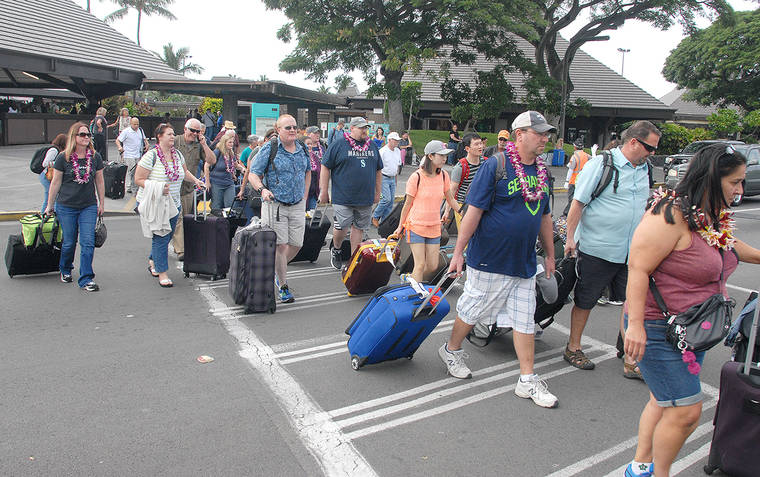

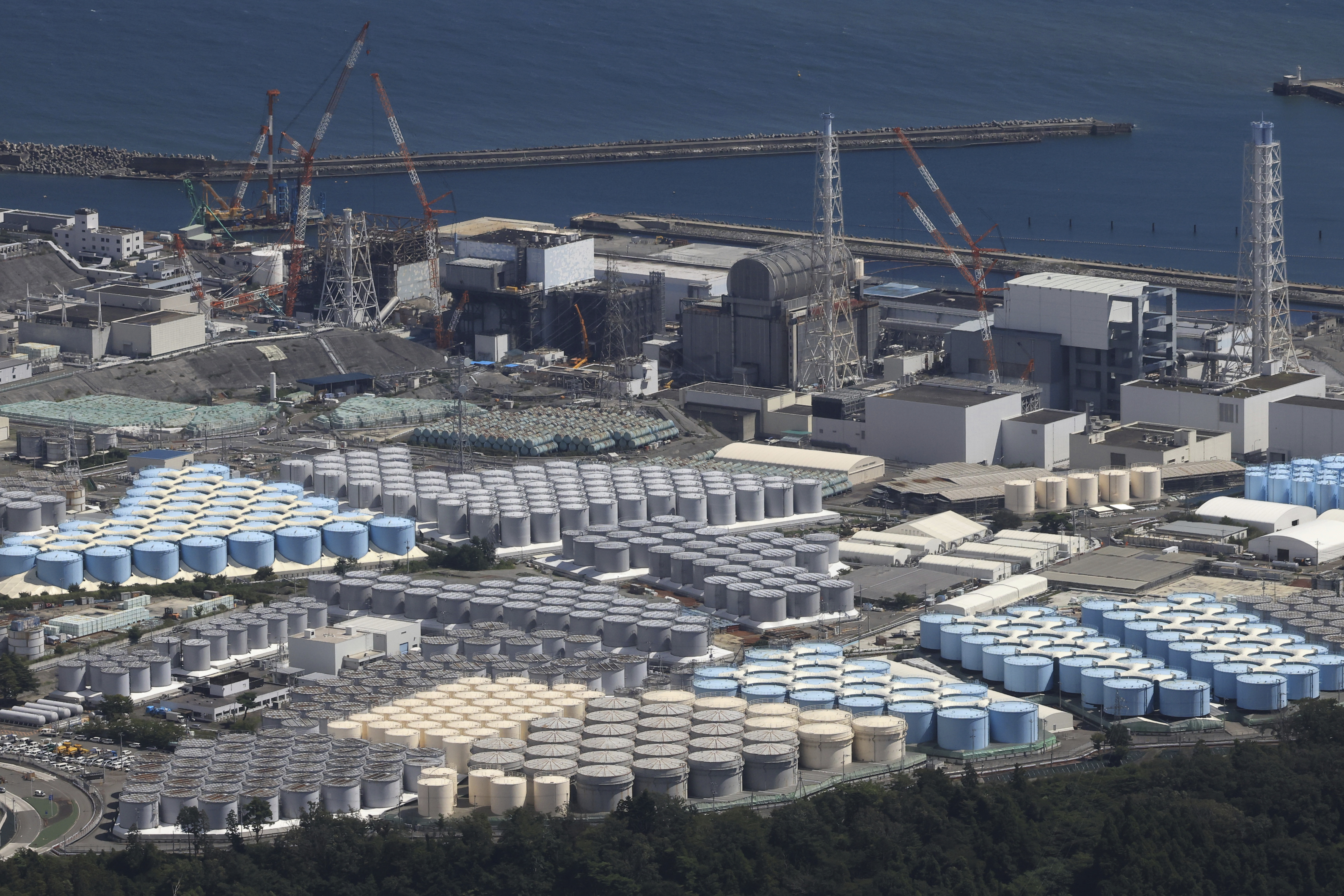
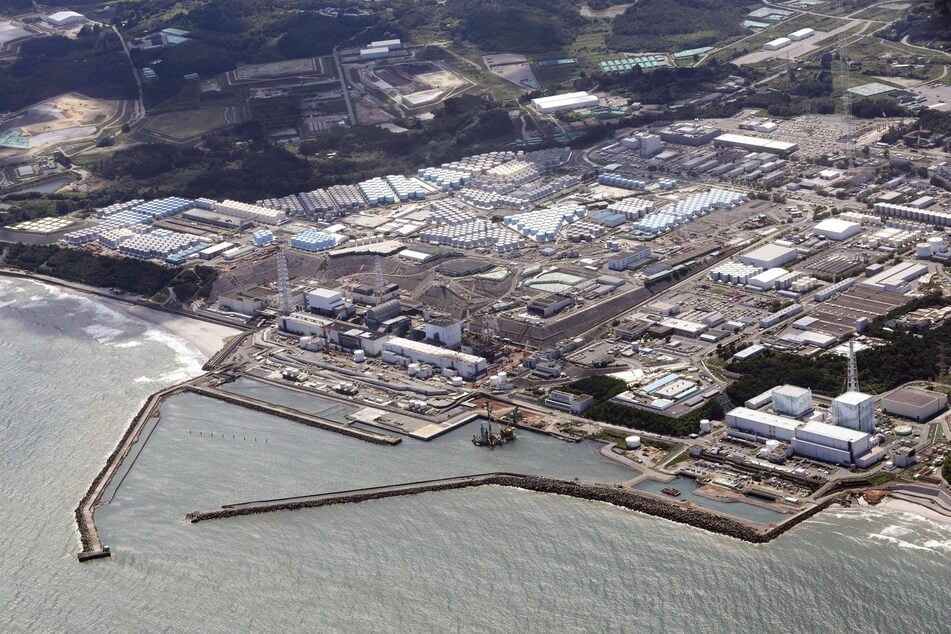
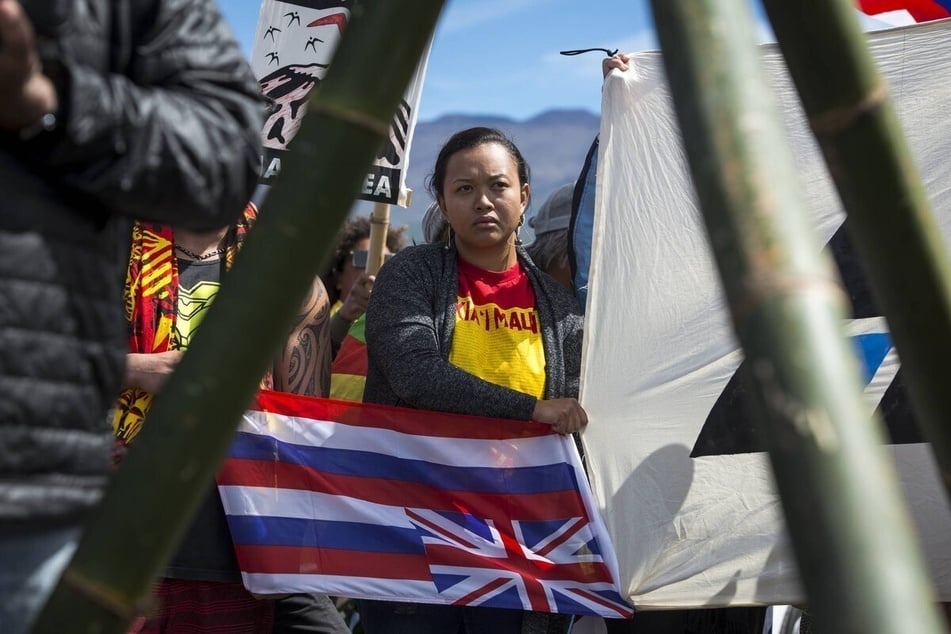
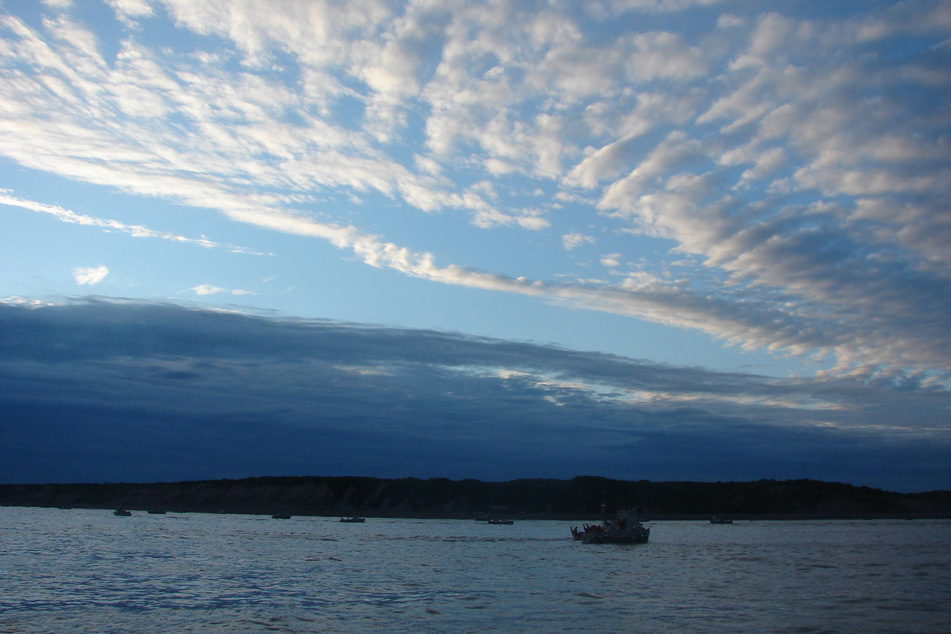
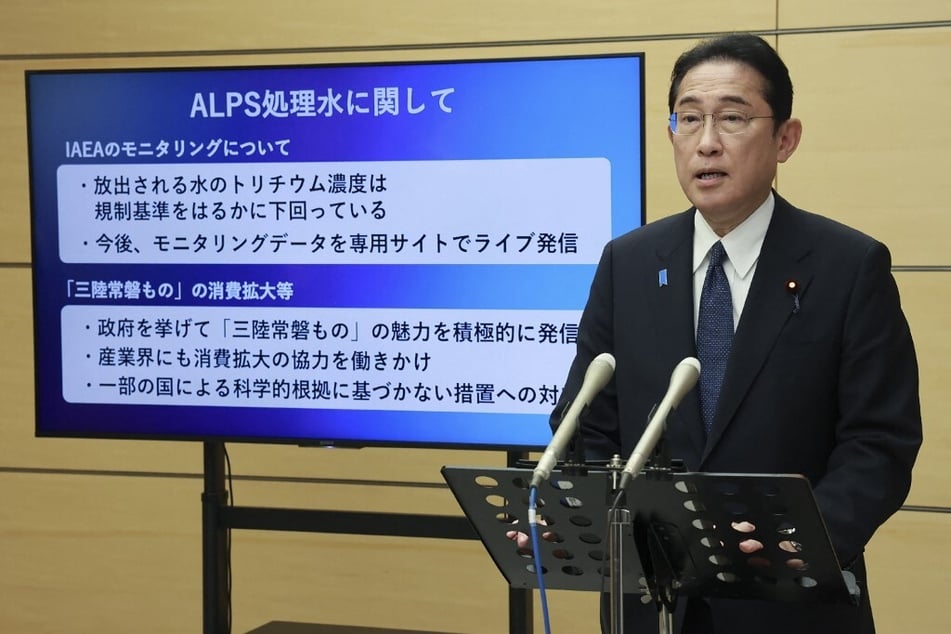
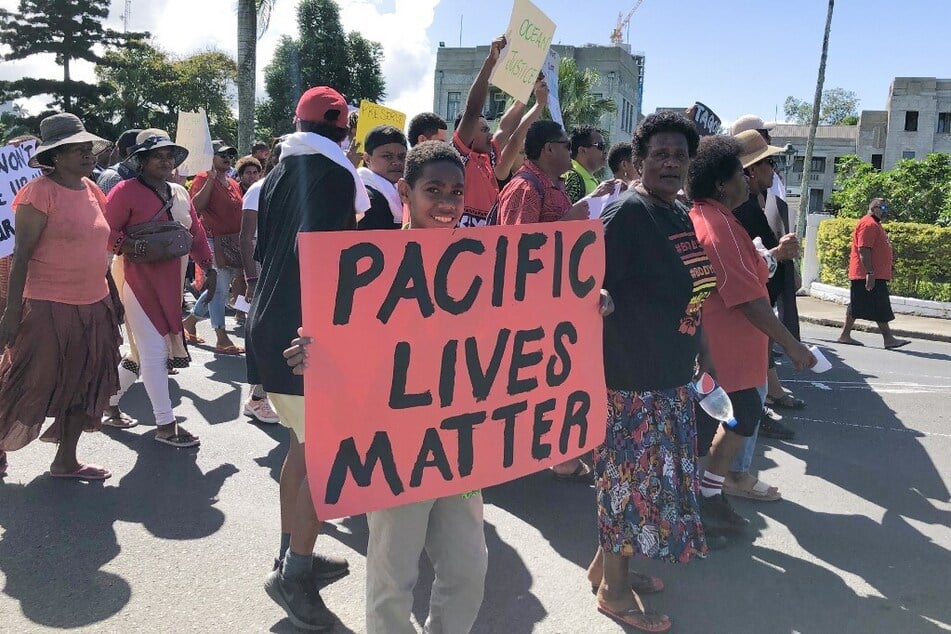

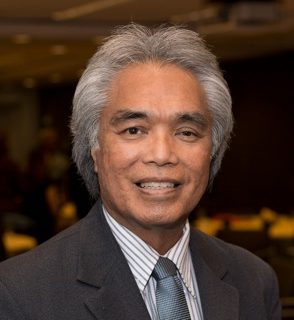


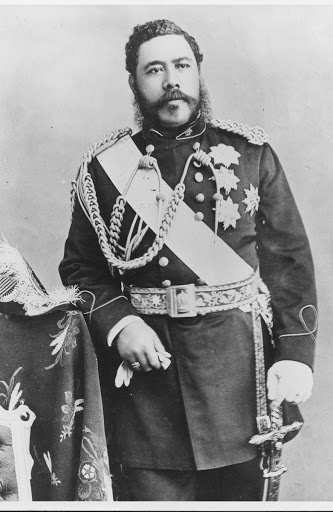

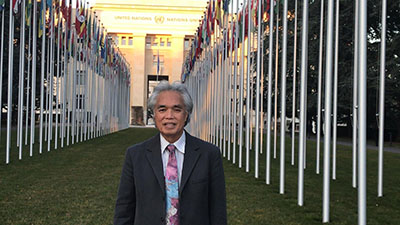


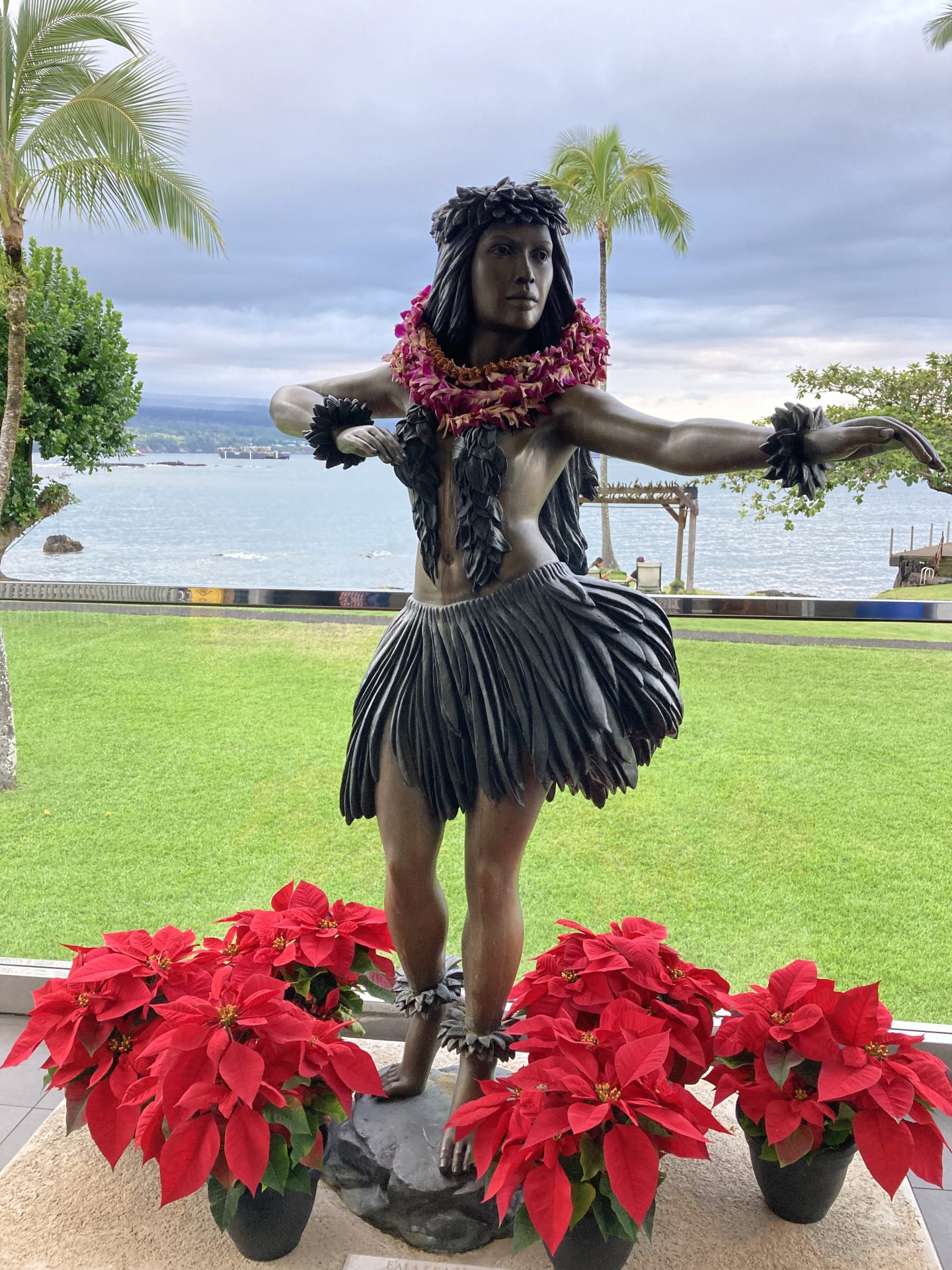


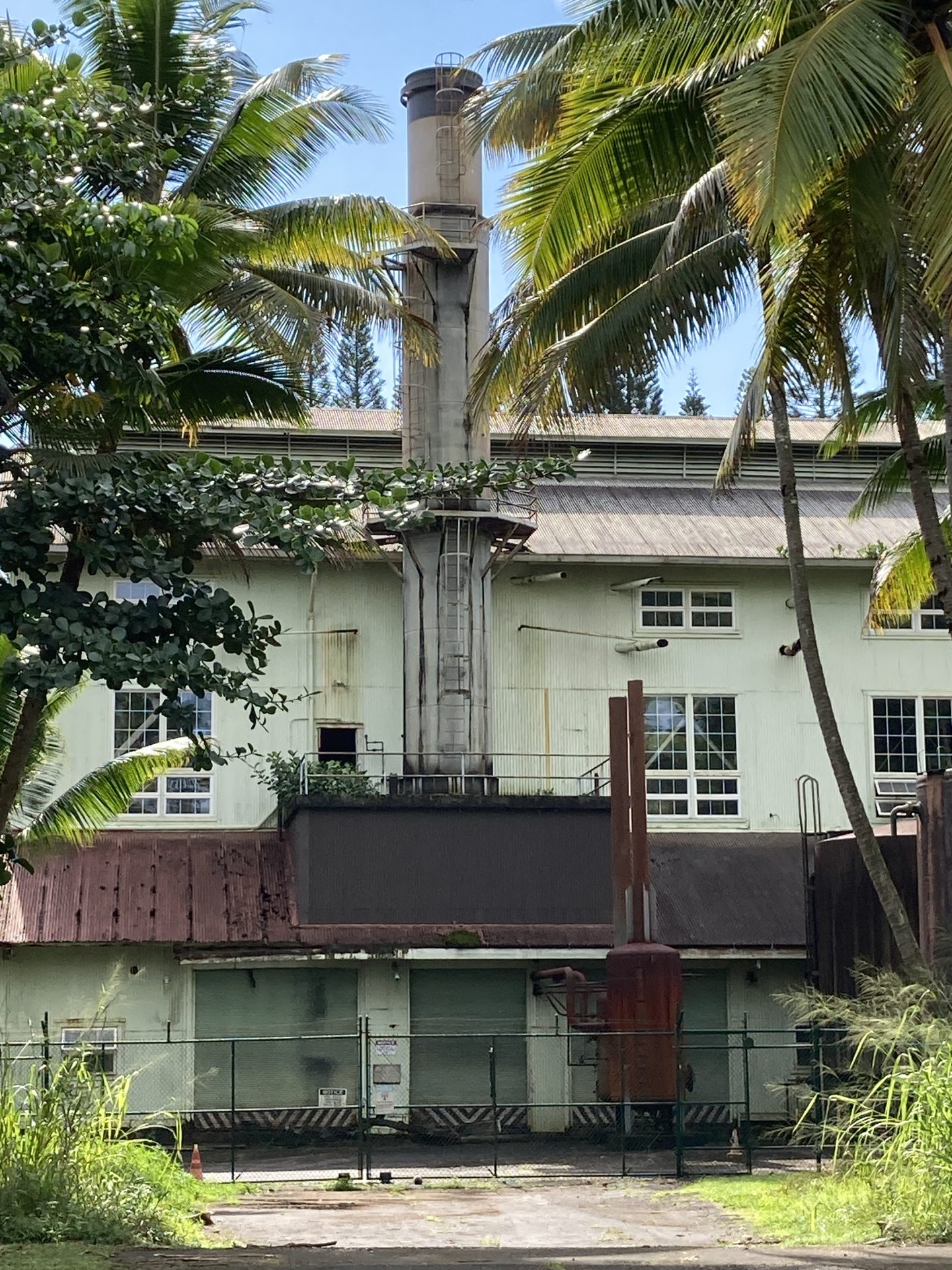
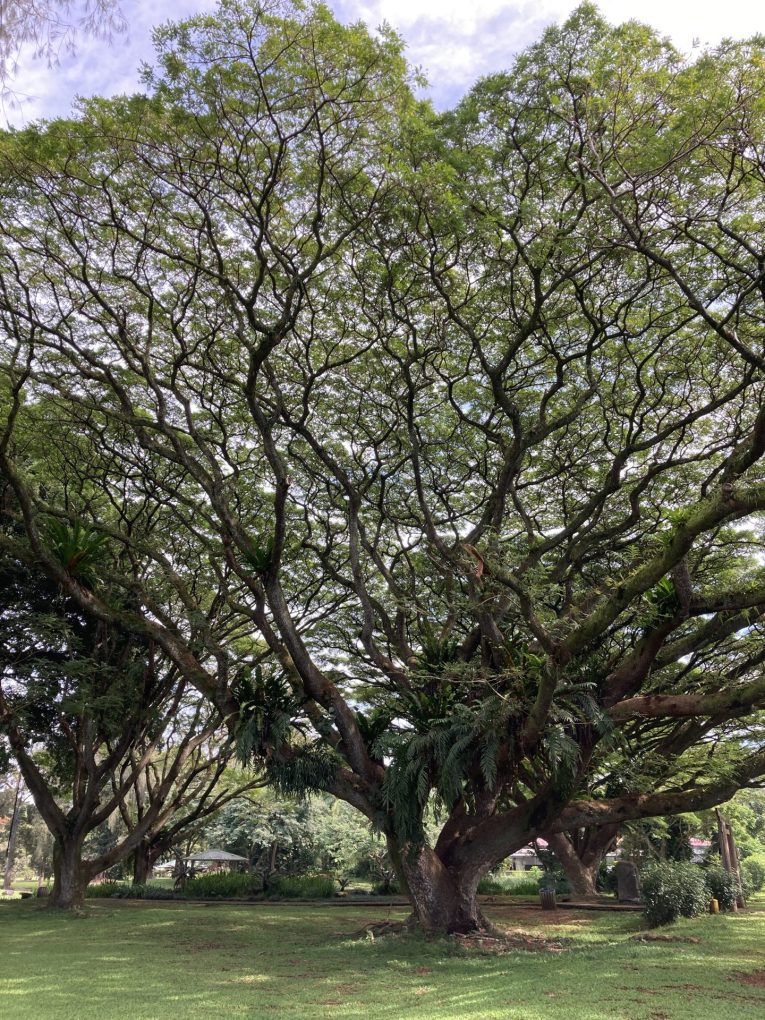
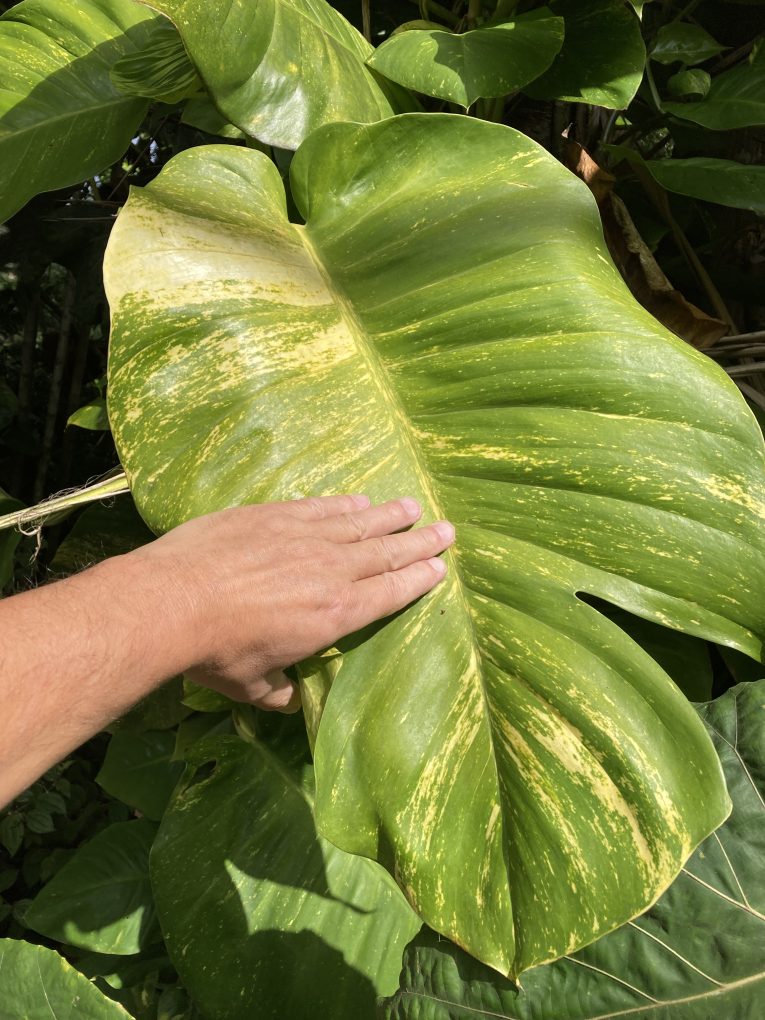


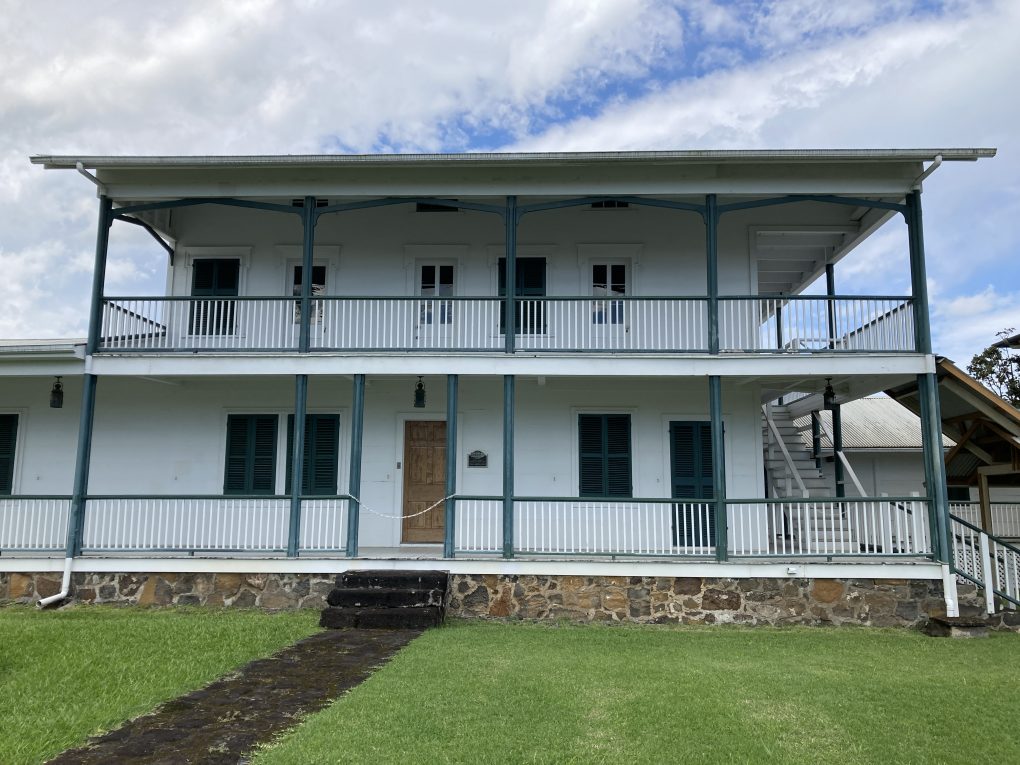
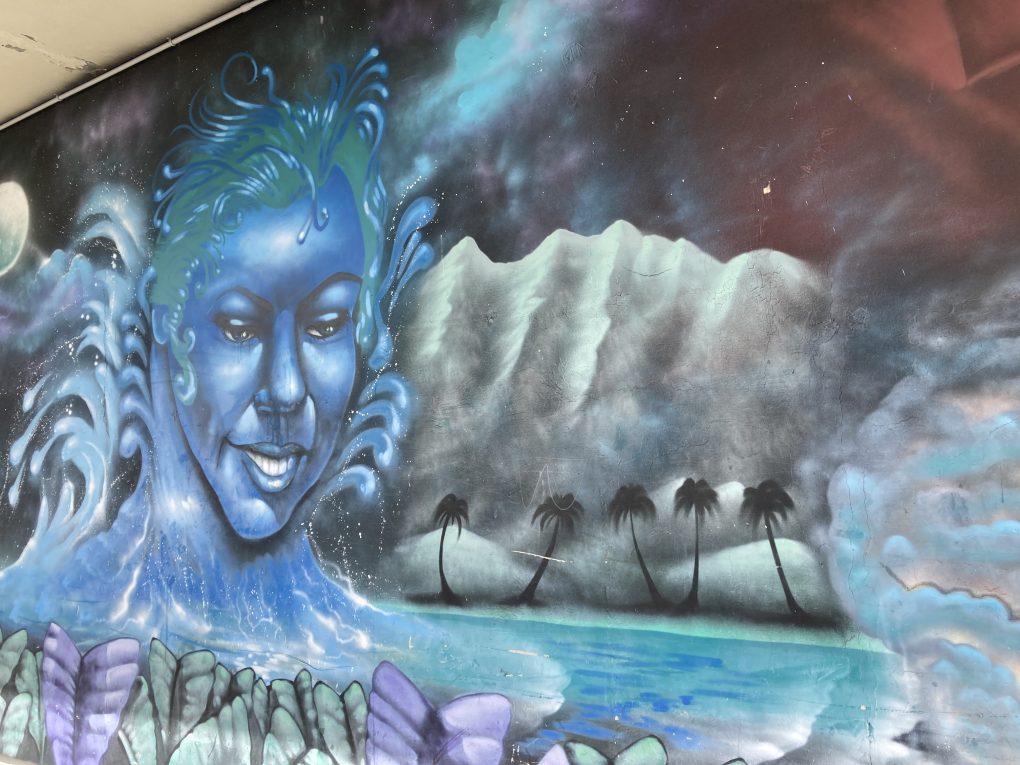

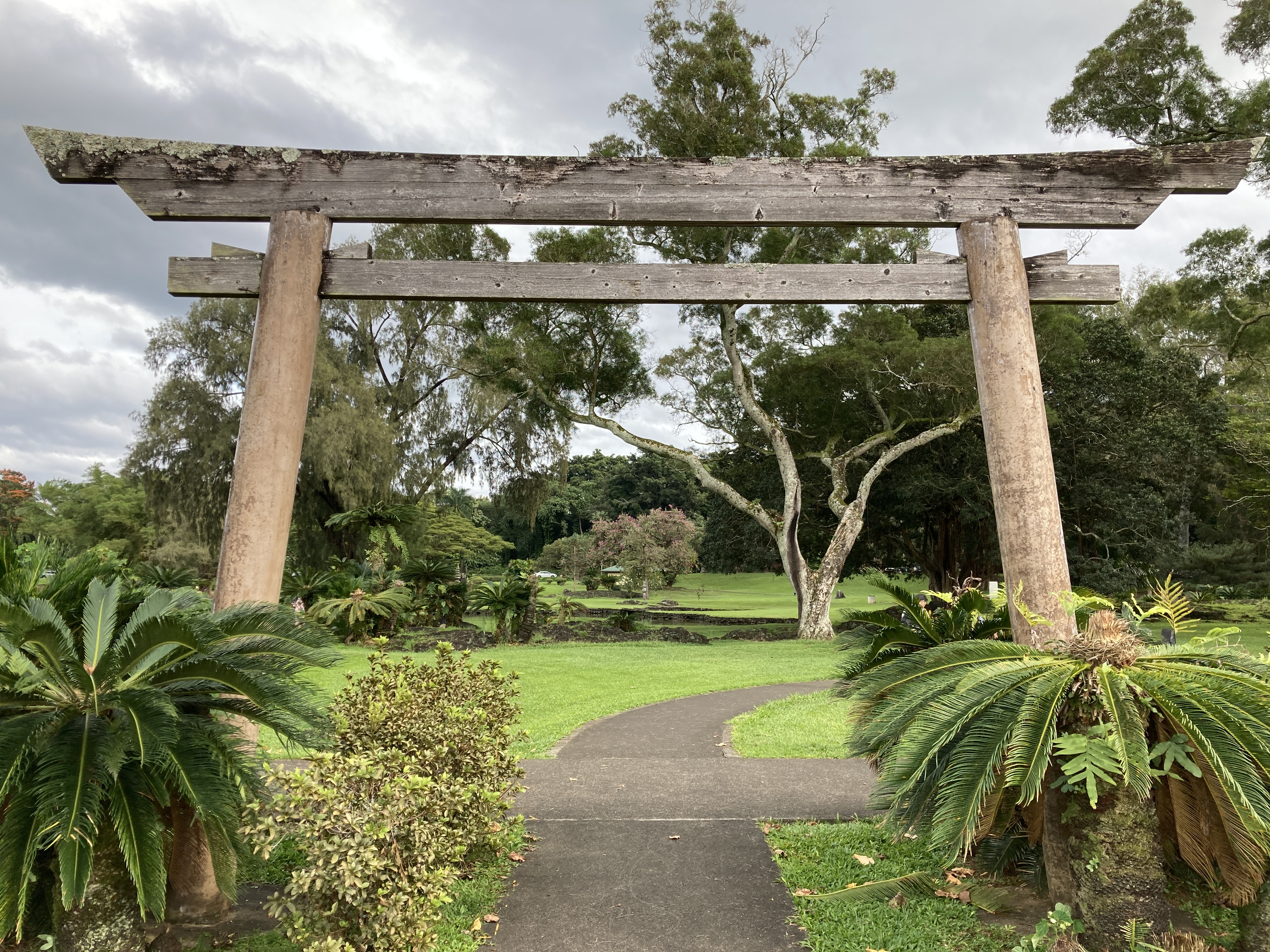

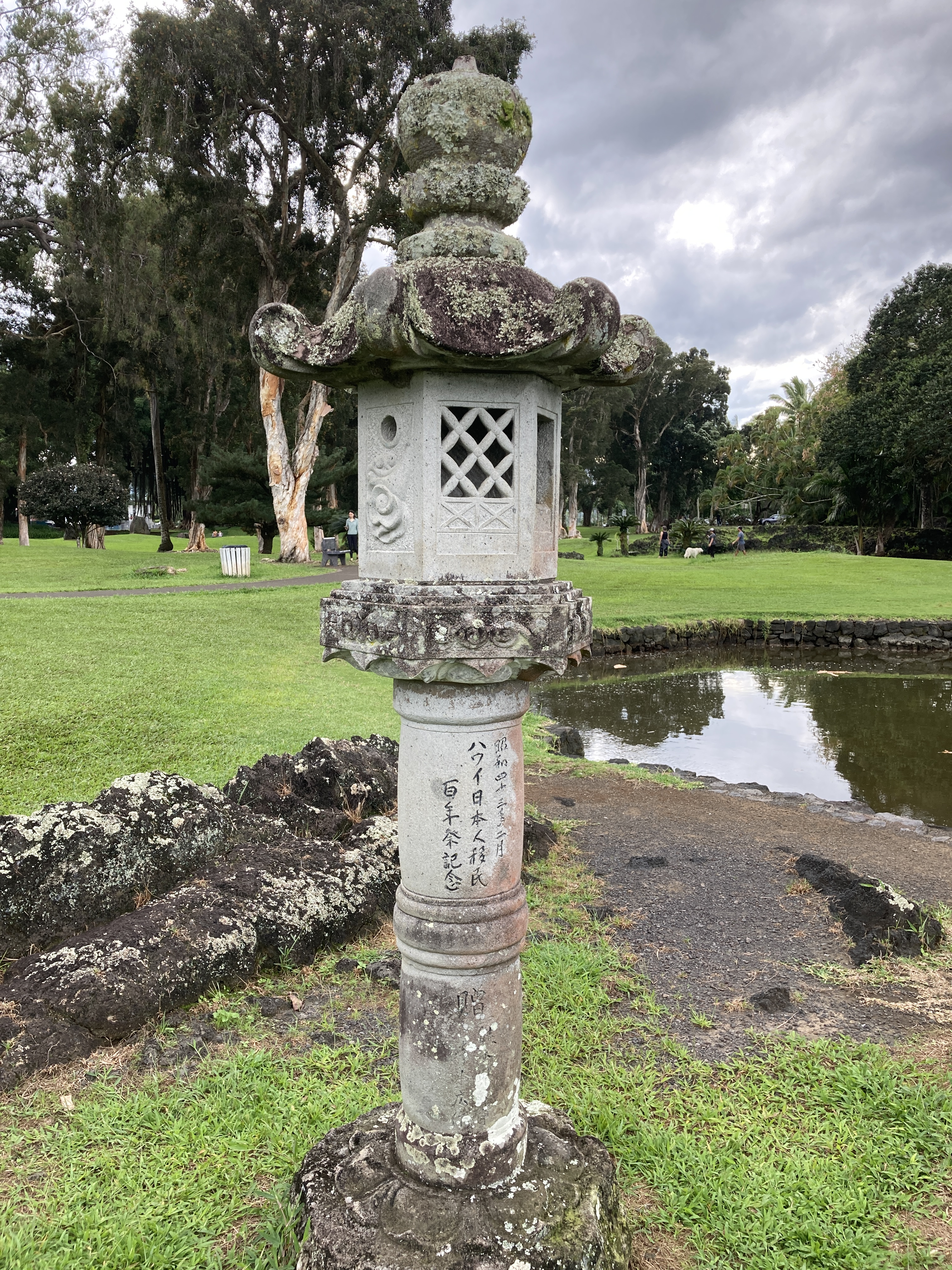

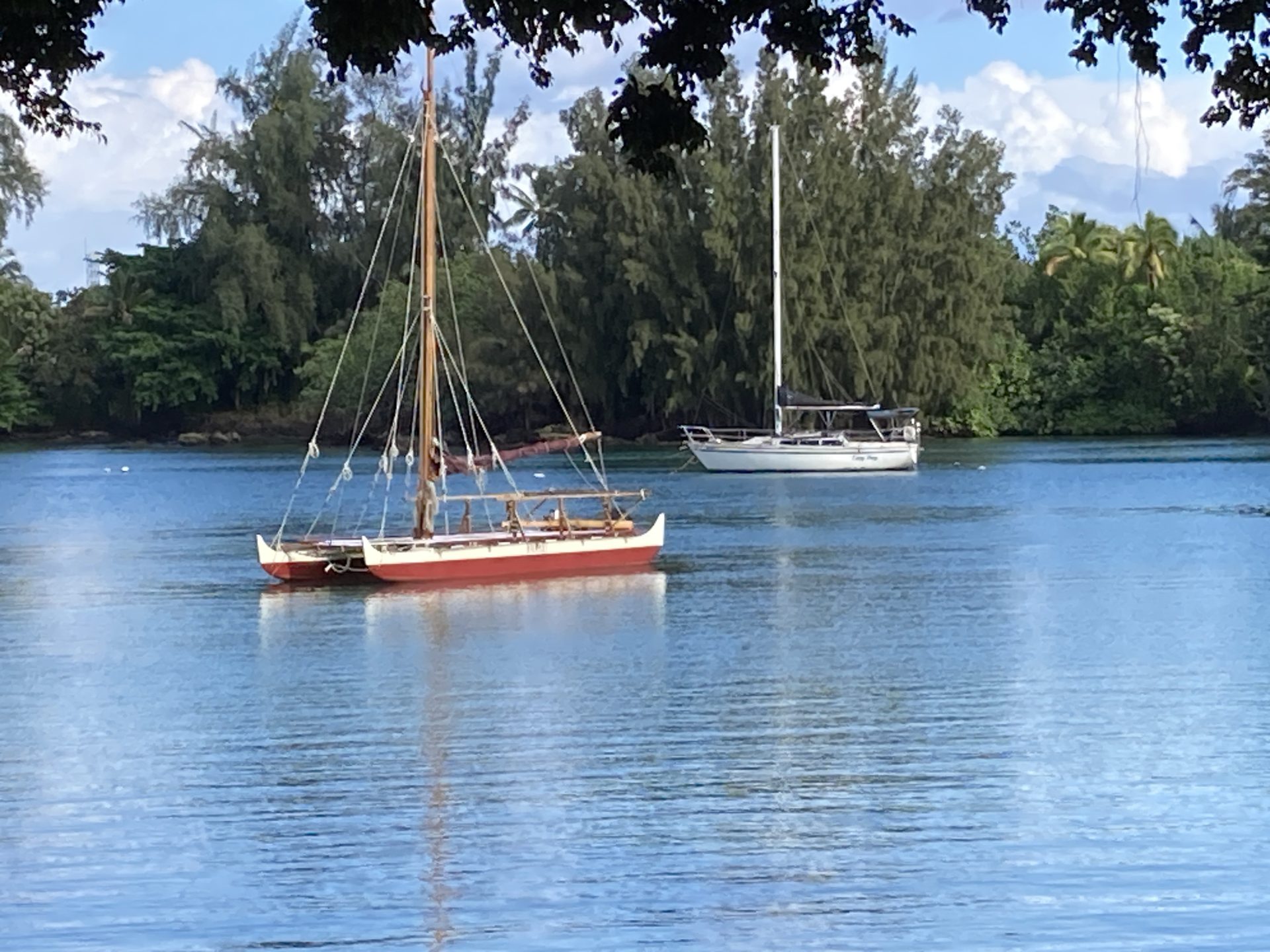


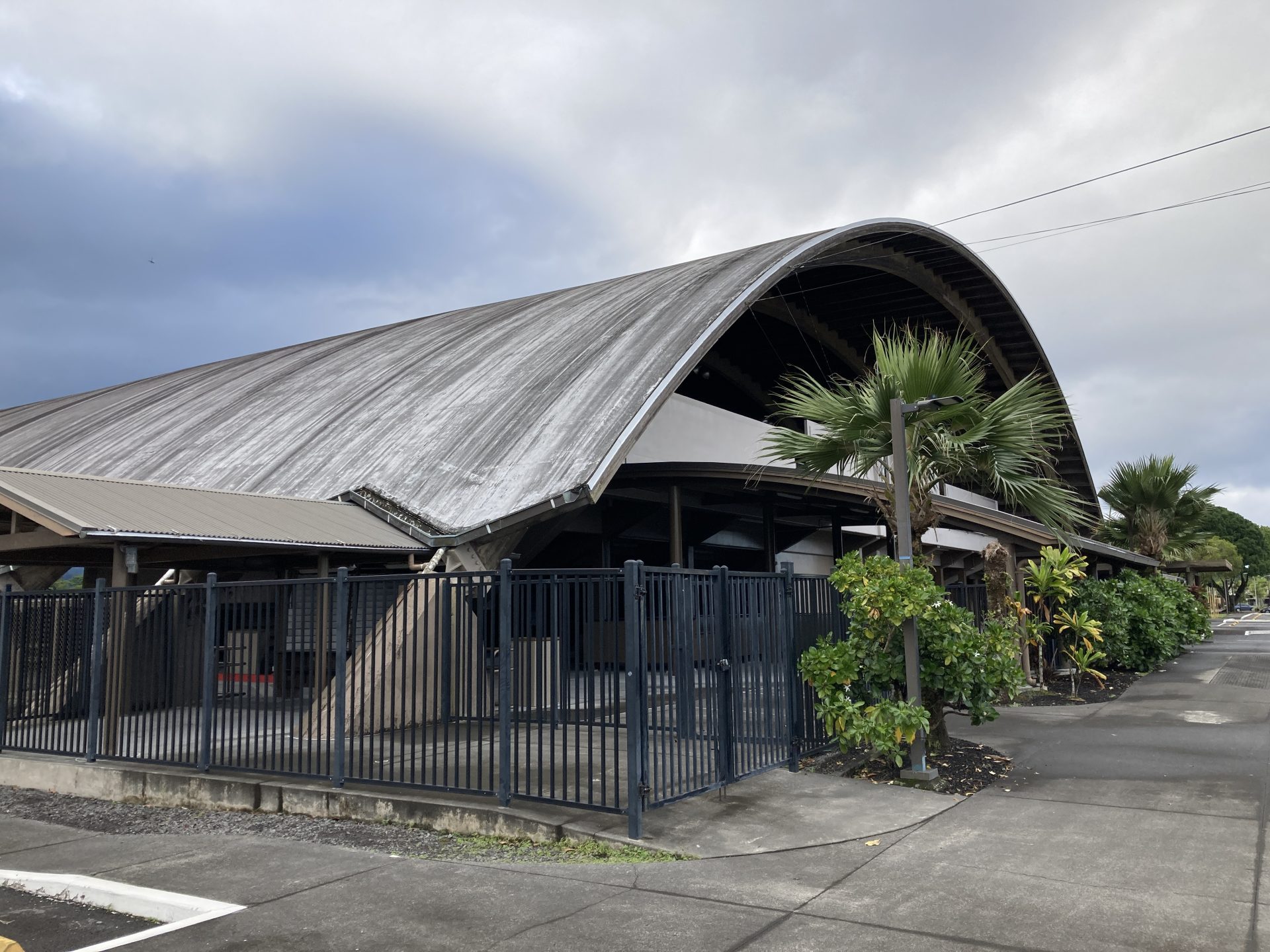
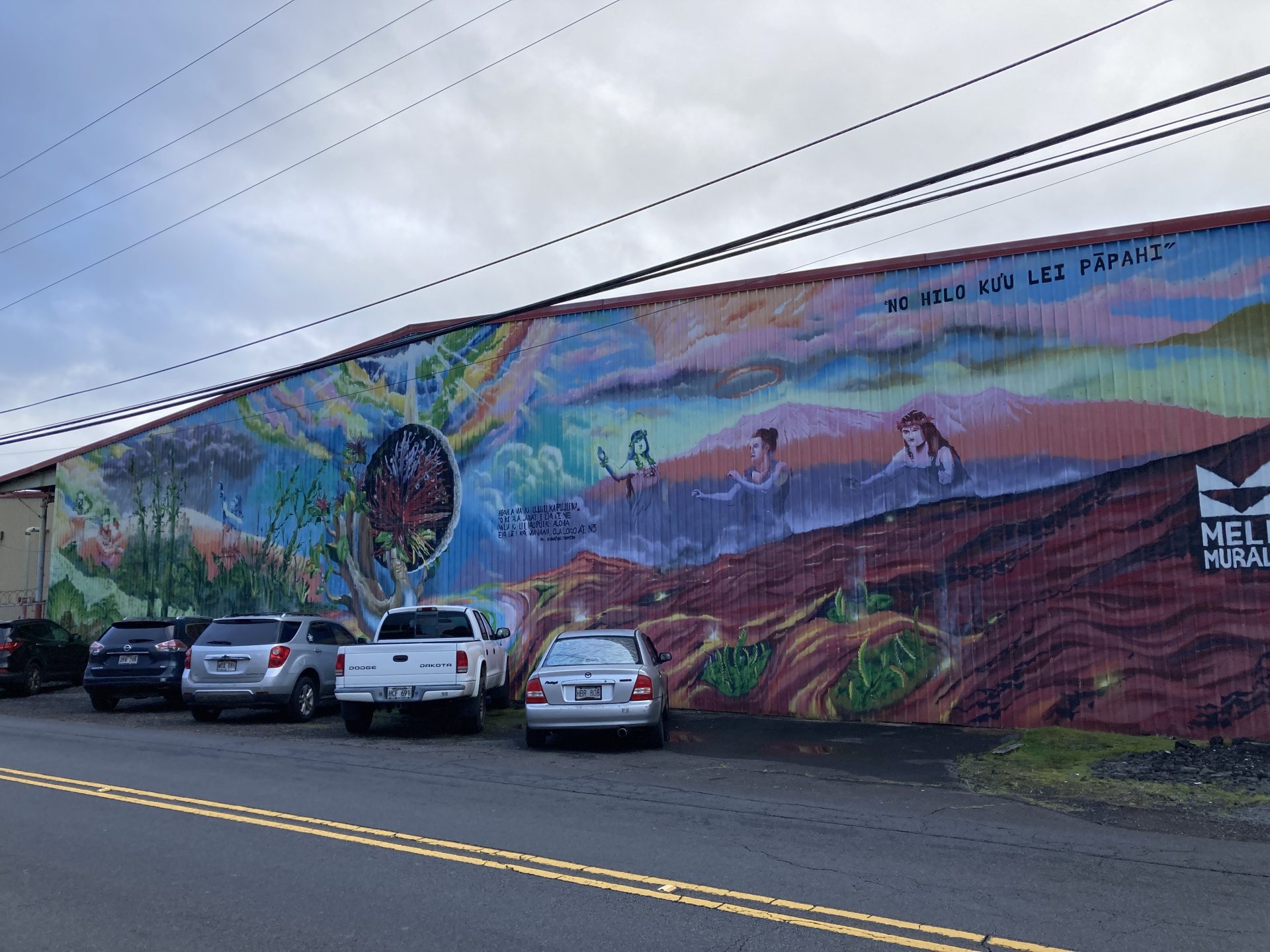

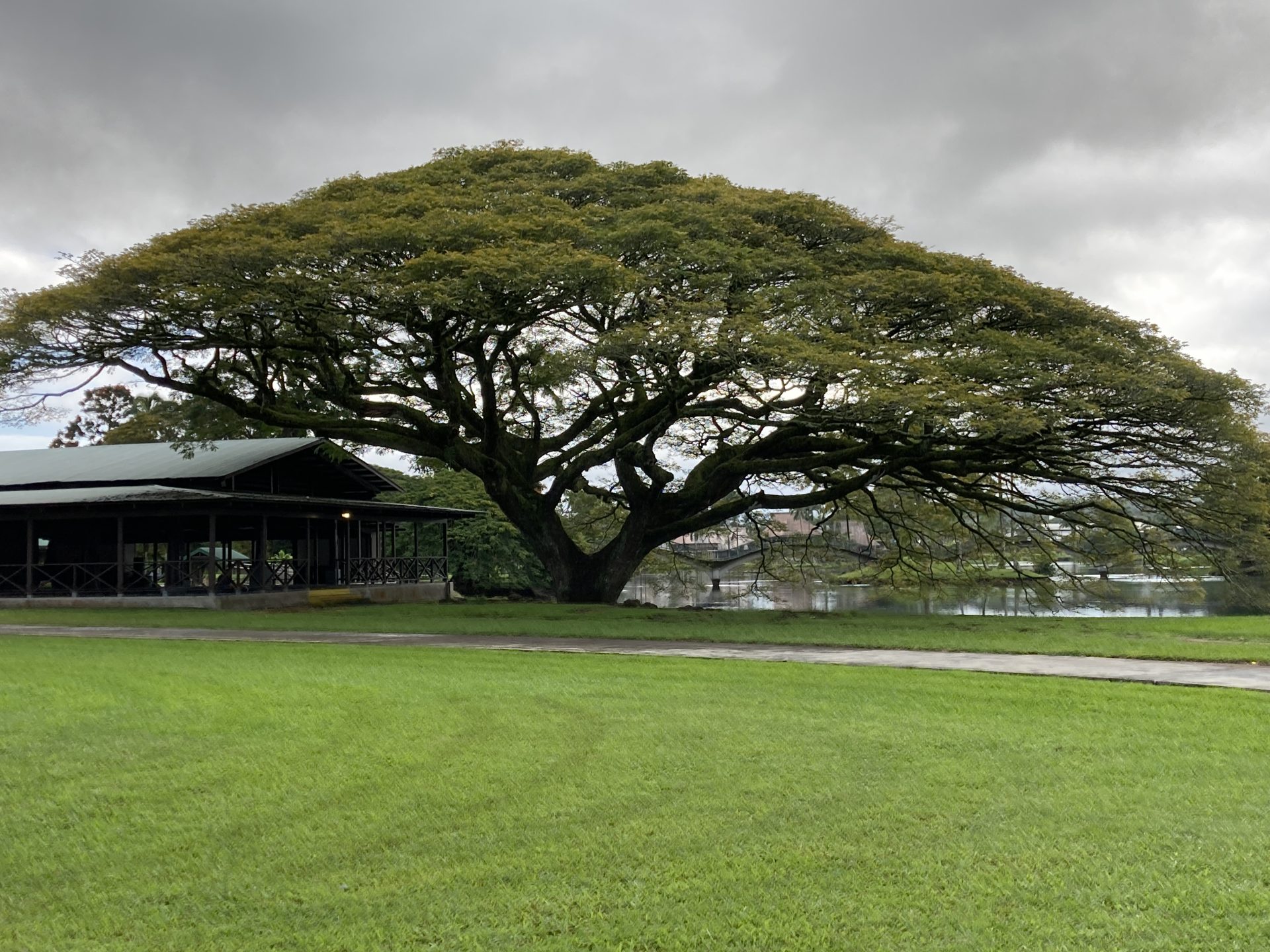
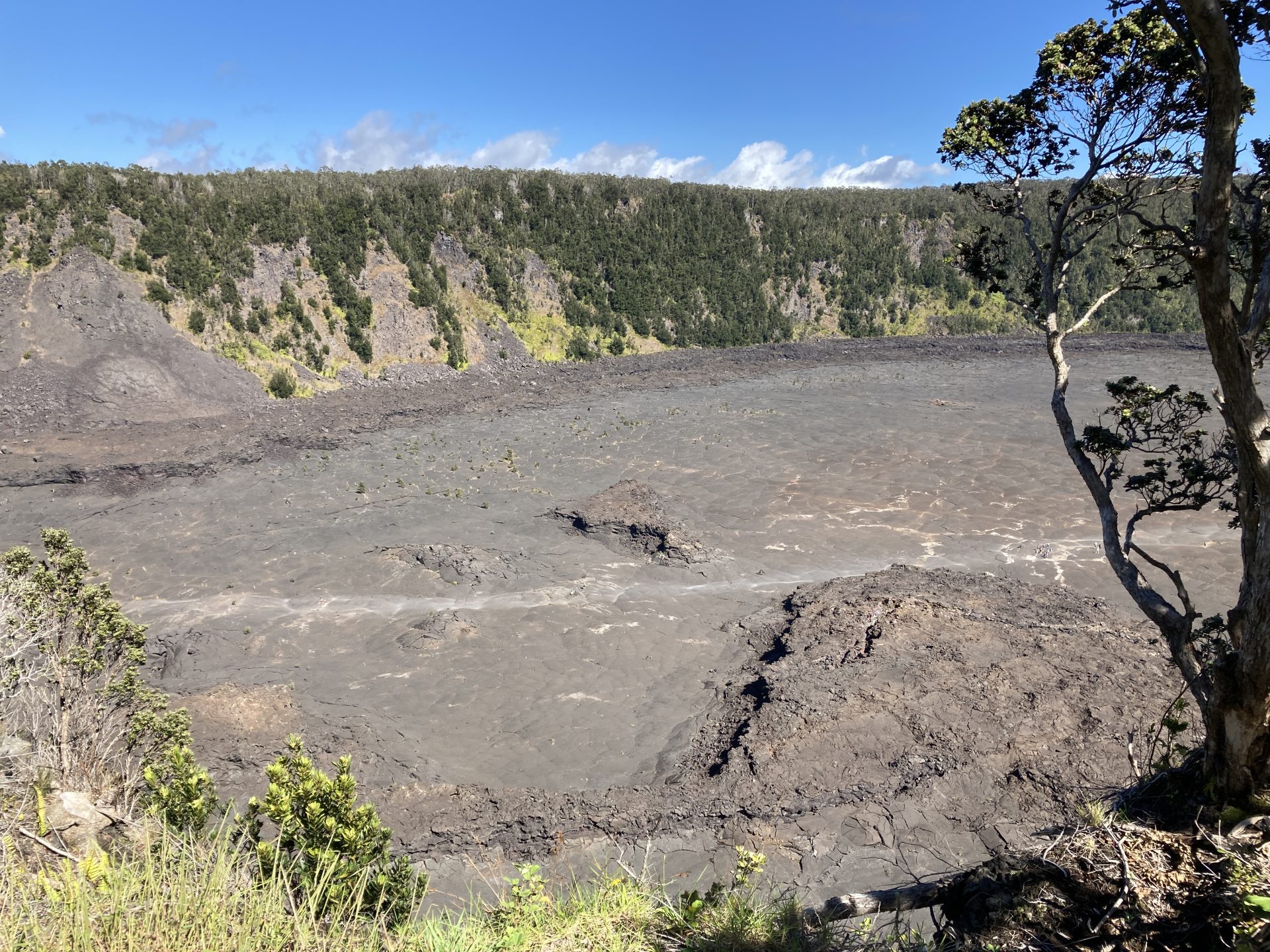

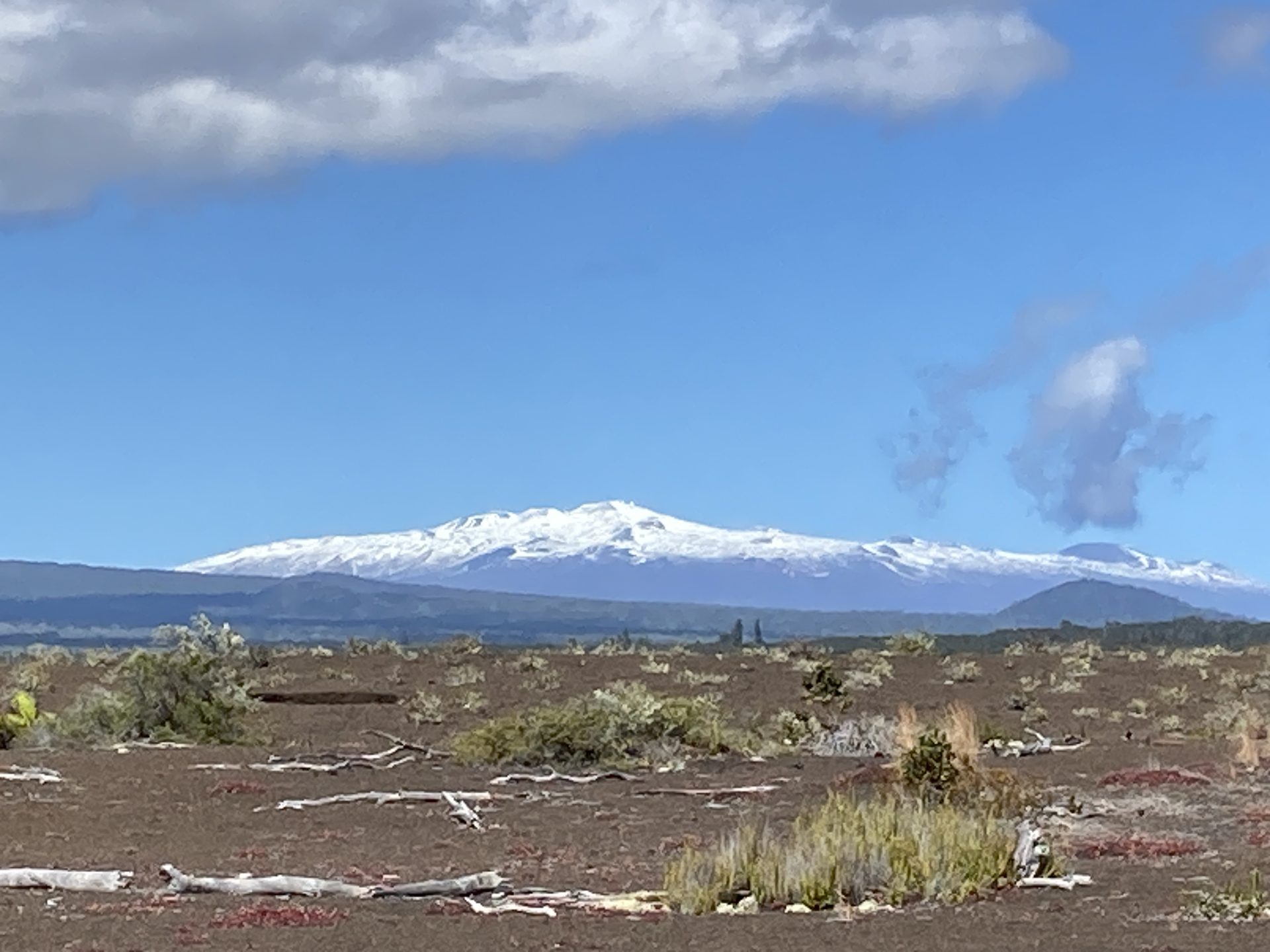

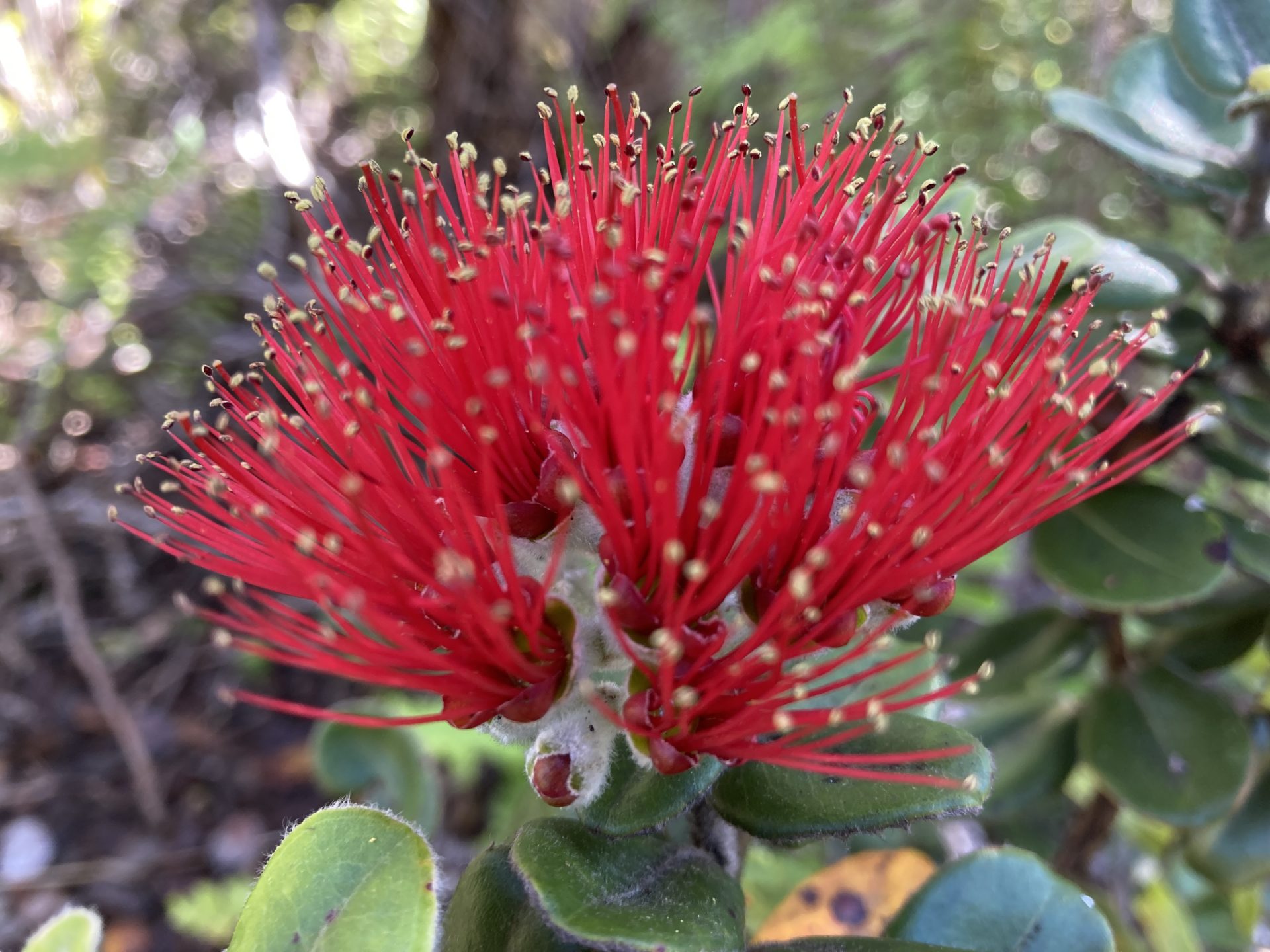


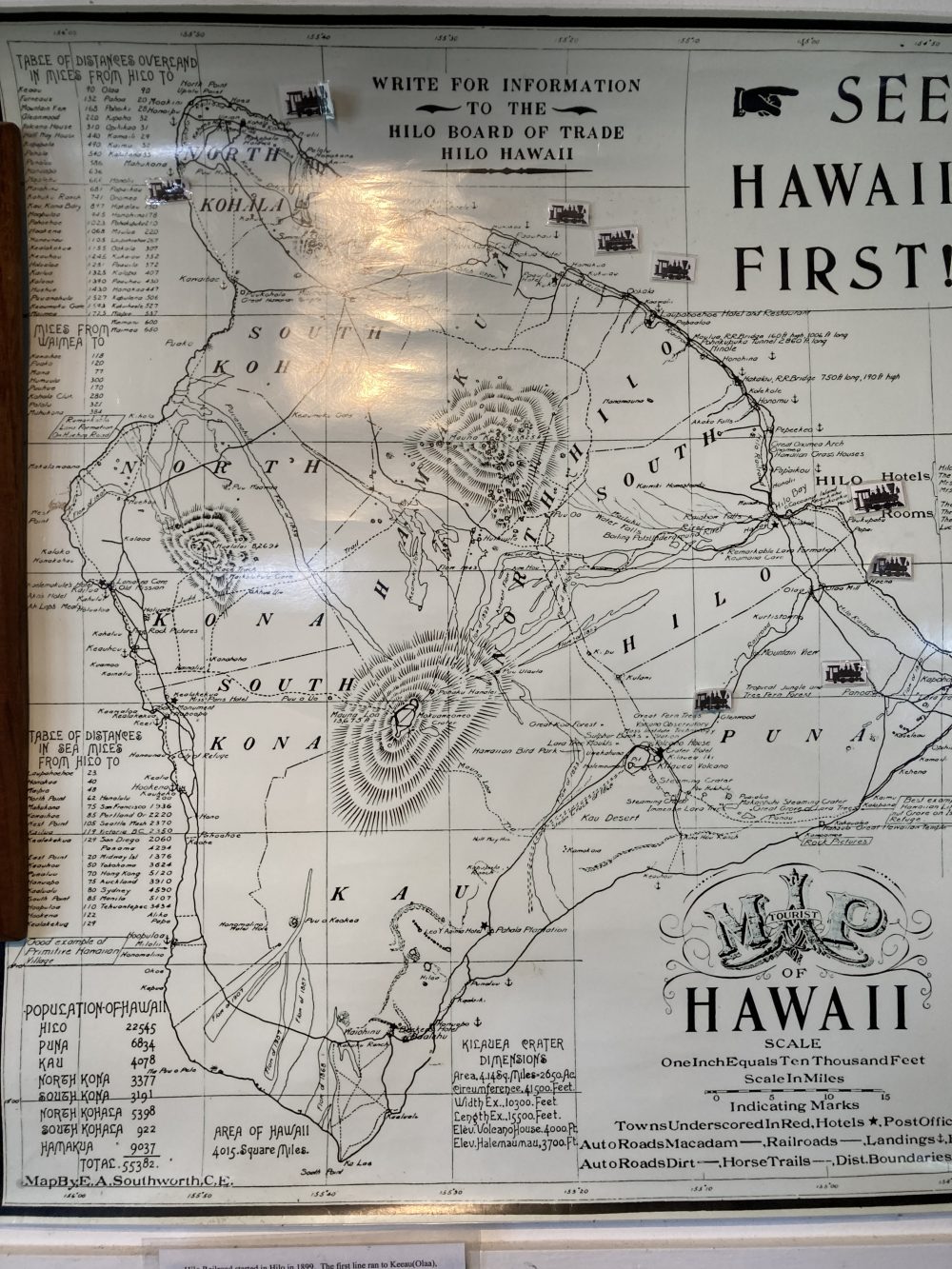

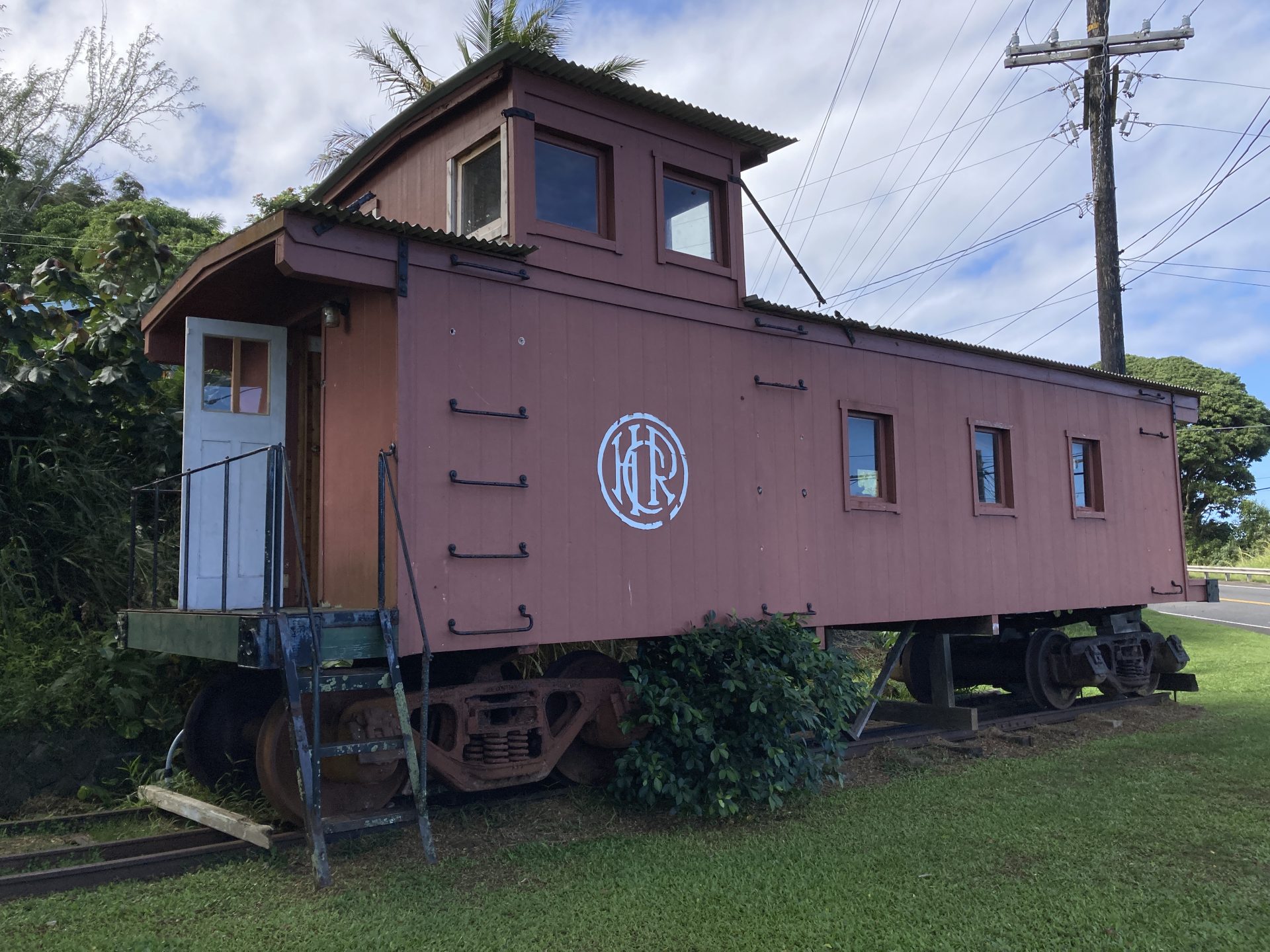


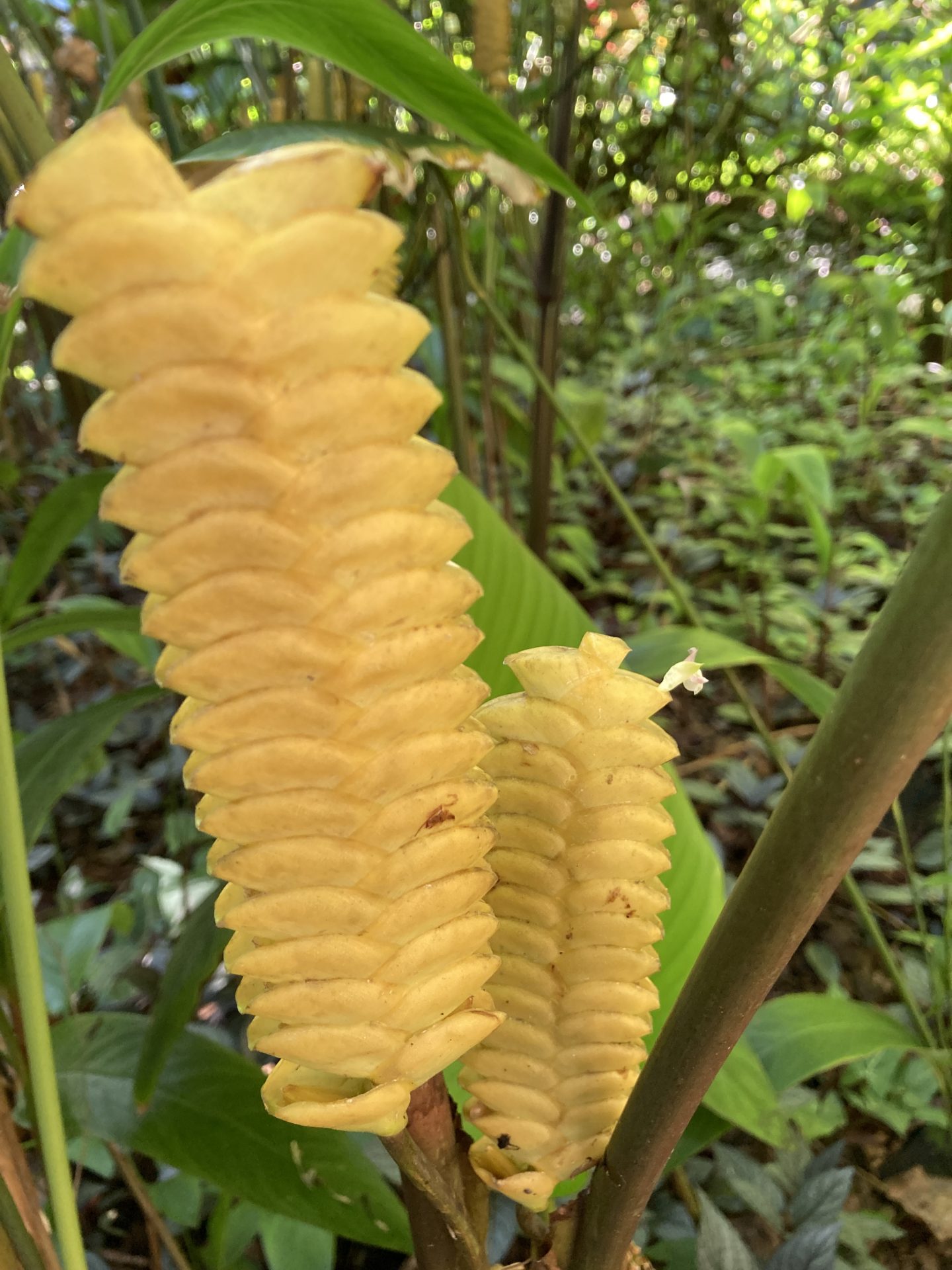
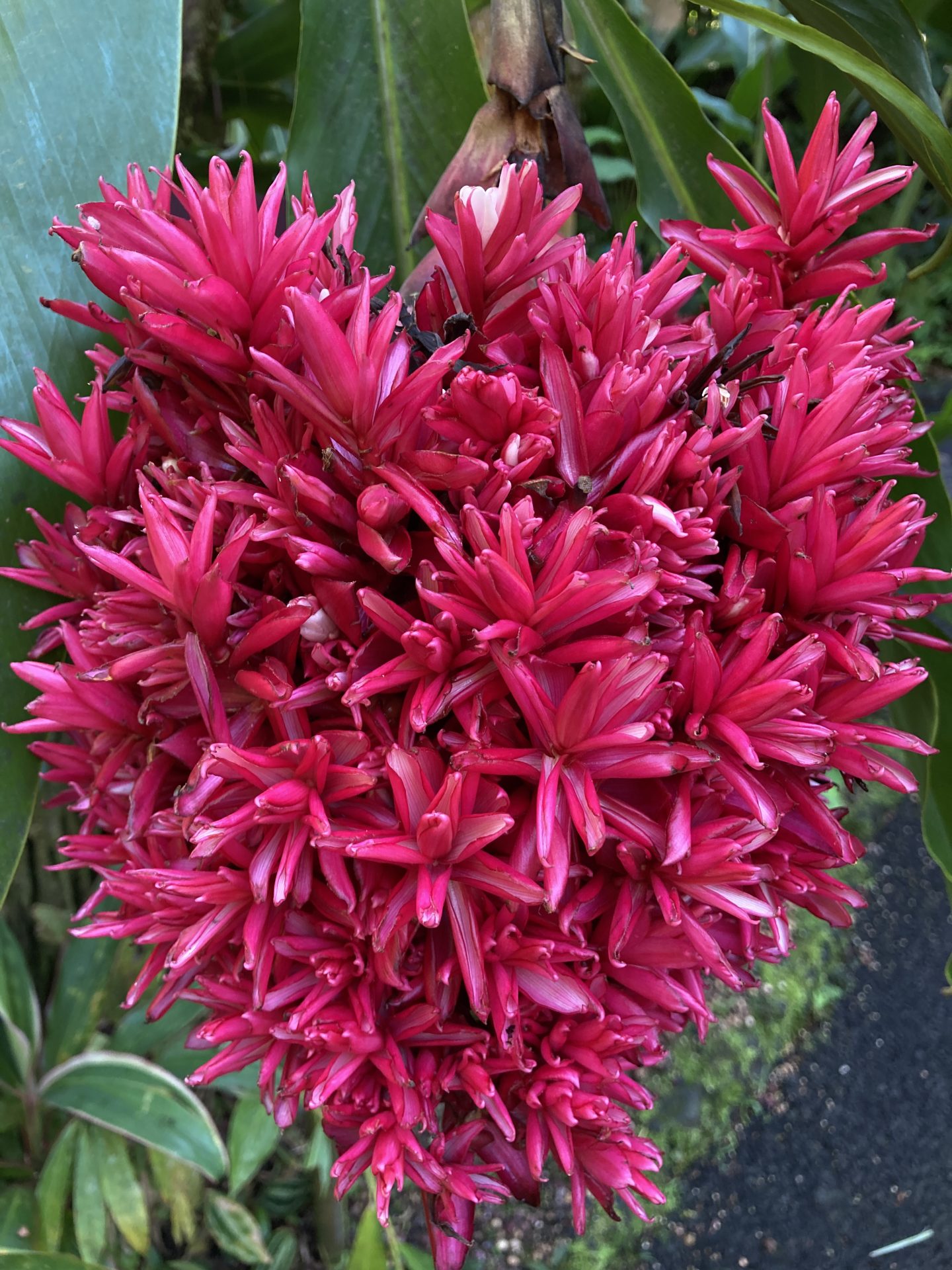

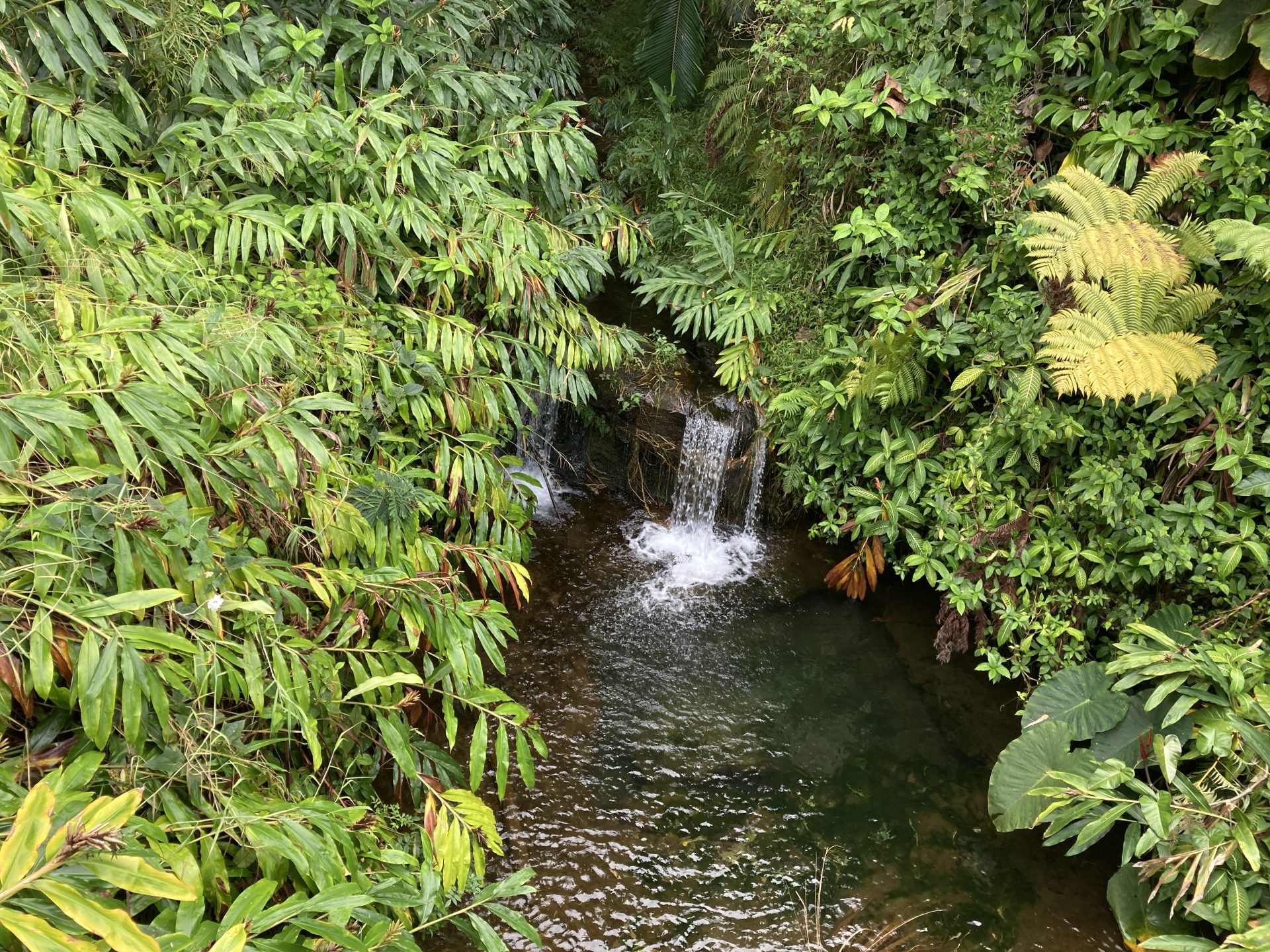
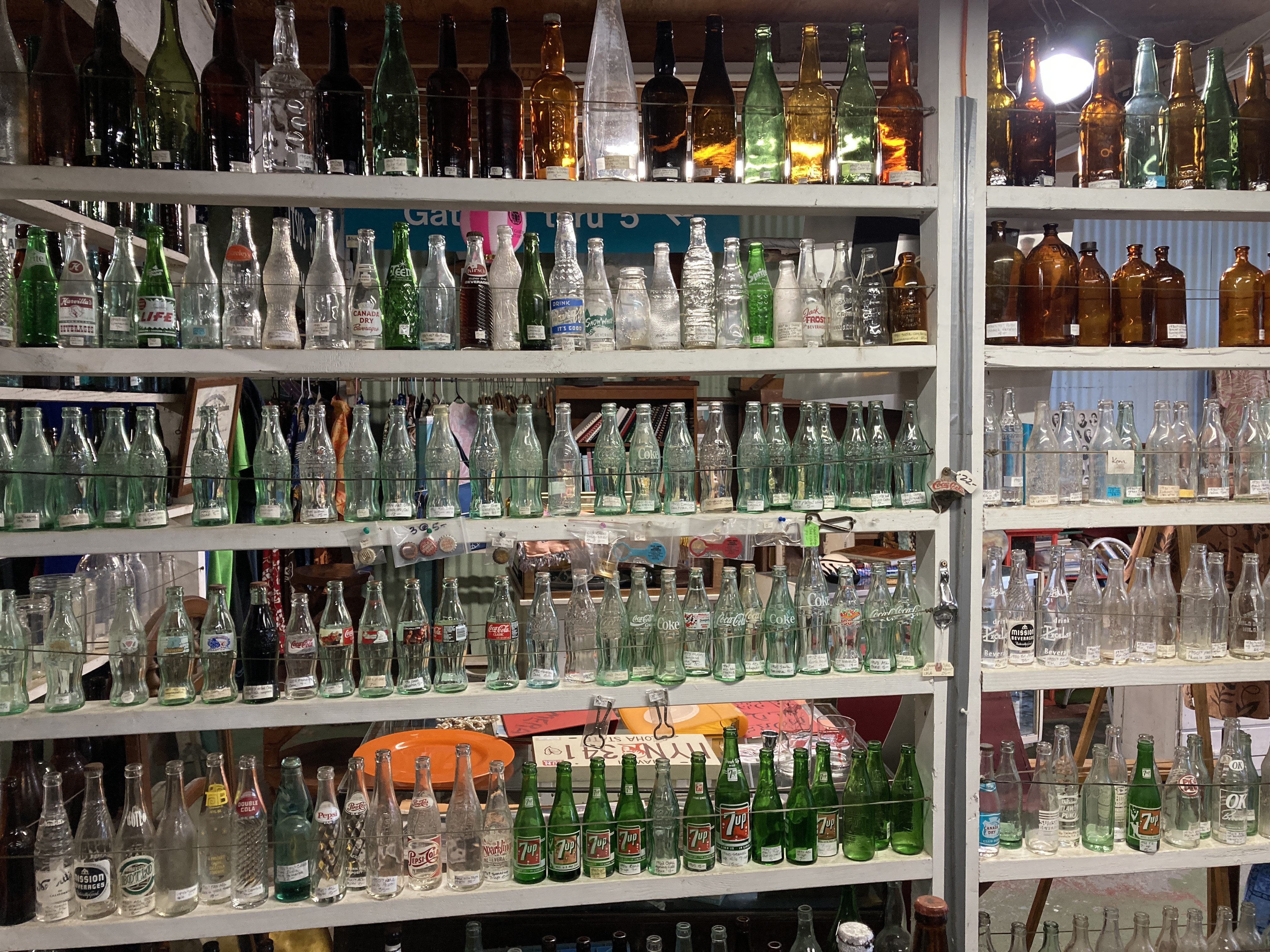
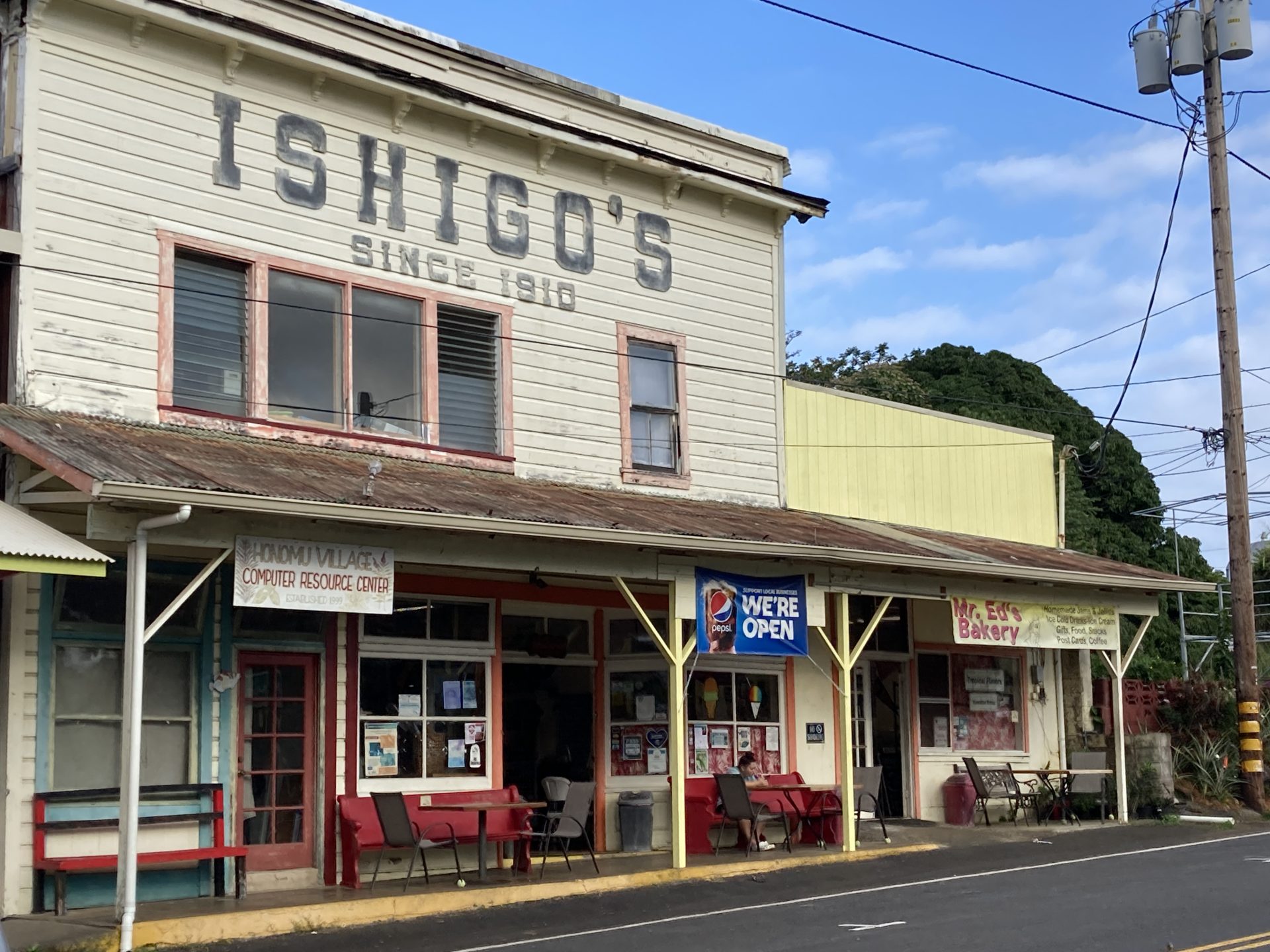
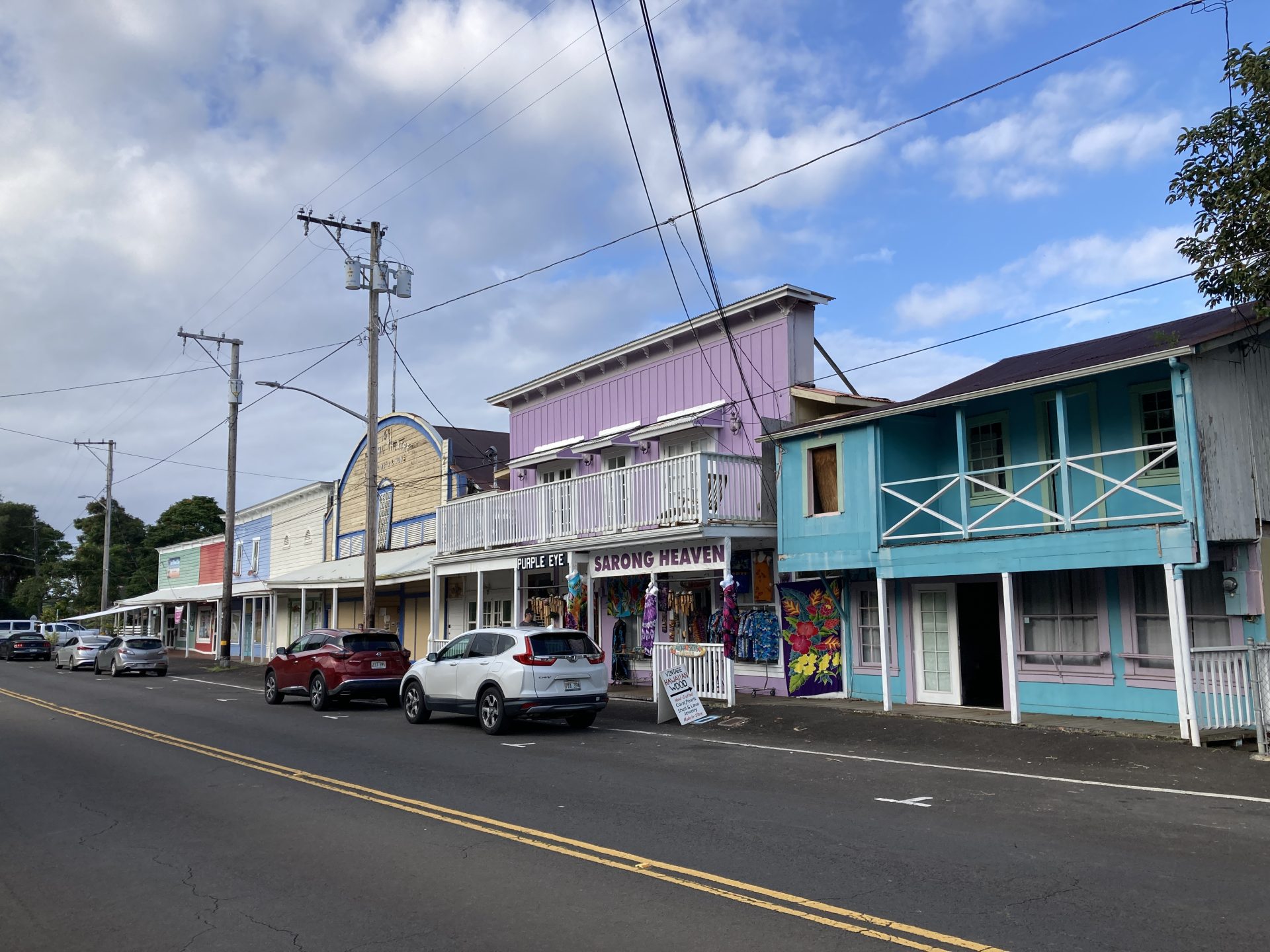




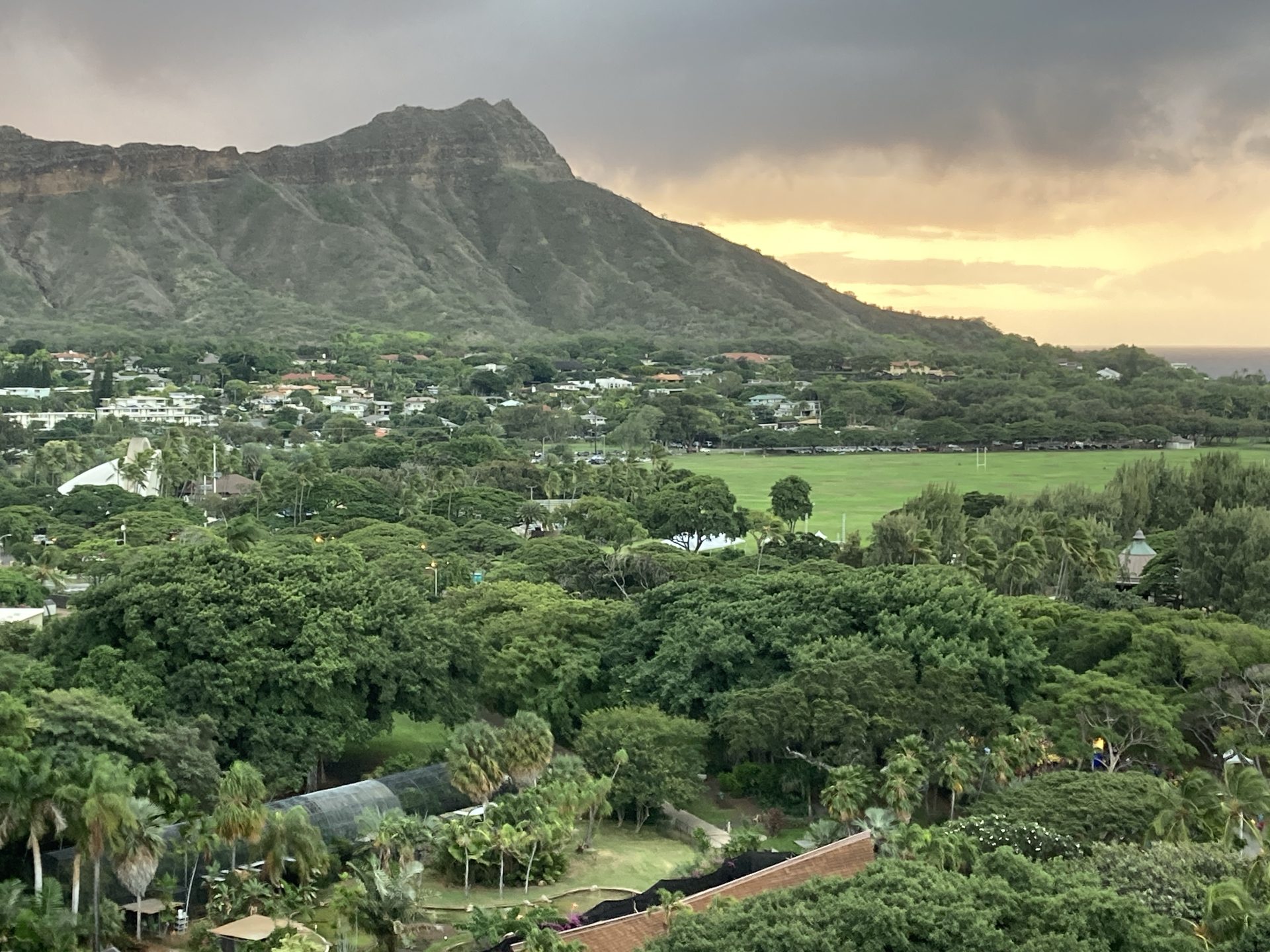

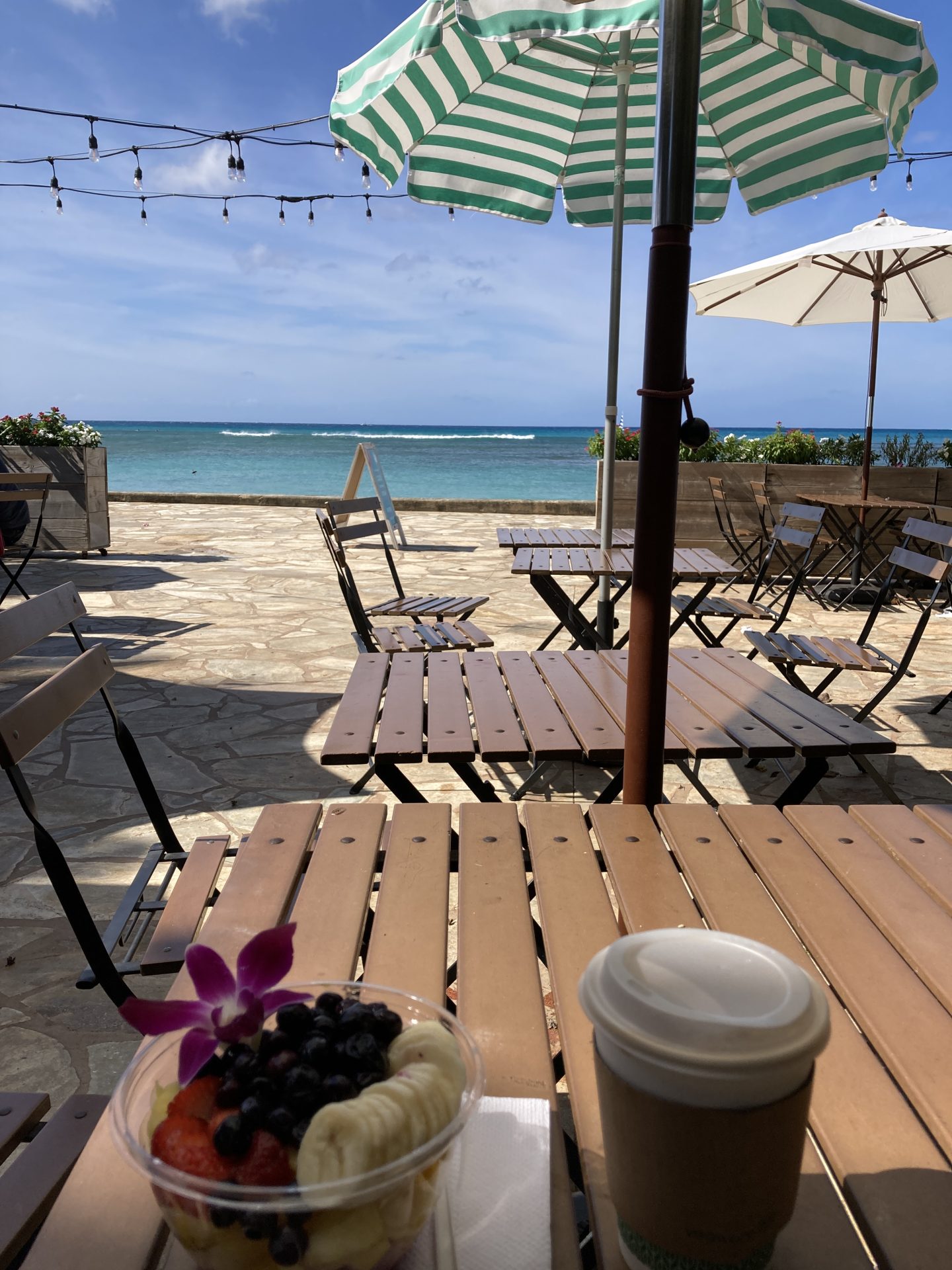
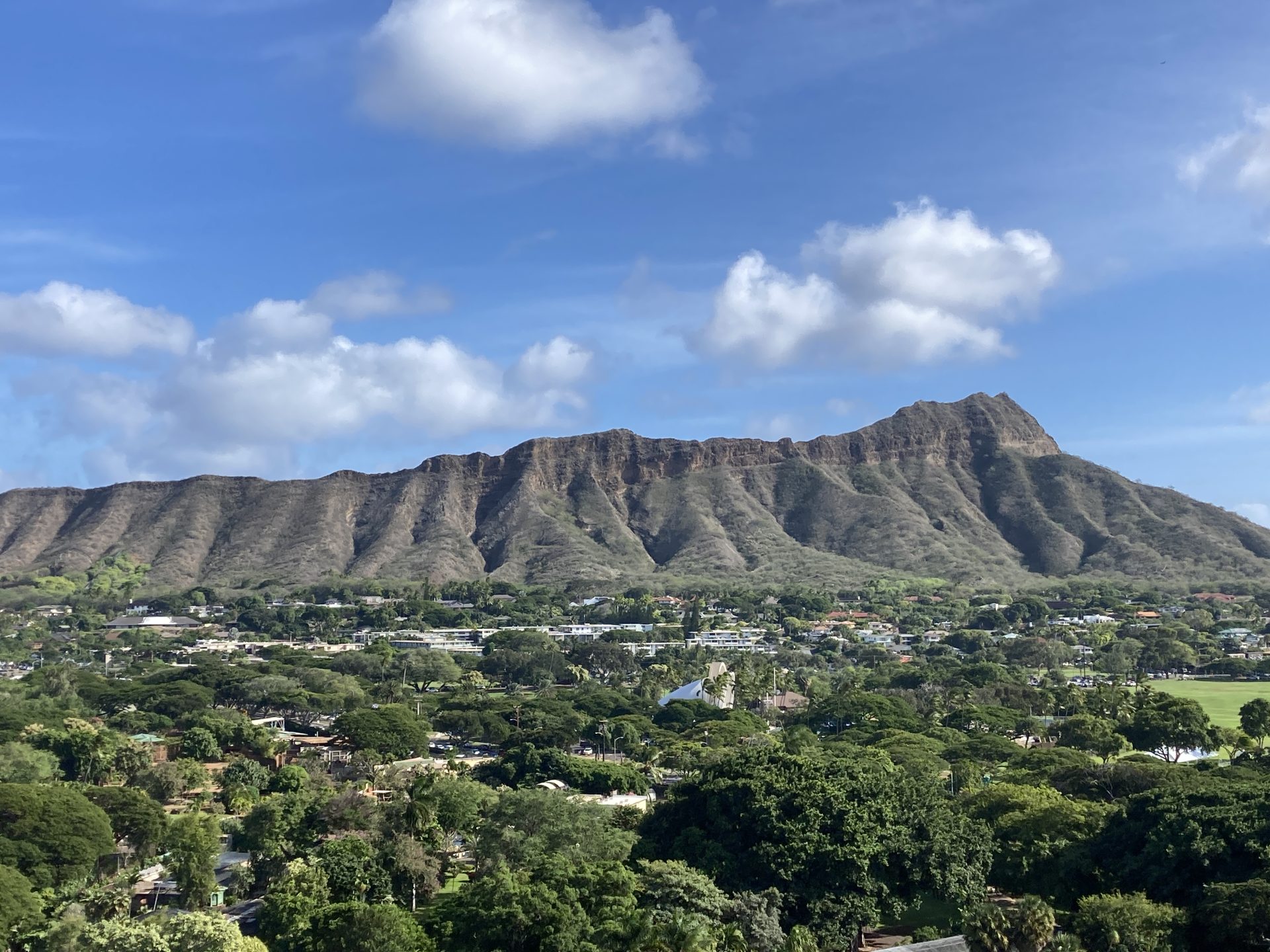

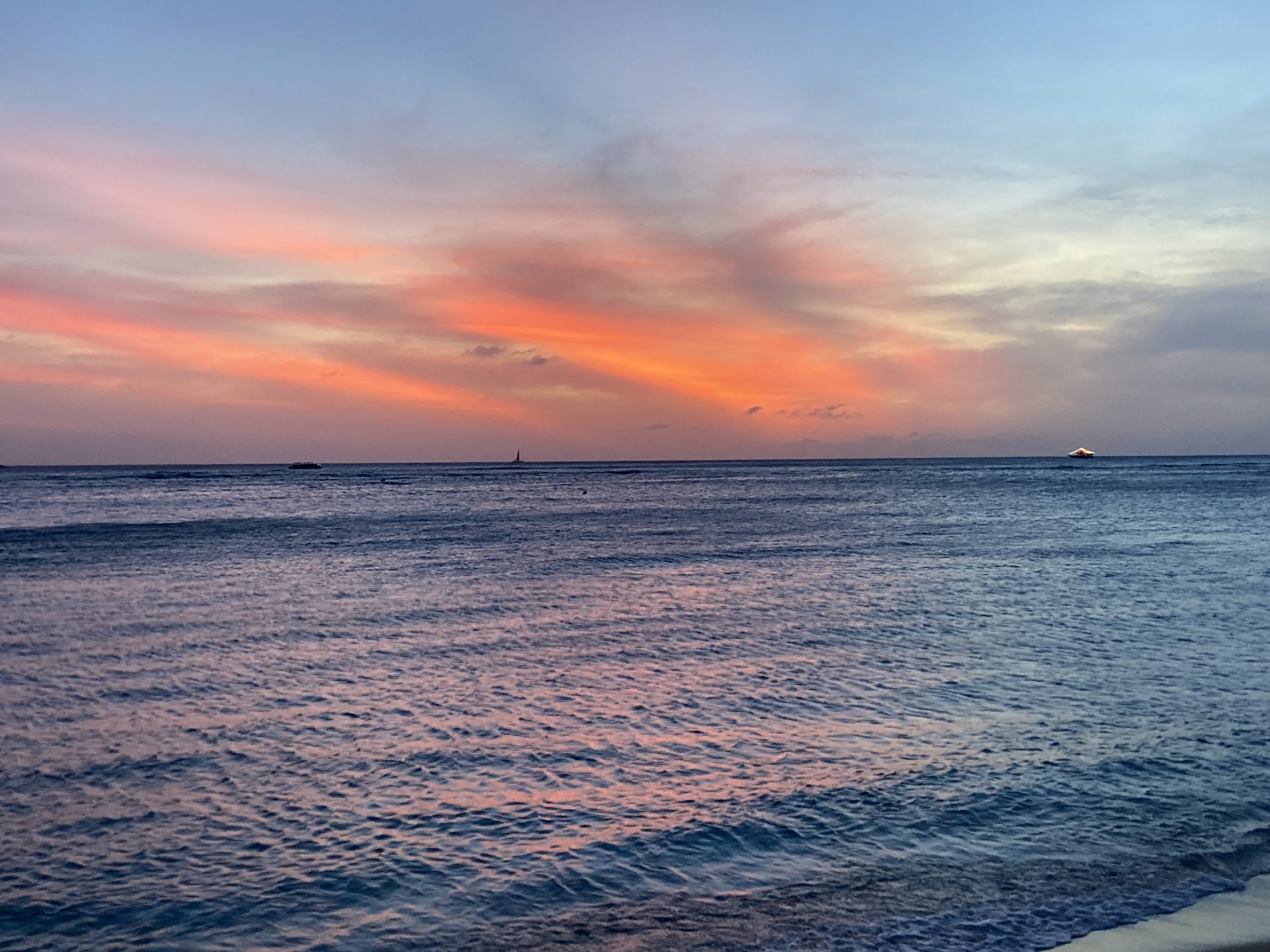


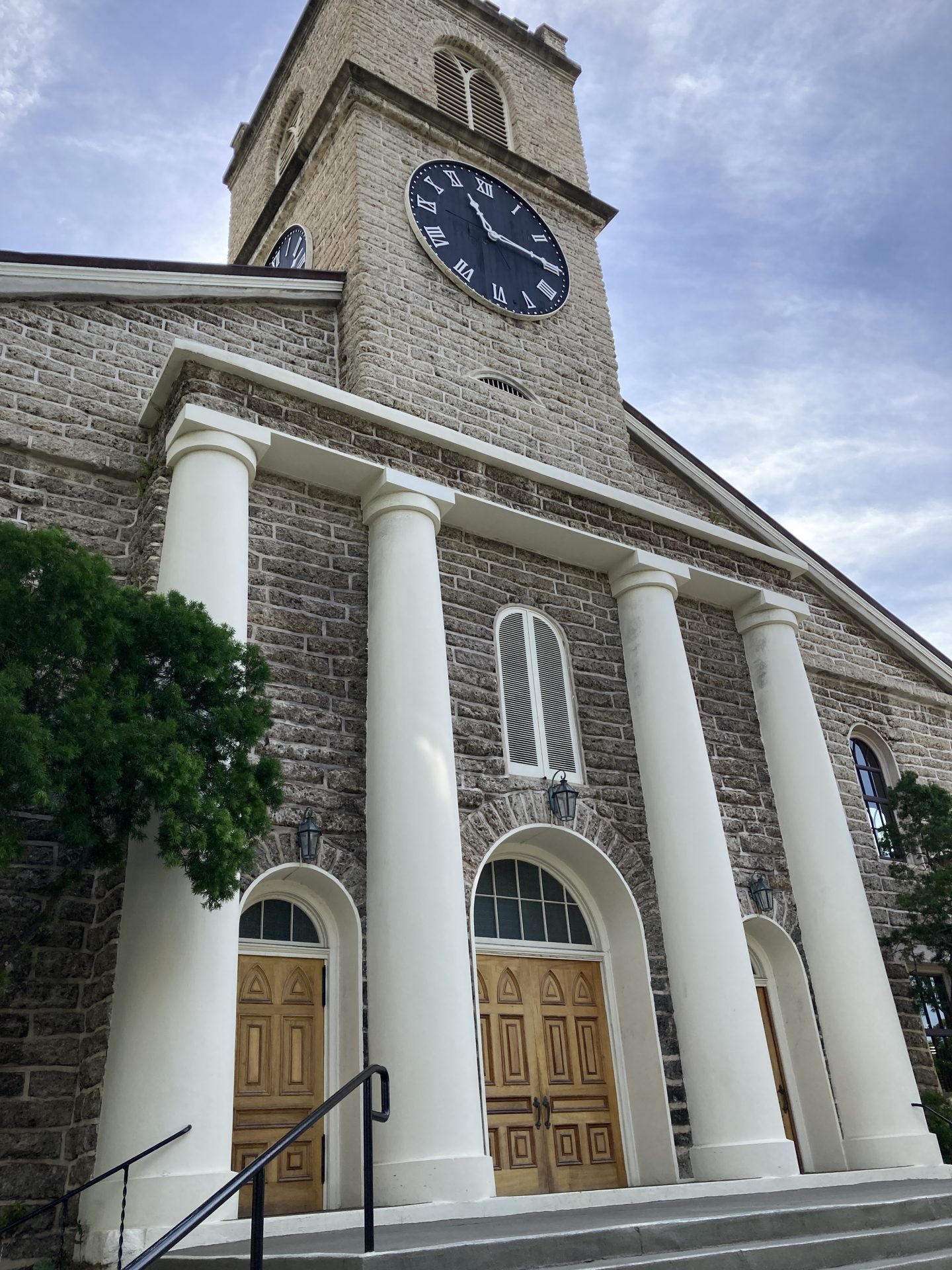


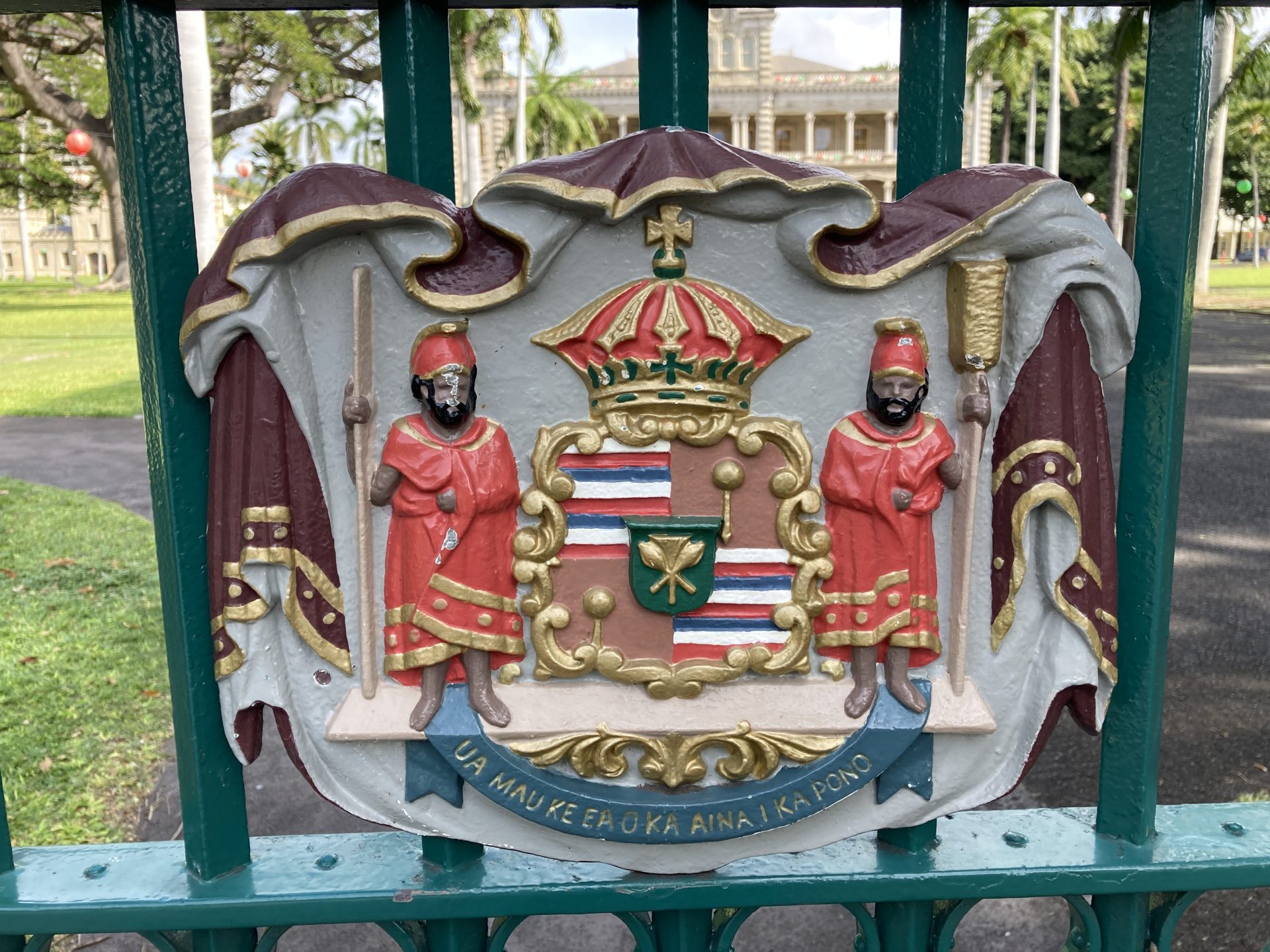


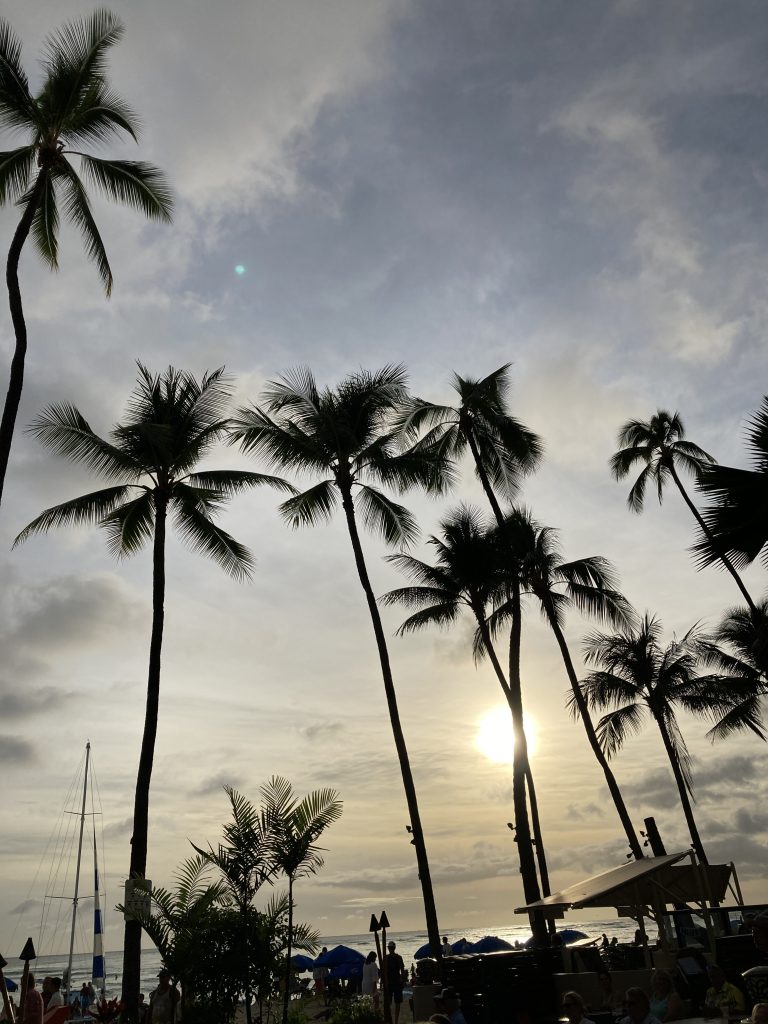
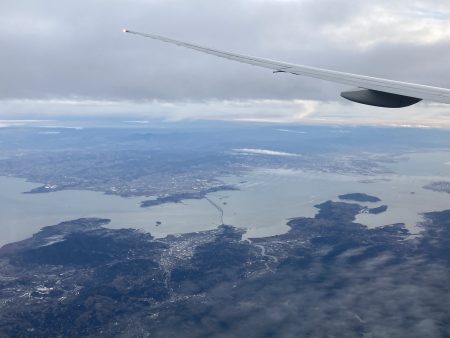

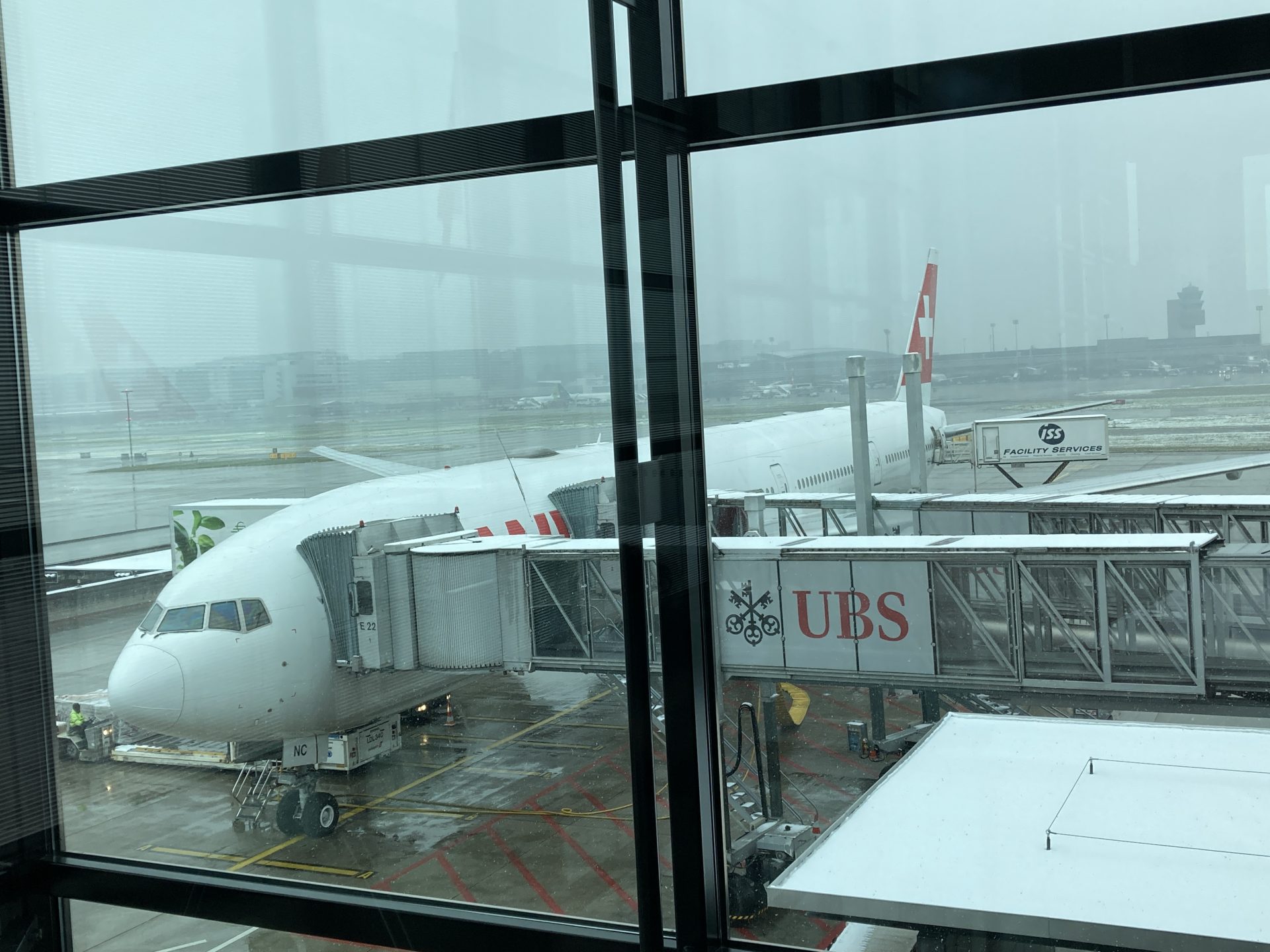






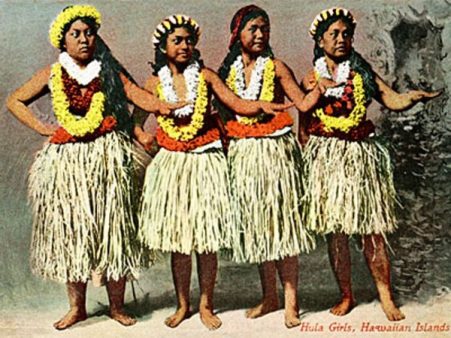


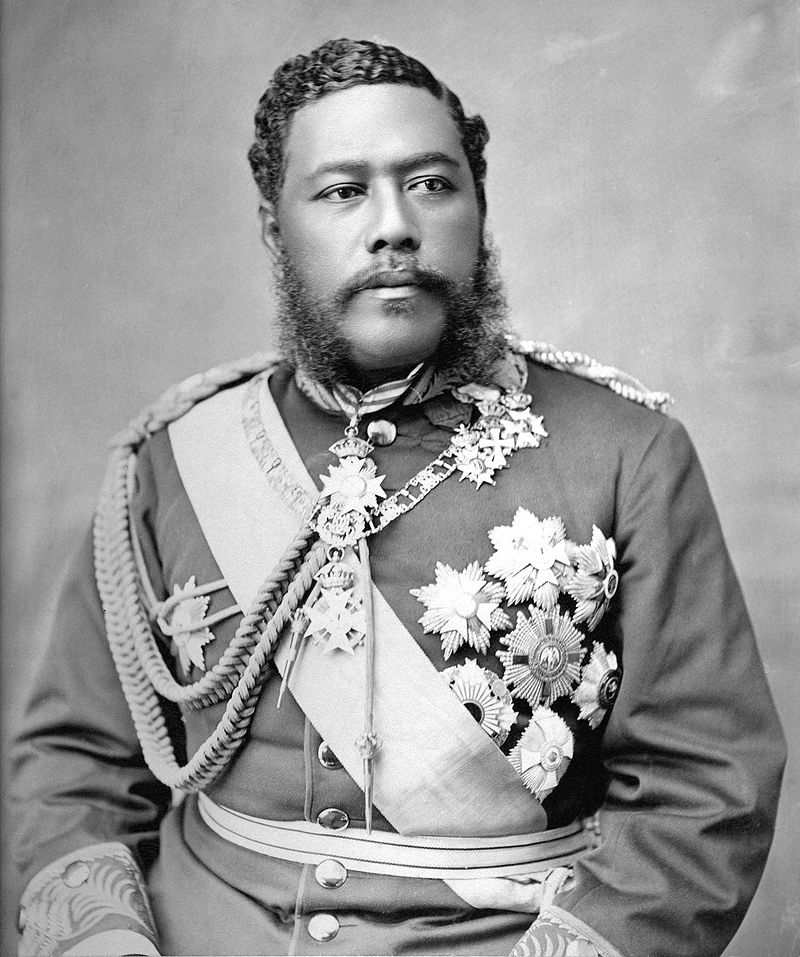


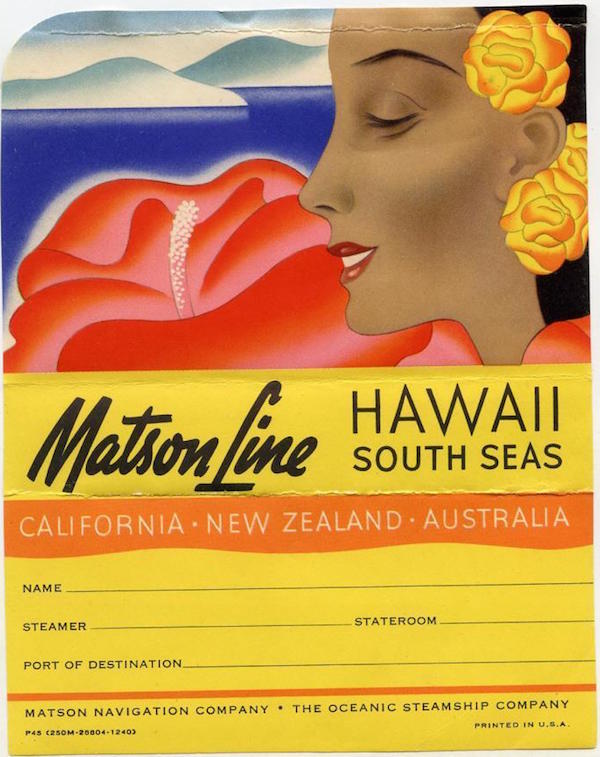


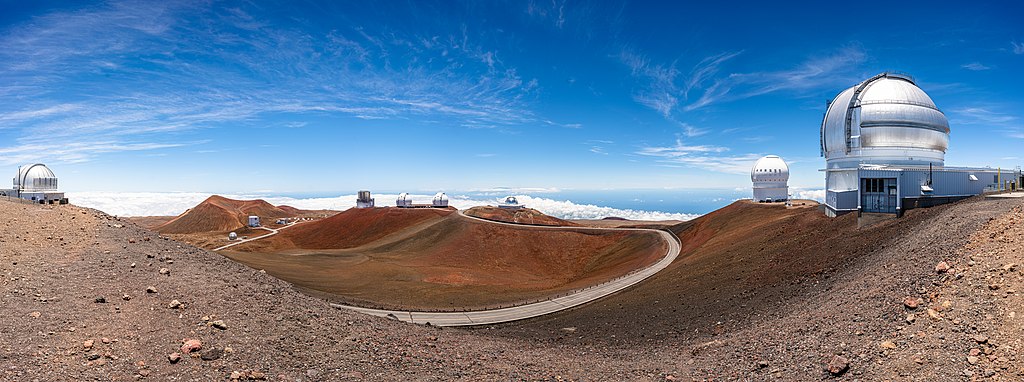

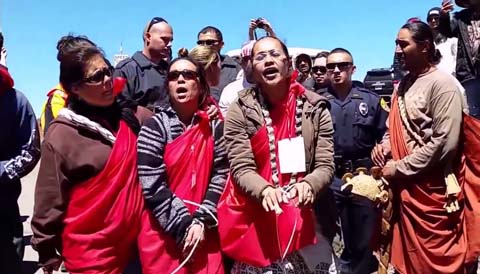
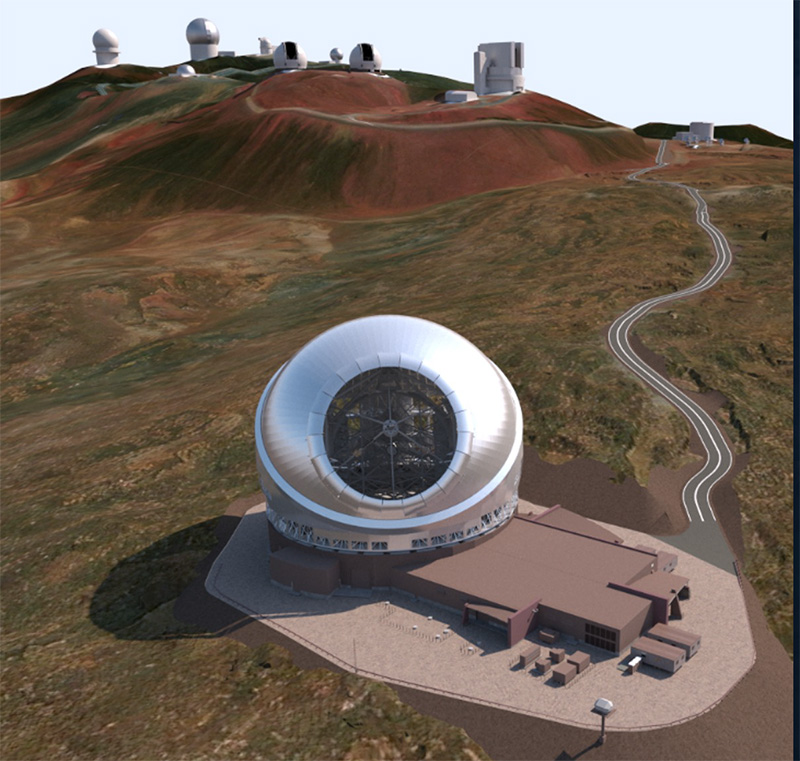
 Tales of Hawai'i