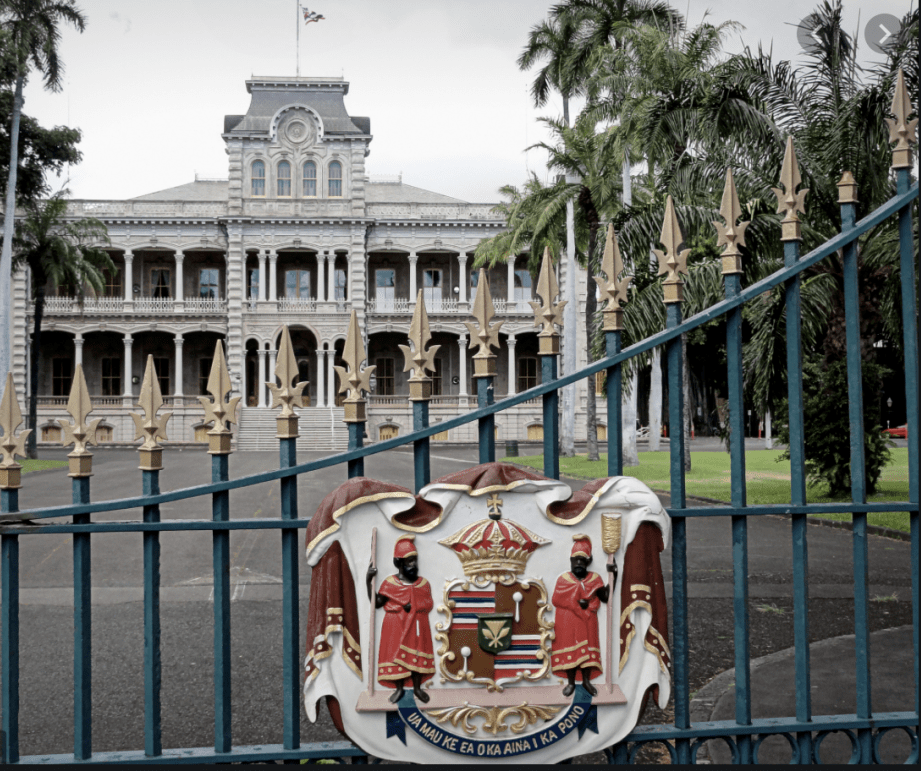
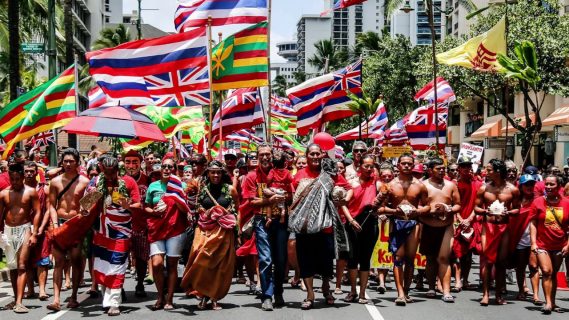
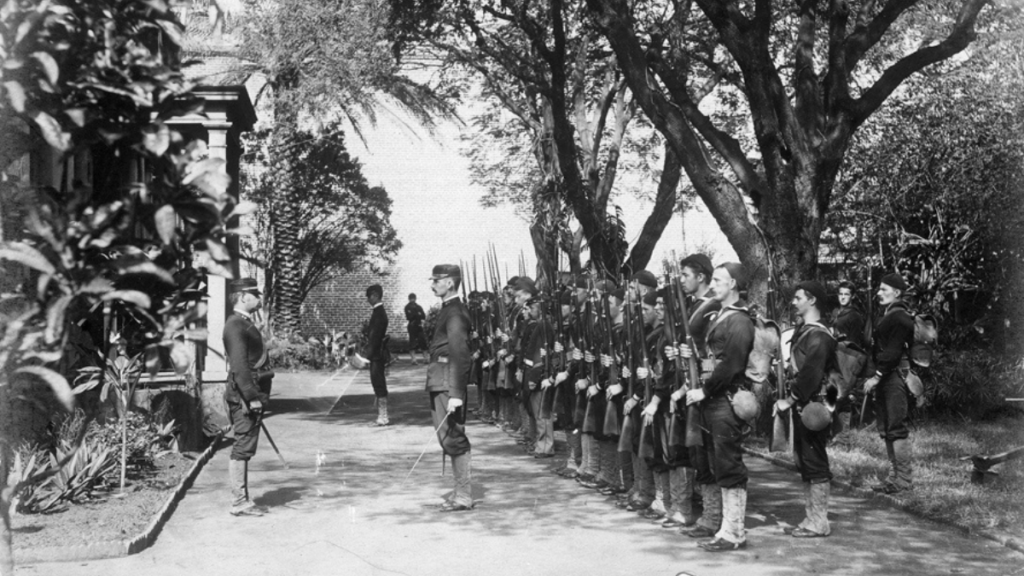
Hawaiian or American?

Written by Leon Siu; June 14,2025

Report expanded with media and Links by GeKo

On January 17, 1993 at the Onipaʻa rally protesting the 100th anniversary of the overthrow of the Hawaiian Kingdom, Haunani Kay Trask boldly declared, “We are not Americans! We are not Americans! We are not Americans! We are not Americans! We are Hawaiians! We will die as Hawaiians! We will never be Americans!” It was a shocking line-in-the-sand challenge, a head-on confrontation of our identity in crisis. Over the past 32 years, many have cone to understand and embrace our identity and our legacy.

I haven’t seen it yet, but friends say that in the Disney film, Lilo and Stich, when the CIA agent tells Lilo that their main job is protect Americans, either Liloʻs sister or their Grandmother says, “But we’re Americans too!” My friends said there was a noticeable groan from the audience. Some people booed. My friends said, that one line ruined the whole film for them. Apparently, the Disney writers (and local script consultants?) “didn’t get the memo” and completely missed that crucial distinction… We are not Americans!

The point is, 30 years ago, 20 years ago and even 10 years ago, the average Hawaii movie-goer would have completely missed that glaring error. But today, Lilo, a bright young Hawaiian tita, would have known she is not an American and would thanked the CIA agent for acknowledging that fact.

Having been in the movement from the early 70s, I am amazed how far we’ve come. I’ve noticed that the term “mainland” when referring to America, is being used less frequently. The McKinley statue (and the name of the school), are now regarded as offensive icons of the hewa (wrong, bad) of the U.S. presence in in Hawaii.

The “Overthrow”, the “Annexation” and “Statehood” are seen as illegal acts. Hawaii’s “relationship” with the U.S. is now called, “a prolonged illegal occupation”; and an “international criminal enterprise,”

Current problems like poverty, homelessness, are seen as the result of the the Illegal Occupation. Nation-to-nation (federal tribal recognition) is out, full independence is in.

What we see happening is not just reclaiming our true Hawaiian identity, it is decoupling from the fake American one of dependency and destruction. The direction for Hawaii is to decouple from the US and make our own way into the future.

Aloha ʻĀina, Kapu Aloha, Mālama ʻĀina, Kuleana, Pono, Aloha I Kekahi I Kekahi… These are not just awesome words and slogans. This is who we are… Hawaiians. These are the foundational principles of our nation rising.

— Aloha ʻĀina —

“Love of country is deep-seated in the breast of every Hawaiian, whatever his station.” — Queen Liliʻuokalani


More Infos:


Hawaiian – “Dead Language” or Learning Opportunity?

Leon Siu

Dec. 12, 2024

At the City Council meeting, Kapua Keliʻikoa Kamae of Waianae gave her testimony in ʻŌlelo Hawaiʻi (the Hawaiian Language), then repeated it in English. Right after, Kai Loring, a remote testifier from the North Shore, apparently had not heard the English version of Kapua’s testimony, complained: “I’m not sure what language it was. I’m assuming it was Hawaiian, and that is a dead language, so it would not work on translator.” [Actually, Hawaiian is on Google Translate and others]

Those in the audience immediately took umbrage at her remark; the internet exploded … and City Council members, to their credit, spoke out.

Councilwoman Esther Kiaʻaina quickly responded “It is not a dead language, it is very much alive…and if it wasn’t for the fact that those who helped to overthrow the Kingdom of Hawaiʻi banned our language, we would be speaking only Hawaiian now!” Councilwoman Andria Tupola said her children attend a Hawaiian immersion school and her family speaks Hawaiian in their home. Council Chair, Tommy Waters, reminded everyone that Hawaiian is an official language of the State of Hawaiʻi.

The public reaction shows how far we have come from 40 years ago when the first Punana Leo program opened quietly in Kekaha, Kauaʻi. At the time, the Hawaiian language was indeed on the brink of extinction with only a few hundred native speakers left. But now, there are well over 24,000 who are fluent in ʻŌlelo Hawaiʻi. And that number is growing every year.

Much has transpired especially over the past decade to assert Hawaiian as an official language. Hawaiian is now used in the courts, government proceedings (like City Council and neighborhood boards meetings), official government forms and documents (like taxes, permits, driver’s licenses), ballots, ATM machines, announcements at the airport, etc., etc.

Some of you may remember that 11 years ago, Rep. Faye Hanohano from Puna was reprimanded by the State House of Representatives for speaking Hawaiian at a session of the House. The only one to speak up in defense of Hanohano’s right to speak in Hawaiian at the legislature was Rep. Gene Ward of Hawaiʻi Kai. Since that incident, the legislature has changed it’s tune. Hawaiian may be spoken on the floor, in public hearings and ceremonial proceedings at the State Legislature.

In many of the confrontations over Aloha ʻĀina issues, Hawaiians are choosing to speak Hawaiian at press conferences, public rallies and court appearances. The point is not that this is a legal right, ʻŌlelo Hawaiʻi is a powerful means of expressing who we are.

ʻŌlelo Hawaiʻi embodies our ancestral roots — our origins, cosmology, stories, knowledge, culture, traditions, perceptions, understandings, values and principles that distinguishes who we are as a people. The language is not only a treasure from the past, more importantly, it is our blueprint for the future.
— Aloha ʻĀina —


Link

Why is France holding onto New Caledonia — a Pacific territory on the other side of the world?


A white van flying the Kanak flag drives past a roadside tent flying the French tricolour flag.

Views on independence from France are split in New Caledonia. (AFP: Sebastien Bozon)

Half a world away from France, a city sometimes called „Paris in the Pacific“ is counting the cost of violent unrest.

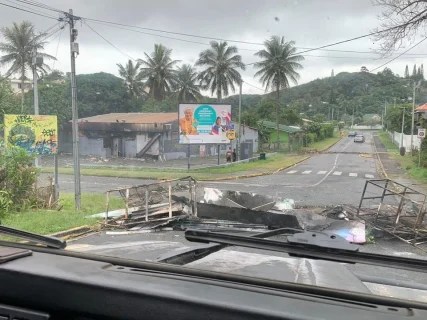
Months of riots and blockades shook Nouméa, the capital of New Caledonia, earlier this year, causing 13 deaths and damaging hundreds of businesses.

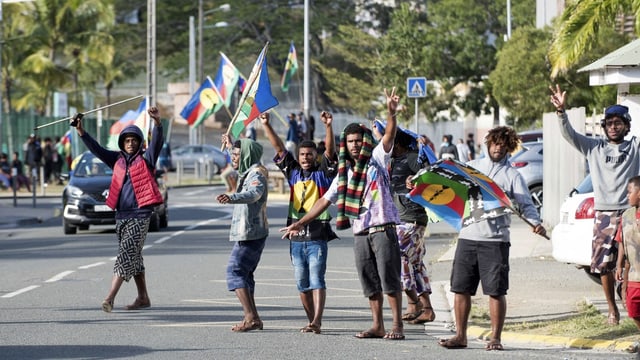
It was the latest chapter in a decades-old struggle between people who want independence from France and those who want to remain a French territory.

Why France won’t give up its Pacific island paradise, New Caledonia | ABC News

France already spends about 1.5 billion euros ($2.4 billion) a year administering the territory and it’s expected to cost another 4 billion euros ($6.4 billion) to repair the damage.

And experts say the crisis has come at a major reputational cost for France in the region.

„It’s reminded neighbouring countries that France is still a colonial power a quarter of the way through the 21st century,“ journalist Nic Maclellan, who has covered the territory for decades, said.

Most of New Caledonia’s Pacific neighbours gained independence from colonial powers in the 1970s and ’80s.

So why is France holding onto the territory?

What’s in it for France?

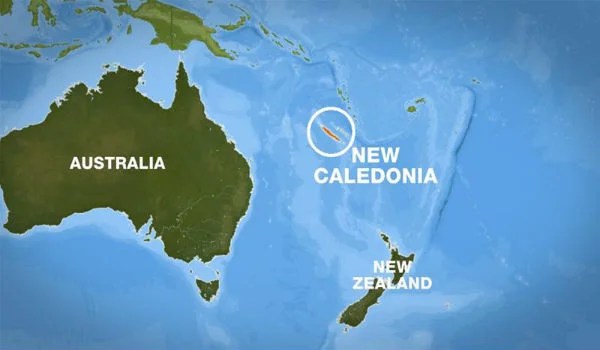
More than 150 years after it took over New Caledonia, the territory — about 1,500 kilometres from Queensland’s coast — remains a valuable possession for France.

That’s partly because of what lies underground and in its oceans, experts say.

New Caledonia has large reserves of nickel — a precious commodity for renewable technologies and something President Emmanuel Macron raised on a visit last year.

„He talked about nickel not only as wealth for New Caledonians but as a vital strategic resource for France and for Europe,“ Mr Maclellan said.

A tall industrial building of metal pipes and chutes.

New Caledonia’s nickel industry, including its operations at Koniambo Nickel SAS Vavouto (pictured), remain an important part of its economy despite a recent downturn. (AFP: Delphine Mayeur)

France’s overseas territories also give it a massive exclusive economic zone (EEZ) — ocean beyond its own immediate seas where it can explore and use maritime resources.

About 60 per cent of its EEZ is in the Pacific, including about 1.4 million square kilometres of ocean around New Caledonia.

„At a time where people talk of the blue economy, of seabed resources, deep sea oil and gas, fisheries, marine biodiversity — that’s an incredible resource to control,“ Mr Maclellan said.

A map highlighting the French territories in the Pacific: New Caledonia, Wallis-and-Futuna, French Polynesia and Clipperton.

France’s Pacific territories help expand its exclusive economic zone well beyond Europe. (ABC News: Jarrod Fankhauser)

Experts say France’s Pacific territories also offer something that can’t be underestimated — prestige.

„For centuries, France has always been obsessed with its international status, or what it refers to as its rank,“ Australian National University researcher in French foreign policy Eglantine Staunton said.

„It constantly tries to promote the idea that France is more than a middle-sized power.“

And in recent years under Mr Macron’s presidency, the European nation has turned its gaze on the Indian and Pacific oceans.

„[The French government has] argued that the growing competition between China and the United States, but also the economic growth in the region for the past two decades, and its vulnerability to environmental issues in climate change, make it an area to prioritise,“ Dr Staunton said.

Two men in blue suits and with woven colourful garlands, and a man in traditional Vanuatu chiefly dress.

Emmanuel Macron, pictured on a visit to Vanuatu in July 2023, has tried to build France’s status in the region. (ABC News: Doug Dingwall)

New Caledonia is a hub for the French military in the Pacific. It hosts a naval base home to small and medium vessels, surveillance and transport aircraft, and helicopters with soldiers mostly deployed on rotations from France.

Dr Staunton said France wanted to be seen as a „balancing power“ for the region amid growing competition between China and the US, one that promotes a less confrontational approach to containing China’s ambitions.

„France shares the US’s will to contain China’s influence in the region, but it wants to promote a different pathway than the one proposed by the US and now AUKUS,“ Dr Staunton said.

France released its „Indo-Pacific Strategy“ in 2018, saying it wanted to keep the region „open and inclusive, free of all forms of coercion and founded on multilateralism and the respect of international law“.

A grey navy ship on teal coloured waters.

The Pointe Chaleix naval base in Nouméa helps give France a military presence in the Pacific. (AFP: Delphine Mayeur / Hans Lucas)

As France became more involved with the region, its Pacific territories had a special importance, Dr Staunton said.

„New Caledonia is key to France’s argument that it is an Indo-Pacific nation and a key actor in the region,“ she said.

What do New Caledonians want?

France’s ambassador in the Pacific, Véronique Roger-Lacan, said it was not a question of France holding onto New Caledonia.

She said overseas territories were choosing to stay part of France.

A woman in a blue shirt smiling.

French ambassador to the Pacific, Véronique Roger-Lacan. (X: Véronique Roger-Lacan)

„There is a strong attachment to the French Republic, so this is what the Australian public should have in mind. They should reverse the reasoning,“ Ms Roger-Lacan said.

„It’s not that France is hanging onto those territories, but it’s the fact that there are lots of people — actually the majority — who [want to be] in the French Republic.“

Nicole George, a University of Queensland researcher on the Pacific Islands who was in Nouméa when unrest broke out in May, said many people in New Caledonia identified as French.

„The idea that France would give up this territory is hard for a big part of the population to accept,“ she said.

Views on independence are split in New Caledonia.

A large group of demonstrators parade waving French tricolour flags.

A large part of New Caledonia’s population wants to stay in the French Republic. (AFP: Theo Rouby)

Today, under the Nouméa Accord reached in 1998, New Caledonia has a locally elected government that controls areas like health, tourism, agriculture and fisheries, and both primary and secondary education.

But France still has power over defence, foreign policy, the justice system, currency, and tertiary education.

Most in New Caledonia’s Indigenous Kanak community want that to change.

A woman surrounded by other pro-independence demonstrators holds up a Kanak flag behind her back.

The pro-independence movement in New Caledonia has existed since the 1970s. (AFP: Delphine Mayeur)

„We’ve been pushing for independence for New Caledonia, so that we are able to manage our own affairs, just like in the other independent countries,“ Party of Kanak Liberation representative Jimmy Naouna said.

Another reason for the independence push in New Caledonia is inequality, experts say.

While it has one of the highest GDPs per capita in the Pacific, there are large wealth gaps in the territory.

„That was shown during the crisis in May and June, where young people and not so young, came out of the squatter settlements to attack supermarkets, to burn down the Porsche dealership in Nouméa, to really show that the economic, social, political gulf between communities is very deep,“ Mr Maclellan said.

Smoke rises over city of Noumea, in New Caledonia.

There were both political and economic reasons for the riots that engulfed Nouméa. (AP Photo: Nicolas Job)

The divide over independence was reflected over three referendums on the issue.

In 2018, 57 per cent rejected independence, and in 2020 that shrunk to 53 per cent.

But the third referendum in 2021 remains controversial.

Masked voters wait in lines.

The third referendum went ahead after COVID-19 swept through New Caledonia in 2021. (AFP: Theo Rouby)

Pro-independence groups requested a delay while the Kanak community mourned people who died from COVID.

When France refused, pro-independence supporters boycotted and the referendum returned a 96.5 per cent „no“ vote — a result the independence movement rejected.

The parties have since been unable to agree on a path forward.

Tensions radically escalated when French lawmakers tried to reform the electoral system in May.

For years, only families who had lived in New Caledonia before 1998 could vote in local elections, but Paris wanted to scrap those restrictions, which would add more non-Kanak people to voting rolls.

Independence supporters feared that would skew any future referendum, and people took to the streets.

Deadly riots in New Caledonia trigger a state of emergency.

„Many independence supporters thought we will now never, ever win … because the vote will be immediately slanted towards supporters of continued links with France,“ University of Melbourne expert in New Caledonian history and politics Professor Simon Batterbury said.

The French government has dropped the reforms and after months of violence, there’s a fragile calm now in New Caledonia.

What’s next?

The parties are expected to resume talks over the territory’s political status.

But negotiations will be fraught with uncertainty.

Mr Naouna, from the Party of Kanak Liberation, said it was just a matter of time before New Caledonia achieved independence.

„We are in an irreversible process now of decolonisation,“ he said.

„It’s just a matter of finding the right political agreement between parties in New Caledonia and the French state.“

His party wants to negotiate a fourth referendum on independence to be held in the next five to 10 years.

On the anti-independence side, some argue there should be no pathway to independence after the three referendums.

MS Roger-Lacan said as parties returned to negotiations, it would be up to New Caledonians to agree on a way forward.

„It is not up to the French authorities, it is up to New Caledonians to identify what they want together, what they can agree on,“ she said.

„They have to find something. If it is independence … it cannot be something that will be imposed on people that don’t want it. There is some compromise to be identified somewhere by all of them.“

Mr Maclellan said local elections had been delayed until 2025, giving about a year to resolve the situation.

„One thing that’s clear, there can be no solution without the Indigenous Kanak people,“ he said.

„And the younger generation has shown over the last six months that they still want a pathway towards independence and sovereignty.

„Can that be done within the French Republic? Time will tell.“

As parties prepare to meet, some experts say France’s status in the Pacific is at stake.

Dr Staunton said France should „proceed extremely carefully“ on the matter of New Caledonia.

Police blocking a road with their cars direct traffic.

France deployed security personnel this year in response to the unrest that broke out in May. (AFP: Theo Rouby)

„There is still a lot of distrust in the region over France’s colonial past … and it is now more important than ever to act as a responsible power by fulfilling France’s responsibility in terms of decolonisation,“ she said.

„Failing to do so will not only permanently endanger France’s relationship with territories such as New Caledonia, it risks derailing its entire Indo-Pacific Strategy.

„France indeed cannot claim to be an Indo-Pacific power if it does not listen to Indigenous communities.“

——————————————————————————

Posted , updated 

ABC – News

This service may include material from Agence France-Presse (AFP), APTN, Reuters, AAP, CNN and the BBC World Service which is copyright and cannot be reproduced.

AEST = Australian Eastern Standard Time which is 10 hours ahead of GMT (Greenwich Mean Time)


The Chagos-Hawaii Connection

October 26, 2024

Leon Siu

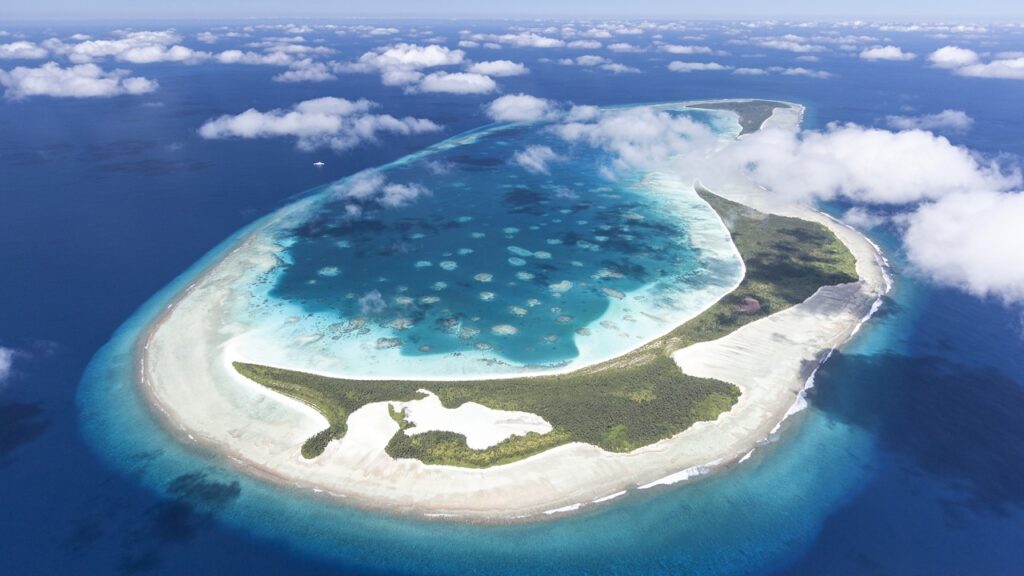
An international case we have been tracking for years is the dispute between the United Kingdom and the Republic of Mauritius over the Chagos Islands. It has a parallel to our dispute with the United States… the manipulation of the United Nations’ decolonization process by the “administrative power” (the colonial or occupying nation) to manufacture an outcome in its favor. 
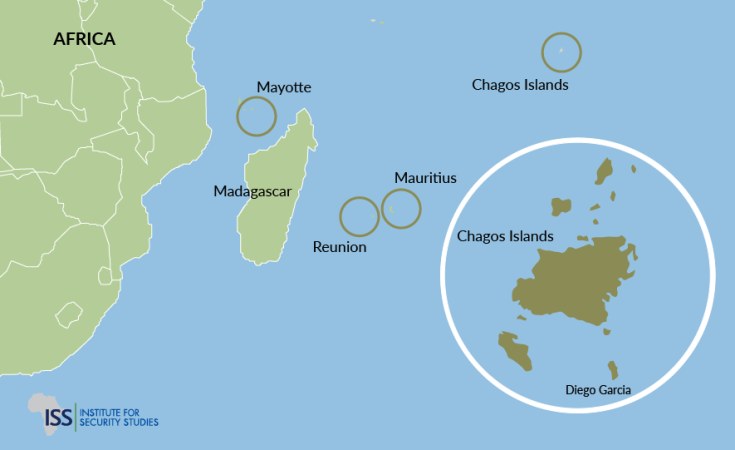
The Chagos Islands is an archipelago that was part of Mauritius, a colony of the UK in the Indian Ocean. When Mauritius gained its independence in 1968 and became the Republic of Mauritius, the UK arbitrarily withheld the Chagos Islands from the new nation saying it was needed for defense purposes. The UK forcibly evacuated the inhabitants (a couple of thousand people) from all the Chagos Islands, then leased the largest island, Diego Garcia, to the United States.
 
The US then built a huge Air Force base on Diego Garcia to assert the United States’ military power in the region, especially in the Middle East. Thus, Diego Garcia was the key forward base for the US Air Force in the Gulf War, the Iraqi War, the Afghan War, the war against al-Qaeda, the war against Isis, and numerous other conflicts in the region. And so it remains…
 
After years, of complaining to the UK and international bodies such as the UN about the illegal withholding of the Chagos Islands from their nation, Mauritius filed a complaint with the International Court of Justice (the ICJ) located at The Hague, Netherlands, asking for an Advisory Opinion from the ICJ regarding the matter.
 
In a 2019 landmark decision, the ICJ opined that the withholding of the Chagos Islands from the Republic of Mauritius, was in violation of the UN’s decolonization procedure and illegal. The ICJ said the United Kingdom had an international obligation to return the Chagos Islands to Mauritius.

When that news broke there was much celebration in Mauritius and among the Chagos descendants living in exile, and those of us hoping for this just and favorable outcome. But the UK made it known it considered the ICJ Opinion as non-binding, and it was not going to return Chagos to Mauritius.
 
This brings up a primary weakness of the International Court of Justice and the World Court system. Many of their rulings are either non-binding or unenforceable. Thus, countries, especially powerful ones, simply ignore rulings they think are bothersome.
 
It looked like this was going to be one of those times. But, amazingly, in August 2024, five years after the ICJ opinion, to their credit, the UK announced in that it would indeed return the Chagos Islands to Mauritius. Apparently, an agreement was reached to allow the UK/US base at Diego Garcia to remain. And plans are being made for Chagosians to return.
 
What is significant to us in Hawaii, is that the Chagos case was successfully resolved, setting a clear precedence for correcting an error made in a botched UN decolonization process. Thus, because Hawaii’s case is also one of a botched UN decolonization process (the “Statehood Plebiscite”) we could leverage this international precedence to resolve our situation as well.
And so could Alaska… and perhaps, West Papua.

 — Aloha ʻĀina —


Video’s


A Pacific Celebration

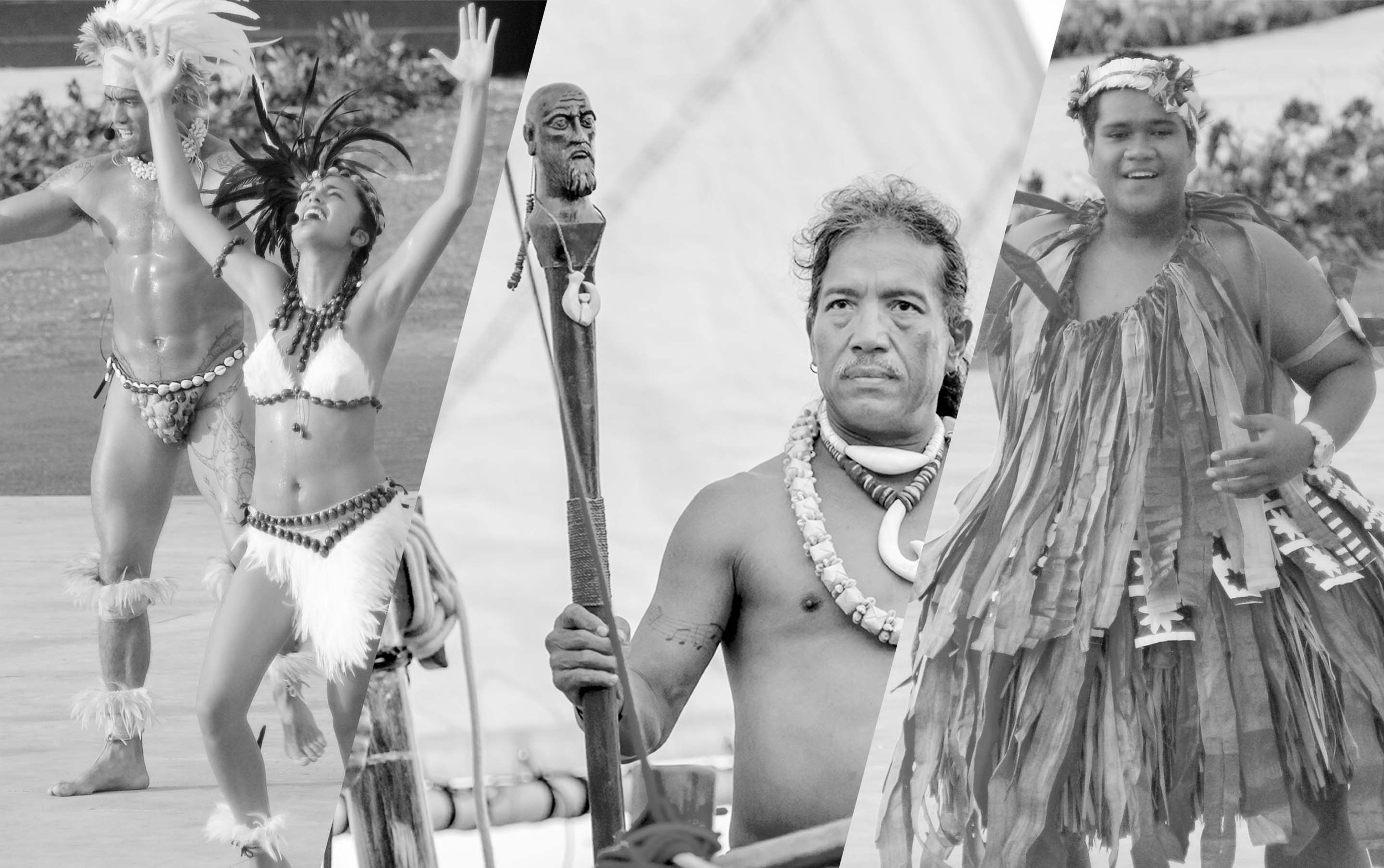
Hawaii is currently hosting a massive ten-day event called the Pacific Festival of the Arts and Culture (FestPac), bringing together delegations of artists, dancers, musicians and cultural practitioners from 28 Pacific Island nations celebrating the peoples of Moananuiakea (the Pacific Islands), Polynesians, Micronesians, Melanesians and Austronesians.

The prelude to FestPac was the gathering of the famous voyaging canoe, Hōkūleʻa, and dozens of her offspring since being launched at Kualoa 49 years ago. Just as ‘a rising tide lifts all boats’ Hōkūleʻa had a profound impact in awakening not only the voyaging traditions but raising up the strength, skills, spirit and dignity of peoples of the Pacific. That was evident as thousands gathered to welcome and celebrate the crews and builders of these amazing vessels, like those that our ancestors used to shrink the vast reaches of their watery home.

On June 6, the opening ceremonies of FestPac welcomed the most amazing parade of the myriad faces, smiles, sounds, dances and regalia of our Pacific Islands ʻOhana (family).

The festival continues for the next 7 days at the Hawaii Convention Center with presentations, seminars, and discussions of the issues facing Pasifika. Also, in the exhibition hall there is a fantastical village featuring the cultures of the various islands. To register to attend this event go to: www.FestPacHawaii.org

This is the 13th FestPac, and the first time it is being hosted by Hawaii… that is, the “State of Hawaii, USA”. Governor Josh Green is the official host. The huge budget for this massive event comes from the State and its agencies, the US Federal government, US non-profit organizations, American businesses, etc.

The organizers of FestPac fastidiously steered clear of any mention that this is really the Kingdom of the Hawaiian Islands, not the State of Hawaii, USA. As the U.S. presumes to be the gatekeeper to determine who could come and go from our country (the Hawaiian Kingdom), all “foreign” delegations, and participants had to go through stringent U.S. Customs, FBI and Homeland Security clearance to enter the “US State of Hawaii”.

It’s okay, though, because now we have a great template for the next time we have an international celebration of such magnitude — the celebration of the restoration of the Hawaiian Kingdom.

— Aloha ʻĀina —

“Love of country is deep-seated in the breast of every Hawaiian, whatever his station.” — Queen Liliʻuokalani


more Videos and Information:


More Videos about the FestPAC you will find on my Youtube-Channel „Tales of Hawaii“ under „Hawaii Culture“

Webside: FestPAC

New Caledonia in turmoil – state of emergency

Serious unrest in French overseas territory

Indigenous independence supporters are resisting electoral law reform that would give immigrant French people more say.

Contribution from SRF; from Rendez-vous from May 15, 2024 / updated May 16, 2024

Further serious unrest in French overseas territory

Separatist riots broke out in New Caledonia for the third night in a row. So far there have been four deaths.

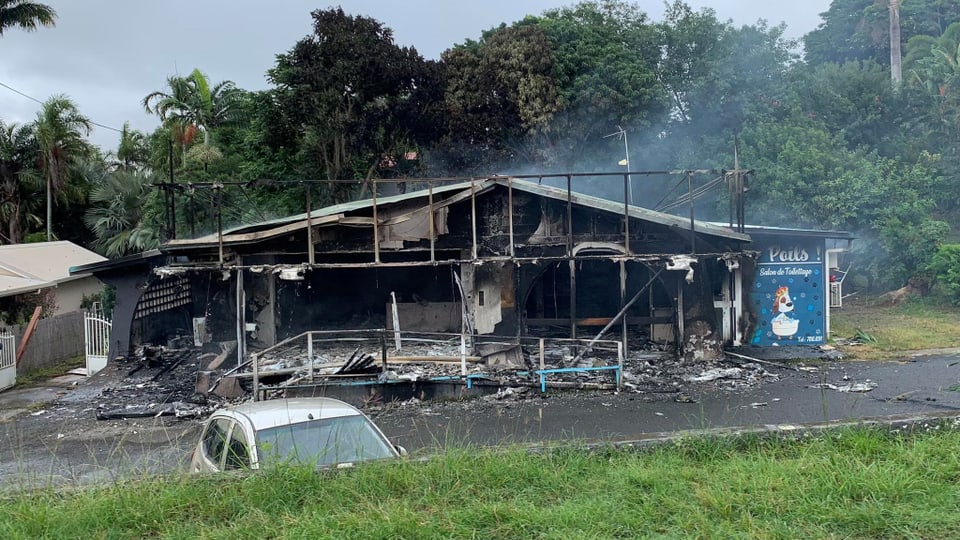
According to official information, a police officer was also killed in the unrest. Hundreds more people were injured. Local media published photos and videos of looted and completely destroyed supermarkets and gas stations. Since the beginning of the week, independence supporters have repeatedly set fire to shops and cars.

France subsequently declared a state of emergency, which has been in effect since yesterday evening. The state of emergency makes it easier to impose curfews and bans on demonstrations and can give the police and judiciary expanded powers.

The acts of violence are not tolerable and the state will take relentless action to restore order, it was said from the Élysée Palace. Macron called for a resumption of political dialogue and wanted to quickly receive the Caledonian delegations in Paris.

Against electoral law reform from Paris

The separatists in New Caledonia are angry about a planned constitutional reform by the government in Paris. It would give thousands of French voters the right to vote in the island state in the South Pacific with a total of around 270,000 inhabitants.

So far, only those people who lived in New Caledonia in 1968 are entitled to vote. Everyone who has lived there for at least ten years should now have the right to vote. The limited right to vote in New Caledonia was introduced in 1998 – at the time a demand of the Kanak people in New Caledonia, as the members of the South Pacific Kanak people are called.

Independence rejected three times

New Caledonia voted on independence from France three times between 2018 and 2021 – and always rejected it. However, the last of the three votes was boycotted by the Kanaks because it took place in the middle of the pandemic and the date violated Kanak customs.

For Paris, New Caledonia’s independence was no longer an issue after the three votes. The overseas territory should now only receive a certain degree of autonomy within the French state.

And because the restricted voting rights in New Caledonia violate the European Convention on Human Rights, the French government wants all residents to be able to have a say in politics in the future.

Kanaks fear loss of power

Keystone/Mathurin Derel

“The escalation of violence shows that many Kanaks do not accept the result of the third vote on independence in 2021,” says SRF France correspondent Daniel Voll. The government in Paris now probably has to go over the books again. And in fact, President Emmanuel Macron wants the two political camps in New Caledonia to look for a new solution. “That will be very difficult,” says Voll.

In addition, the indigenous people fear that the planned social equalization reforms of the incumbent government in New Caledonia – which consists of a coalition of separatists – could come to nothing if the people of French origin gain more political weight. “The fear of losing political weight again makes the Kanaks less willing to compromise,” the correspondent notes.

Buildings burned, airport closed

Numerous buildings and cars in the capital Nouméa went up in flames. The main airport, La Tontouta, schools and public facilities remain closed until further notice. Long queues formed in front of many shops due to fears of food shortages.

Abgebranntes Gebäude mit Rauch und Ruinen, umgeben von Bäumen.
In der Hauptstadt Nouméa gingen zahlreiche Gebäude in Flammen auf. Reuters/Lilou Garrido

Interior Minister Darmanin made it clear that one of the people was killed by a bullet, but not by a police officer. The exact circumstances would have to be clarified. There is no information available about the second death.

Police stations attacked with axes

“There should be no violence in a democracy. There must be absolute calm,” demanded Darmanin. He spoke of attacks on police stations with axes and heavy ammunition. According to reports from the broadcaster 1ère Nouvelle-Calédonie, at least 60 police officers were injured. Accordingly, 130 people were arrested.

Rendez-vous, May 15, 2024, 12:30 p.m.; sda/srf/snep;lehl


More Inos

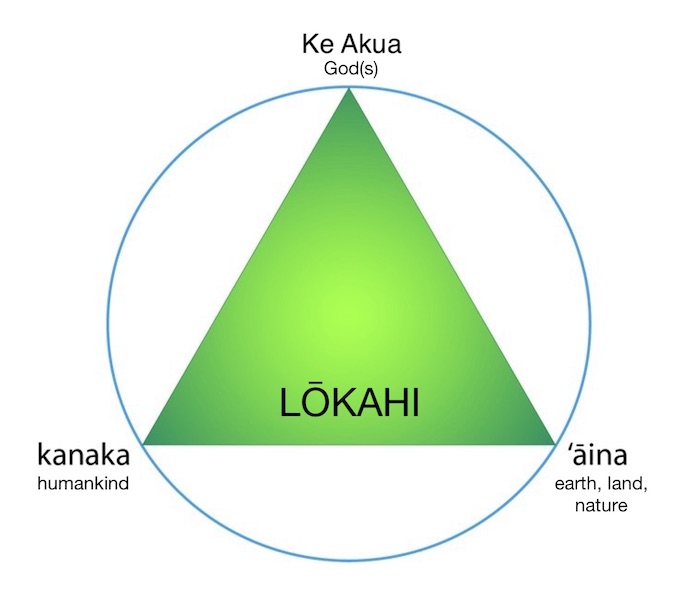
Mahalo for joining us in lokahi for Maui

 Last month, we shared an acronym relating to the meaning of aloha. Each of these words are values that make aloha possible–they are at the root of the aloha you have in your heart for Maui.

          Akahai – kindness expressed with tenderness

          Lokahi unity

          Oluolu

          Ha‘aha‘a

          Ahonui

We started with akahai, and today, I want to share the meaning of lokahi, which means ‘unity.’ It is something we felt when you and thousands of others from around the world chose to support Maui after the wildfires.

We also saw a powerful expression of unity at the Lele Aloha Hoʻūlu Lahaina Unity March on Maui on January 20, 2024, when the people of Maui came together to love and support Lahaina and the healing and recovery of those affected by the fires.

Archie Kalepa, a Lahaina community leader and the founder of Lele Aloha, a Maui Strong Fund partner that organized the march, addressed the 4,000 plus attendees with an inspiring message:

“What is required of us now? In the aftermath, to continue to walk forward, there are many answers that we do not have today. But I know this deep in my na‘au: we will not get there alone. We need the kind of strength and the kind of power that we can only find in one another. In unity.”

Here are some scenes from the Lele Aloha Hoʻūlu Lahaina Unity March.

Mahalo for recognizing the needs in Maui and for your kindness and generosity to support the healing, recovery, and resilience of our community. Mahalo for joining us in lokahi.

Me ke aloha (with aloha),

Mary Leong Saunders
Vice President of Philanthropy
Hawai‘i Community Foundation

The Roadblock at the UN…

From Leon Siu , March 3th, 2024
The biggest obstacle to reinstating Hawaii as an independent country is UNGA Resolution 1469, adopted by the United Nations General Assembly on December 12, 1959. Resolution 1469 accepted a report it received from the United States that the people of Hawaii had voted to become the 50th State of the United States. Even though we know now that the “statehood referendum” was a complete sham, UNGA Resolution 1469 still stands, blocking the way to a free Hawaii.

UNGA Resolution 1469 gives international legitimacy to the United States’ claim of dominion and jurisdiction over the Hawaiian Islands. It stands today as the official position of the UN and its 193 member countries, effectively insulating the United States and the State of Hawaii, from legal challenges, liability and accountability for otherwise clearly unlawful acts against the Hawaiian nation since 1893.

When lawsuits are brought by Hawaiians against the US for the illegal overthrow or the illegal annexation or the illegal land grabs –– anything that argues the US’ unlawful jurisdiction –– the courts dismiss the cases by citing, “this is not a legal question, it’s a political question”. Usually left unsaid is… “and the political question has been settled”.

So, what settled the political question of Hawaii’s political status? The 1959 “statehood plebiscite”, which was actually a veiled and skewed UN referendum for decolonization. When the US reported to the UN that the people of Hawaii exercised their right to self-determination and overwhelmingly chose to join the US, the UN, without verifying whether or not the US report was truthful, extended its approval by adopting Resolution 1469, thus validating that the political question was settled: Hawaii had been absorbed into the United States. That is where we are stuck, and will remain stuck, unless Resolution 1469 is removed.

At the UN in New York (where this issue of Ke Aupuni Update is being written) we have been developing a strategy to remove the obstacle that is Resolution 1469. How? We are asking members of the UN General Assembly who are sympathetic to our cause, to submit a resolution to the General Assembly calling for a procedural review of the conditions and circumstances that led to their adoption of Resolution 1469 in 1959. It is simply a procedural review of an action by the UN, not a direct challenge to the UN or the US.

However, conducting such a review will quickly uncover the blatant fraud by the U.S. to con the UN General Assembly into erroneously adopting Resolution 1469. Upon discovering that error and realizing they are complicit in fraud and the prolonged illegal occupation of a peaceful and friendly sovereign nation (Hawaii), the UN General Assembly would then be categorically obligated to annul that flawed and offending resolution.

This would cause a 180-degree turnaround. Without UNGA Resolution 1469 to lean on, the United States’ claim to Hawaii collapses, and by default, the Hawaiian Kingdom, the sovereign nation in continuity, springs forward to be restored as the lawful governing entity over the lands and people of the Hawaiian Islands.

The removal of Resolution 1469 will also open the United States to legal challenges and judgements for the 131 years of criminal acts of piracy, pillaging and crimes against humanity, which would result in the United States not only withdrawing from our country, but providing massive restitution for crimes and damages.

But most importantly, it will mean the return of control of the assets, operations and governance of the Hawaiian Islands to the Hawaiian Kingdom and its Aloha ʻĀina…the people who love their country…
— Aloha ʻĀina —
“Love of country is deep-seated in the breast of every Hawaiian,
whatever his station.”
Queen Liliʻuokalani


(additional information from Geko)

Text of the UNGA Resolution 1469 from the December 12, 1959

1469 (XIV). Cessation of the transmission of
information under Article 73 e of the Char-
ter in respect of Alaska and Hawaii
The General Assembly,
Recalling that, by resolution 222 (III) of 3 Nov-
ember 1948, the General Assembly, while welcoming any
development of self-government in Non-Self-Governing
Territories, considered it essential that the United
Nations be informed of any change in the constitutional
status of any such Territory as a result of which the
responsible Government concerned thinks it unnecessary
to transmit information in respect of that Territory
under Article 73 e of the Charter of the United Nations,
Having received from the Government of the United
States of America communications dated 2 June 195938
and 17 September 195934 informing the Secretary-
General that Alaska and Hawaii, respectively, have, as
a result of their admission into the United States as
the forty-ninth and fiftieth States, attained a full meas-
ure of self-government and that, as a consequence of
this change in their constitutional status, the United
States Government would cease to transmit information
under Article 73 e of the Charter in respect of Alaska
and Hawaii,
H wing examined the communications of the Gov-
ernment of the United States of America in the light
of the basic principles and objectives embodied in
Chapter XI of the Charter and of all the other elements
of judgement pertinent to the issue,
Bearing in mind the competence of the General
Assembly to decide whether a Non-Self-Governing Ter-
ritory has or has not attained a full measure of self-
government as referred to in Chapter XI of the Charter,
1. Takes note of the opinion of the Government of
the United States of America that, owing to the new
constitutional status of Alaska and Hawaii, it is no
33 Jbid., Fourteenth Session, Annexes, agenda item 36, docu-
ment A/4115.
34 Jbid., document A/4226.
longer appropriate or necessary for it to transmit in-
formation under Article 73 e of the Charter of the
United Nations in respect of Alaska and Hawaii;
2. Expresses the opinion, based on its examination
of the documentation and the explanations provided,
that the people of Alaska and Hawaii have effectively
exercised their right to self-determination and have
freely chosen their present status;
3. Congratulates the United States of America and
the people of Alaska and Hawaii upon the attainment
of a full measure of self-government by the people of
Alaska and Hawaii ;
4. Considers that, owing to the circumstances men-
tioned above, the declaration regarding Non-Se!t-
Governing Territories and the provisions established
under it in Chapter XI of the Charter can no longer he
applied to Alaska and Hawaii;
5. Considers it appropriate that the transmission of
information in respect of Alaska and Hawaii under
Article 73 e of the Charter should cease.
855th plenary meeting,
12 December 1959.


The timeline of Statehood
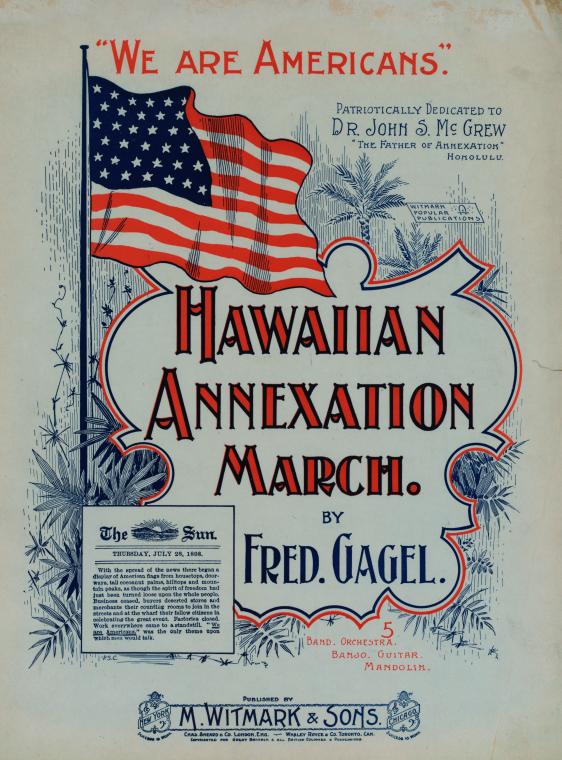
Newspaper article with the headline, Massachusetts papers howl at idea of Hawaii asking statehood.

June 14, 1900: Congress approved the Hawaii Organic Act. The Territory of Hawaii then developed its governing legislation, and the citizens of Hawaii were now U.S. citizens.

February 11, 1919: Jonah Kūhiō Kalanianaʻole presented a Hawaiian statehood bill to Congress. A committee studied the bill.

1921-1959: During this period, statehood for Hawaiʻi would be proposed to the House of Representatives forty-eight more times and face opposition. Opposing representatives from the Southern states were concerned that the representatives from Hawaiʻi would encourage civil rights legislation in Congress. For some of the opposing Democrat representatives, admitting a traditionally Republican state into the union could lessen the chances of the Democrats regaining control of the Senate. Some of the representatives from populous states didn’t want Hawaii to lessen their voting leverage. New York Representative Coudert argued that the bill would give Hawaiʻi one Senator for every 35,000 voters, when New York state has one Senator for every 2,500,000 people.

1935: The movement for statehood in Hawaiʻi accelerated, partially due to the possibility of a new tariff for the continental United States on sugar from Hawaiʻi and the possibility of military rule resulting from the community’s unrest from the controversial Massie case.

October 6 to 22, 1937: A joint congressional committee with seven senators and twelve representatives went through seventeen days of hearings in Hawaiʻi and determined that Hawaiʻi is eligible for statehood. From the hearings is a recommendation for a statehood plebiscite, or a vote in which people in Hawaiʻi approve or disapprove statehood.

November 5, 1940: The majority of Hawaiʻi voters voted in favor of statehood 46,174 to 22,426 votes in the statehood plebiscite, resulting in the required 2 to 1 vote.

January 7 to 17, 1946: The U.S. House Committee on Territories conducted hearings for Hawaiʻi statehood. On the last day, Territorial Senator Alice Kamokila Campbell delivered a speech against statehood, 53 years after the overthrow of the Hawaiian monarchy. She said, „I do not feel … we should forfeit the traditional rights and privileges of the natives of our islands for a mere thimbleful of votes in Congress…“

1946: The United Nations included Hawaiʻi in the United Nations List of Non-Self-Governing Territories, which also included Alaska, America Sāmoa, Guam, the Philippines, the Panama Canal Zone, Puerto Rico, and the U.S. Virgin Islands.

September 1947: Kamokila Campbell started the Anti-Statehood Clearing House, which went against the Hawaiʻi Statehood Commission efforts. She gathered testimonies against statehood, presented them to Congress, and sent information and arguments against statehood to Congress.

January 7, 1948: President Harry S. Truman encouraged Hawaiʻi statehood in his state of the union address.

January 17, 1948: Fifty-five years after the overthrow of the Hawaiian Kingdom, Territorial Senator Alice Kamokila Campbell filed a lawsuit against the Hawaiʻi Statehood Commission in the case Campbell v. Stainback et al. She questioned the territorial government’s use of $200,000 in public funds for the local and national campaign for statehood and argued that it was for political, rather than for public, purposes.

March 29, 1949: The case Campbell v. Stainback et al. concludes with Justice E. C. Peters ruling that the Statehood Commission should not be using public money to campaign for statehood.

May 20, 1949: The Territorial Legislature approved the assembling of the Constitutional Convention to develop a state constitution to accelerate the statehood process.

November 7, 1950: Hawaiʻi voters voted in favor of the Hawaii State Constitution with a vote of 82,788 to 27,109 votes.

1952: A combined Hawaii-Alaska Statehood bill went to the Senate floor, despite the objections from the delegates from Hawaiʻi and Alaska.

1953: The House of Representative approved the Hawaii Statehood bill 274 to 138, but the Senate delayed the measure until the next year.

1954: The Senate decided to combine the statehood bills for Hawaiʻi and Alaska together and passed the combined bill 57 to 28.

1957 to 1958: Hawaiʻi Delegate John A. Burns decided to follow the strategy of giving Alaska statehood and delaying statehood for Hawaiʻi. President Dwight D. Eisenhower wanted to give Hawaiʻi statehood, but was uncertain about giving Alaska statehood. However, the House of Representatives and the Senate passed the Alaska Statehood bill, and Eisenhower signed the bill.

March 11, 1959: The Senate voted in favor of the Hawaii Statehood Bill 75 to 15 votes.

March 12, 1959: The U.S. House of Representatives voted in favor of the Hawaii’s Statehood Bill 323 to 89 votes.

June 27, 1959: Hawaiʻi voters approved the Statehood bill 132,773 to 7,971 votes.

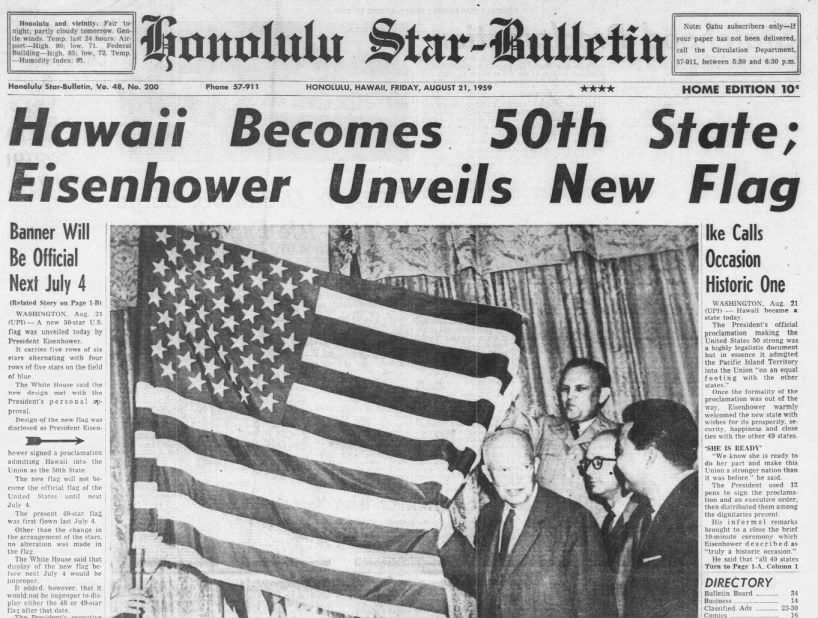
August 21, 1959: President Eisenhower signed the proclamation that welcomes Hawaiʻi as the fiftieth state.

September 17, 1959: After Hawaiʻi voters approved the statehood bill, the United States sent a letter to the United Nations Secretary General, saying that Hawaiʻi is now a State of the Union and that the United States will no longer report about Hawaiʻi to the United Nations. The United Nations removed Hawaiʻi from the list of non-self-governing territories.

November 23, 1993: U.S. President Bill Clinton signed the „Apology Resolution,“ formally known as United States Public Law 103-150, which apologizes on behalf of the United States for its role in the overthrow of the Hawaiian monarchy.

Suggested Search Terms:

1. [Try the following terms in combination, proximity, or as phrases using Search Pages in Chronicling America.] hawaii, statehood, kuhio, kalanianaole

2. Put “Hawaii Statehood” in the field “with all of the words”

3. Select Hawaii in the “Select state(s)” field and enter “statehood” as a search term

Sample Articles from Chronicling America:

Hawaiian Statehood, The Honolulu Republican (Honolulu, T.H.), July 14, 1900, Image 2, Col. 3
http://chroniclingamerica.loc.gov/lccn/sn85047165/1900-07-14/ed-1/seq-2/

No Statehood for Hawaii, The Honolulu Republican (Honolulu, T.H.), July 14, 1900, Image 2, Col. 3
http://chroniclingamerica.loc.gov/lccn/sn85047165/1900-07-14/ed-1/seq-2/

Delegate Wilcox Much Too Previous, The Honolulu Republican (Honolulu, T.H.), July 17, 1901, Image 1, Col. 7
http://chroniclingamerica.loc.gov/lccn/sn85047165/1901-07-17/ed-1/seq-1/

Ridicules the Idea of Statehood for Hawaii, The Honolulu Republican (Honolulu, T.H.), August 08, 1901, Image 1, Col. 4
http://chroniclingamerica.loc.gov/lccn/sn85047165/1901-08-08/ed-1/seq-1/

Hawaii and Statehood, The Honolulu Republican (Honolulu, T.H.), August 11, 1901, Image 4, Cols. 3-4
http://chroniclingamerica.loc.gov/lccn/sn85047165/1901-08-11/ed-1/seq-4/

Delegate Wilcox Impassionate Address to Hawaiians, The Independent (Honolulu, H.I.), July 10, 1902, Image 1
http://chroniclingamerica.loc.gov/lccn/sn85047097/1902-07-10/ed-1/seq-1/

Hawaii and Statehood, The Hawaiian Gazette (Honolulu [Oahu, Hawaii]), January 01, 1909, Image 4, Col. 1
http://chroniclingamerica.loc.gov/lccn/sn83025121/1909-01-01/ed-1/seq-4/

Must Wait for Our Statehood, The Hawaiian Gazette (Honolulu [Oahu, Hawaii]), July 26, 1910, Image 1, Col. 2
http://chroniclingamerica.loc.gov/lccn/sn83025121/1910-07-26/ed-1/seq-1/

Statehood for Hawaii, The Hawaiian Gazette (Honolulu [Oahu, Hawaii]), August 05, 1910, Image 4, Col. 2
http://chroniclingamerica.loc.gov/lccn/sn83025121/1910-08-05/ed-1/seq-4/

What Other Say of Statehood, The Hawaiian Gazette (Honolulu [Oahu, Hawaii]), September 30, 1910, Image 4, Col. 2
http://chroniclingamerica.loc.gov/lccn/sn83025121/1910-09-30/ed-1/seq-4/

Time to Campaign for Statehood Here, The Hawaiian star., January 11, 1911, SECOND EDITION, Page THREE, Image 3

http://chroniclingamerica.loc.gov/lccn/sn82015415/1911-01-11/ed-1/seq-3/

Hawaii and Statehood, The Hawaiian Gazette (Honolulu [Oahu, Hawaii]), March 24, 1911, Image 4, Col. 1
http://chroniclingamerica.loc.gov/lccn/sn83025121/1911-03-24/ed-1/seq-4/

Massachusetts Papers Howl at Idea of Hawaii Asking Statehood, Evening Bulletin (Honolulu [Oahu, Hawaii]), June 17, 1911, Image 15, Col. 1-3
http://chroniclingamerica.loc.gov/lccn/sn82016413/1911-06-17/ed-1/seq-15/

Hawaii Wants Statehood, The Washington Times (Washington [D.C.]), February 12, 1919, FINAL EDITION, Image 2, Col. 6
http://chroniclingamerica.loc.gov/lccn/sn84026749/1919-02-12/ed-1/seq-2/

Drive of Freedom Plan of Our Isles, The Washington Times (Washington [D.C.]), April 06, 1919, NATIONAL EDITION, Image 11
http://chroniclingamerica.loc.gov/lccn/sn84026749/1919-04-06/ed-1/seq-11/

More Information
Das Königreich Hawaii – Immer noch eine souveräne Nation

Die indigenen Völker der Vereinigten Staaten interssieren sich sehr über die Geschichte und Problematiken des Hawaiin Kingdom. Denn auch sie haben ähnliche oder gleiche Schicksale der Unterdrückung von den Vereinigten Staaten an ihrer eigenen Haut erfahren müssen. Das traurige Schicksal von Hawaii bekommt langsam mehr und mehr Zuhörer von der ganzen Welt über.

So haben Freunde von mir, Peter Schwarzbauer und Gawan Maringer, vom „Arbeitskreis Indiander Nordamerikas“ aus Österreich den Text von meinem hawaiianischen Freund Leon Siu übersetzt und ebenfalls am Januar 21, 2024 veröffentlicht.

Ich möchte euch den spannenden Bericht von Leon nicht vorenthalten:

Entgegen der Annahme, dass es gar nicht mehr existiert, besteht das Königreich der Hawaii-Inseln nach wie vor als souveräner, unabhängiger Staat.Die meisten Menschen, darunter auch Diplomaten und internationale Experten, sind sich der aktuellen Situation bezüglich der Souveränität der hawaiianischen Inseln nicht bewusst, nämlich, dass Hawaii auf eine absonderliche Art und Weise von den USA besetzt gehalten wird..Das hawaiianische Königreich hat zu keinem Zeitpunkt seine Souveränität oder sein Territorium an die USA oder ein anderes Land abgetreten.

Zu keinem Zeitpunkt haben die USA die Souveränität über Hawaii erlangt oder irgendein Gebiet vom Königreich Hawaii auf legale Weise erworben.

Die Souveränität des hawaiianischen Königreichs ist zu keinem Zeitpunkt erloschen.

Das bedeutet, dass die hawaiianischen Inseln heute nicht zu den USA gehören oder gehört haben, und dass der erfundene „Bundesstaat Hawaii“ eine von den USA geschaffene Einheit ist, um eine koloniale kriminelle Aktion zu verbergen.

Wie die USA Kontrolle über das Königreich Hawaii erlangte

Im 19. Jahrhundert wurde das hawaiianische Königreich international als vollwertige souveräne Nation anerkannt und respektiert, unterhielt internationale Handels- sowie Geschäftsbeziehungen, und es bestanden bilaterale sowie multilaterale Verträge mit anderen souveränen Nationen. Weiters verfügte es über 137 Botschaften und Konsulate in verschiedenen Teilen der Welt.

Im Jahr 1893 landeten ohne Vorwarnung oder vorangegangene Provokation seitens Hawaii voll bewaffnete US-Truppen in Honolulu, um eine kleine Gruppe von vorwiegend nicht-indigenen aufständischen  Geschäftsleuten (sie werden von Hawaiianern als Verräter gesehen) militärisch zu unterstützen und durch eine Reihe rechtswidriger Handlungen die Kontrolle über die Hawaii-Inseln zu erlangen.

Zu diesen unrechtmäßigen Handlungen gehörten: das Anstiften eines Regimewechsels, die Einsetzung von Marionettenregierungen, das Aufzwingen der US-Gesetzgebung, die unfreiwillige Verleihung der US-Staatsbürgerschaft und sogar die Unterdrückung des Dekolonialisierungsverfahrens der UNO.

Die USA gestand ihre rechtswidrige Vorgangsweise ein

Zwei US-Präsidenten, Grover Cleveland 1893 und William Clinton 1993, entschuldigten sich offiziell für die unrechtmäßige Inbesitznahme der hawaiianischen Inseln und räumten ein, dass die Souveränität des hawaiianischen Königreichs niemals rechtmäßig aufgegeben wurde oder erloschen ist.

Trotz dieser Eingeständnisse tun die USA weiterhin so, als sei Hawaii ein integraler Bestandteil der USA; sie weigern sich, die Souveränität von Hawaii anzuerkennen, und entziehen sich den rechtlichen und moralischen Verpflichtungen, ihren Anspruch auf Hawaii zurückzunehmen. Stattdessen versuchen die USA, innerhalb von Hawaii eine eigene indigene hawaiianische Stammesnation zu schaffen (Anm.: Peter Schwarzbauer/Gawan Maringer: „Native Hawaiians“ – so wie „Native Americans“ innerhalb von US-Bundesstaaten, sogenannte „nations within“, folglich die Inkorporierung als „indigene Nation“ innerhalb der USA), die als Rechtfertigung für eine faule „Einigung“ herhalten soll.

Diese Vorgangsweise dient den USA dazu, die absolute Kontrolle über die Inseln zu behalten.

Heutige Situation

Vor etwa 40 Jahren hat ein kleiner Rest von Nachkommen der Bürger*innen des hawaiianischen Königreichs eine Bewegung zur Befreiung der hawaiianischen Inseln von den USA und zur Wiederherstellung des hawaiianischen Königreichs als souveränen, unabhängigen Nationalstaat ins Leben gerufen.

Diese hawaiianischen Staatsangehörigen fordern die Mitglieder der internationalen Gemeinschaft auf, die Verträge, Vereinbarungen, Bündnisse und Pakte, die sie mit dem hawaiianischen Königreich geschlossen hatten, zu respektieren, damit das hawaiianische Volk wieder in Frieden und Harmonie als Teil der internationalen Familie von Nationen leben kann.

Status von Hawaii in Bezug auf die Vereinten Nationen

Die Tatsache ignorierend, dass das hawaiianische Königreich seit bereits mehr als 103 Jahren international als souveräner Staat anerkannt war, setzten die USA 1946 das „Territorium Hawaii“ gemäß Resolution 66 der UN-Generalversammlung und Artikel 73 der UN-Charta auf die Liste der „nicht-selbstverwalteten Territorien“ der Vereinten Nationen und überließen quasi die hawaiianischen Inseln angeblich dem UN-Dekolonisierungsverfahren.

Heute ist klar, dass dies ein Trick der USA war, um den Dekolonisierungsprozess der UNO auszunutzen, indem sie den Anschein von Großmut erweckten, während sie gleichzeitig die unrechtmäßige Inbesitznahme der Hawaii-Inseln verschleierten. Denn 1959 führten die USA auf Hawaii ein Scheinreferendum über die Dekolonisierung durch und legten dann der UN-Generalversammlung den Bericht A/4226 vor, in dem fälschlicherweise behauptet wurde, das hawaiianische Volk habe der Eingliederung in die USA zugestimmt.

Die UN-Generalversammlung nahm den Bericht der USA als bare Münze, ohne den Ablauf des Referendums durch neutrale Beobachter oder eine zuständige UN-Organisation zu überprüfen.

Am 12. Dezember 1959 verabschiedete die UN-Generalversammlung dann die Resolution 1469, in der sie fälschlicherweise zu dem Schluss kam, dass der politische Status der Hawaii-Inseln „geklärt“ sei und Hawaii nicht länger als „nicht-selbstverwaltetes Territorium“ betrachtet werde.

Durch die Vorlage dieses irreführenden Berichts haben die USA den Dekolonialisierungsprozess der UNO absichtlich unterwandert, wodurch die UNO selbst zum Komplizen dieses Betrugs wurde. Leider ist trotz dieses Betrugs die Resolution 1469 der UN-Generalversammlung immer noch die offizielle Position der UNO. Das bedeutet auch, dass die UNO und ihre 193 Mitglieder durch die Resolution 1469 verpflichtet sind, Hawaii als integralen Bestandteil der USA zu betrachten.

Die Annahme, dass „die politische Frage geklärt ist“, schließt derzeit jedes Rechtsmittel gegen die völkerrechtswidrigen Handlungen der USA in Bezug auf die Souveränität Hawaiis aus.

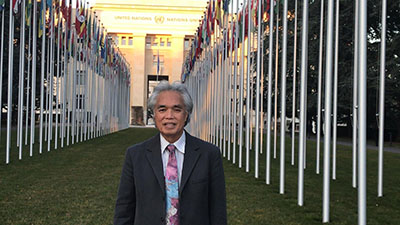
Protest für die Unabhängigkeit von Hawaii vor dem UNO Hauptgebäude in Genf (Palais des Nations)

Trotzdem: Die versuchte Einbeziehung der Vereinten Nationen

In den vergangenen 20 Jahren haben Hawaiianer zahlreiche Petitionen, Berichte, Beschwerden und Appelle an verschiedene UN-Gremien gerichtet, um gegen den rechtswidrigen Anspruch der USA auf die Hawaii-Inseln zu protestieren.

Dazu gehören Appelle an den Generalsekretär, verschiedene Präsidenten der Generalversammlung, den Dekolonisierungsausschuss (das sogenannte „Vierte Kommitee“), das Büro des Hochkommissars für Menschenrechte, den Menschenrechtsausschuss, den Menschenrechtsrat, den Ausschuss für die Beseitigung von Rassendiskriminierung, das Ständige Forum für Indigene Angelegenheiten den Expertenmechanismus für die Rechte indigener Völker und andere.

Bisher alles vergeblich.

Was wurde bei den Vereinten Nationen versucht

Im Folgenden einige Hinweise auf internationale Bedenken hinsichtlich der Situation von Hawaii:

  • Im Jahr 2008 forderten die Mitglieder des UN-Ausschusses für die Beseitigung von Rassendiskriminierung die USA auf, das Verfahren zu erläutern, mit dem Hawaii zu einem Bundesstaat der USA gemacht wurde.
    Die USA haben nicht reagiert.
  • Im Jahre 2010 wich der US-Vertreter bei einem Side-Event im Rahmen der „Allgemeinen Regelmäßigen Überprüfung der USA“ (Anm. Peter Schwarzbauer: bezüglich der Einhaltung von Menschenrechten) an der UNO der Frage nach dem Prozess aus, mit dem Hawaii in die USA aufgenommen wurde.
    Er sagte nur: „Die politische Frage ist geklärt.“
  • Im Jahr 2013 bezeichnete Dr. Alfred M. deZayas, unabhängiger UN-Experte für die Förderung einer demokratischen und gerechten internationalen Ordnung, in Absatz 69 (n) seines Berichts A/68/284 an die UN-Generalversammlung Hawaii als ein Territorium, das im Rahmen des UN-Dekolonisierungsverfahrens der Vereinten Nationen behandelt werden sollte.
    Dies deutet darauf hin, dass dieser unabhängige Experte die Frage des politischen Status von Hawaii in der Tat als nicht geklärt betrachtet.
  • 2015 forderte die Islamische Republik Pakistan im Rahmen der „Allgemeinen Regelmäßigen Überprüfung der USA“, dass die USA auf die Empfehlung in Absatz 69 (n) aus dem Bericht von Dr. Zayas aus dem Jahr 2013 an die Generalversammlung der Vereinten Nationen reagieren müssen, der sich neben Hawaii auch auf die Situation von Alaska und den Dakotas bezieht.
    Auch diese Anfrage Pakistans deutete darauf hin, dass diese Fragen des politischen Status nach internationalem Recht nicht ordnungsgemäß geklärt sind.
    Die USA haben auf die Anfrage Pakistans nicht geantwortet.
  • 2017 reichten die Hawaii-Inseln sowohl beim UN-Dekolonisierungsausschuss als auch beim sogenannten „Ausschuss der 24“ Petitionen ein, in denen sie eine Überprüfung der Resolution 1469 der UN-Generalversammlung forderten und, wenn sich herausstellt, dass diese auf fehlerhaften Informationen beruht, die Resolution für null und nichtig erklärt werden muss.
    Es erfolgte keine Reaktion.
  • 2017 wurde beim UN-Hochkommissars für Menschenrechte eine Beschwerde von Erben und Nachkommen eingereicht, die Landtitel auf Hawaii besitzen und deren Land von Gerichten der Marionettenregierung des Staates Hawaii unrechtmäßig beschlagnahmt und an ausländische Unternehmen verkauft worden war.
    Da es sich um private Landtitel handelt, die durch die Gesetze des Königreichs Hawaii verliehen wurden, müssen sie nach den Gesetzen des Königreichs Hawaii oder nach den Verträgen des Königreichs Hawaii entschieden werden.
    Der Hochkommissar hat nicht geantwortet.
  • Im Jahr 2018 schrieb Dr. Alfred M. deZayas in seiner Eigenschaft als unabhängiger UN-Experte in einem Memorandum an Richter des Staates Hawaii: „Ich bin zu dem Schluss gekommen, dass der rechtmäßige politische Status der hawaiianischen Inseln der eines souveränen Nationalstaates in Kontinuität ist, aber eines Nationalstaates, der unter einer absonderlichen Form von Besatzung durch die USA steht, die aus einer illegalen militärischen Besetzung und einer betrügerischen Annexion resultiert“.
  • Der „Schattenbericht“ 2019 der Koani Foundation Hawaii, der im Rahmen der allgemeinen regelmäßigen Überprüfung der USA vorgelegt wurde, listet zahlreiche Menschenrechtsverletzungen auf den Hawaii-Inseln, die auf die illegale Besetzung der Hawaii-Inseln zurückzuführen sind.
    Darin werden den USA die folgenden Fragen gestellt:
  1. Wie gedenken die USA angesichts der unrechtmäßigen Handlungen, die zur Besetzung des hawaiianischen Königreichs geführt haben, und zu der sich die USA bekennen, sowie angesichts der derzeitigen Behandlung hawaiianischer Staatsangehöriger als besetztes Volk und im Lichte der Genfer Konvention IV und des Artikels 1 des Internationalen Pakts über Bürgerliche und Politische Rechte (ICCPR), die Verweigerung der Menschenrechte hawaiianischer Staatsangehöriger, insbesondere ihres Rechts auf Selbstbestimmung, zu korrigieren?
  2. Wie wollen die USA angesichts der rechtlichen Eingeständnisse des US-Kongresses im Entschuldigungsgesetz (U.S. Public Law 103-150) und der Konfiszierung von 1,8 Millionen Hektar hawaiianischen Landes sowie von Meeresgrund, Ressourcen und Energie die Kontrolle über Land und natürliche Ressourcen an das hawaiianische Volk zurückgeben und das Recht auf Subsistenz und das Recht, frei über ihre natürlichen Ressourcen zu verfügen (oder sie zu erhalten) sicherstellen?
  3. Wie beabsichtigen die USA, ihre nationale Sicherheitspolitik mit dem Recht des hawaiianischen Volkes auf Selbstbestimmung im Rahmen von Artikel 1 des Internationalen Paktes über bürgerliche und politische Rechte (ICCPR) und dem Recht auf Frieden und Sicherheit in Einklang zu bringen?

Die USA haben die im Schattenbericht gestellten Fragen nicht beantwortet.

Die Lösung – Aufforderung an die UN-Generalversammlung

Wir fordern die UN-Generalversammlung auf, die Umstände zu überprüfen, die zur Annahme der Resolution 1469 der Generalversammlung der Vereinten Nationen vom 12. Dezember 1959 geführt haben.

Wenn die UN-Generalversammlung zum Schluss kommt, dass hier Fehler gemacht wurden, muss sie ihrer Verpflichtung gemäß der Charta nachkommen und diese Fehler korrigieren, indem sie die Resolution 1469 der Generalversammlung der Vereinten Nationen widerruft, damit die Behauptung der USA, „die politische Frage sei geregelt“, für ungültig erklärt und den Anspruch der USA auf Souveränität über die Hawaii-Inseln zurückgewiesen wird.

Die inhärente Souveränität der Hawaii-Inseln würde nach internationalem Recht bestätigt werden, und die USA hätten die heilige Pflicht, ihren Anspruch auf Hoheitsgewalt, ihre Kontrolle über und ihre Aktivitäten aus den Hawaii-Inseln zurückzuziehen.

Auf diese Weise würde die illegale Besetzung der Hawaii-Inseln durch die USA mit friedlichen Mitteln beendet und das Königreich Hawaii als souveräner, unabhängiger Staat bestätigt und wiederhergestellt werden.  

Eine einfache Überprüfung der Resolution 1469 der Generalversammlung der Vereinten Nationen würde dies möglich machen.

H.E. Leon Kaulahao Siu
Minister of Foreign Affairs / Außenminister

The Hawaiian Kingdom / Das Königreich Hawaii

180 Years of Independence

Leon Siu

180 Years of Independence
This year, 2023, is the 180th anniversary of an historic moment for Hawaii. November 28, 1843 was the day the United Kingdom (Great Britain) and the Kingdom of France jointly proclaimed their recognition of the Hawaiian Kingdom as a sovereign nation — equal in status with the dominant powers of the world.

Immediately following this recognition, King Kamehameha III declared November 28 as Lā Kuʻokoʻa, Hawaiʻi Independence Day, a national holiday to be celebrated throughout the Hawaiian Kingdom. For 50 years, Lā Kuʻokoʻa and Lā Hoʻihoʻi Ea (Sovereignty Restoration Day) were enthusiasticaly celebrated as the principle national holidays of the Kingdom.

129 Years On: The 1893 Overthrow of the Hawaiian Monarchy

But in 1893, a treacherous coup d’etat supported by U.S. armed forces, usurped the Hawaiian Kingdom. The next year, the self-proclaimed “Republic of Hawaii” replaced Lā Kuʻokoʻa with the celebration of the American Thanksgiving Day. This was a subversive tactic of the fake Republic (and, after 1898, the fake Territory of Hawaii) to denationalize Hawaiians — erasing the people’s identity and loyalty to the Hawaiian Kingdom — and replacing it with identity and loyalty to America. After 70 years of unrelenting indoctrination and coercion, most Hawaiians became staunch Americans.

However, in the 1970s, Hawaiians being evicted from their lands began to bravely stand and fight back. Major confrontations in the 70s were: Kalama Valley (1971), Kahoolawe (1976), Waiahōle-Waikāne (1977), Hilo Airport (1978), Sand Island (1979)… These major acts of resistance and many more skirmishes raised serious questions about the legality of the United States’ claim of sovereignty over the Hawaiian Islands.

Then on January 17, 1993, a huge, three-day event, ʻOnipaʻa, was held at Iolani Palace in protest of the criminal acts committed against Hawaiians over the hundred years since the US armed forces and a handful of insurgents seized control of our sovereign, independent, peaceful country.

Prompted by the growing unrest and this huge public outcry of ʻOnipaʻa, on November 23, 1993, US President Bill Clinton signed a Joint Resolution by the US Congress (USPL 103-150) apologizing for the overthrow of the Hawaiian Kingdom. In the Apology the United States admitted that it did not lawfully gain possession of the Hawaiian Islands and that the sovereignty of the Hawaiian Kingdom was never extinguished.

The US Apology boosted the “Hawaiian Sovereignty Movement” into high gear and Hawaiians and their supporters began to work in earnest to restore the Hawaiian Kingdom as a sovereign, independent nation. To undo the years of American indoctrination and awaken the national consciousness of the Hawaiian people, Kekuni Blaisdell, Haunani Trask, Poka Laenui, Butch Kekahu and many more Hawaiʻi patriots began to make us aware of our history by reactivating our important celebrations and other sacred times and places.


Today, the holidays, Lā Kuʻokoʻa and Lā Hoʻihoʻi Ea are proudly celebrated throughout Ko Hawaiʻi Pae ʻĀina… and in other places around the world where Hawaiians live.
“Love of country is deep-seated in the breast of every Hawaiian,
whatever his station.”
Queen Liliʻuokalani