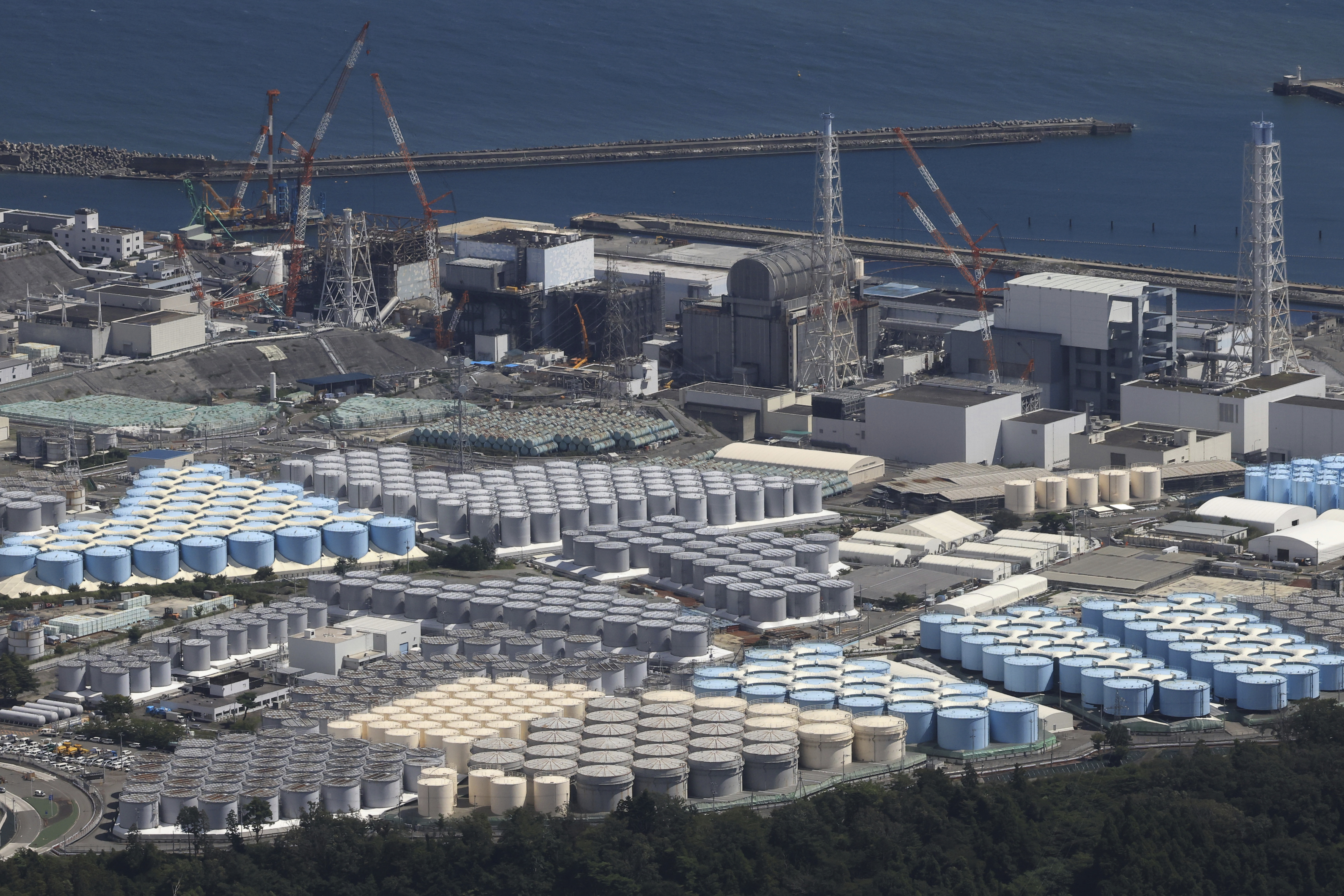
A huge, uncertain problem will affect all of Earth’s humanity in the next few years if we do nothing now.It’s about Japan, where they started releasing the radioactive water from Fukushima into the Pacific for 24 hours/day, 7 days/week, 365 days/year for 30 years.Nobody should tell me that long-term research has been carried out here and that it is harmless.It’s just a matter of resolving a problem as quickly as possible without incurring major costs.Out of sight out of mind.It’s about profit from a few individual people who use their wealth to benefit the entire world population.I already know enough of these statements about it being harmless, including in other topics, and what happened?One environmental disaster after another.
If it is safe, then the very people who claim this should use this water as their drinking water from now on until the end of their lives!Apparently it’s supposed to be harmless.Bottom up!Do we really want to destroy the beauty of the earth and nature within a very short time, just because of the greed of individual people?It is our only home on earth and I was taught to keep order and cleanliness.When will the vultures of money learn that you cannot conquer nature?Nature is learning us and we must finally understand that we can only live with nature.That’s why this contaminated water must never be poured into the Pacific!Wake up people!!It doesn’t just affect the people of Japan or all the people of the Pacific, it also affects you and me far away from that.We are all connected!In my opinion, Japan, which has already made false statements, must not decide on its own and we must not leave Japan alone with this problem.We only have to help by working together and supporting each other, regardless of which country the problem comes from.This is the only way the radioactive water can’t be washed into the ocean.That’s why I wrote to Greenpeace on August 25th.Here are two excerpts:
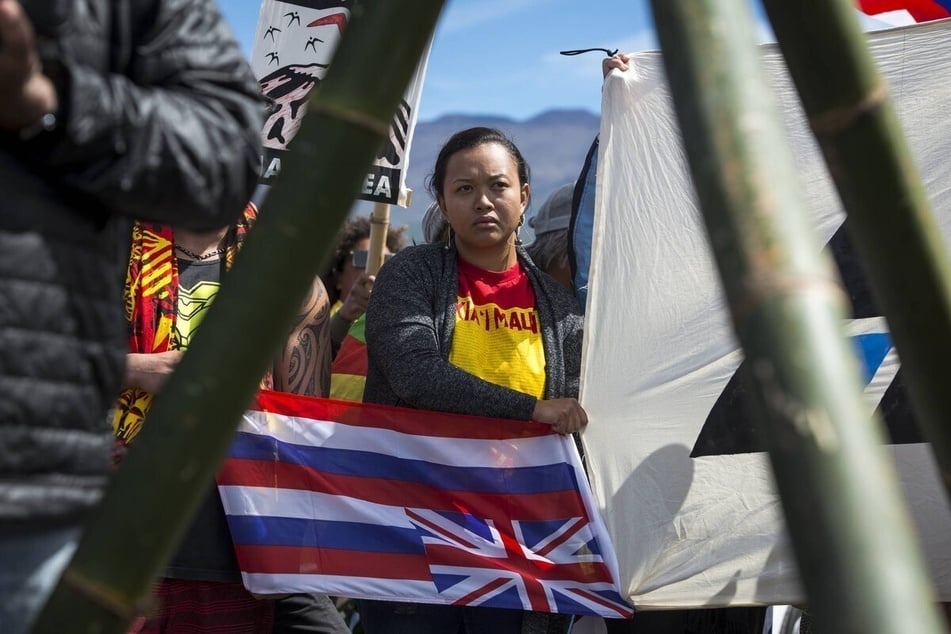
Geneva, Switzerland – Indigenous Alaskans andHawaiian nationals are raising the alarm over the potential harms caused by wastewater released from Japan’s Fukushima nuclear plant, which could worsen precarious environmental conditions resulting from generations of US colonial occupation.
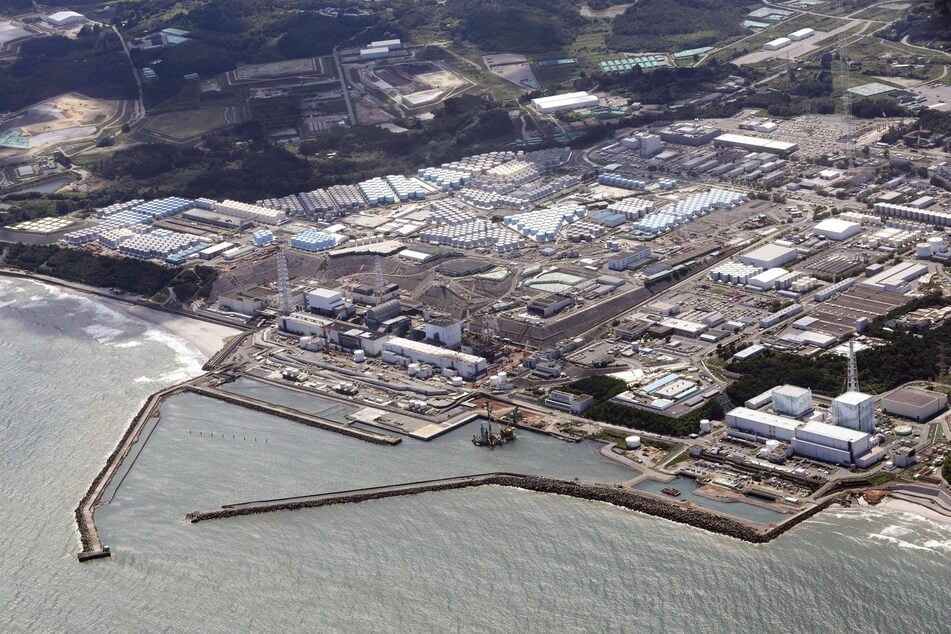
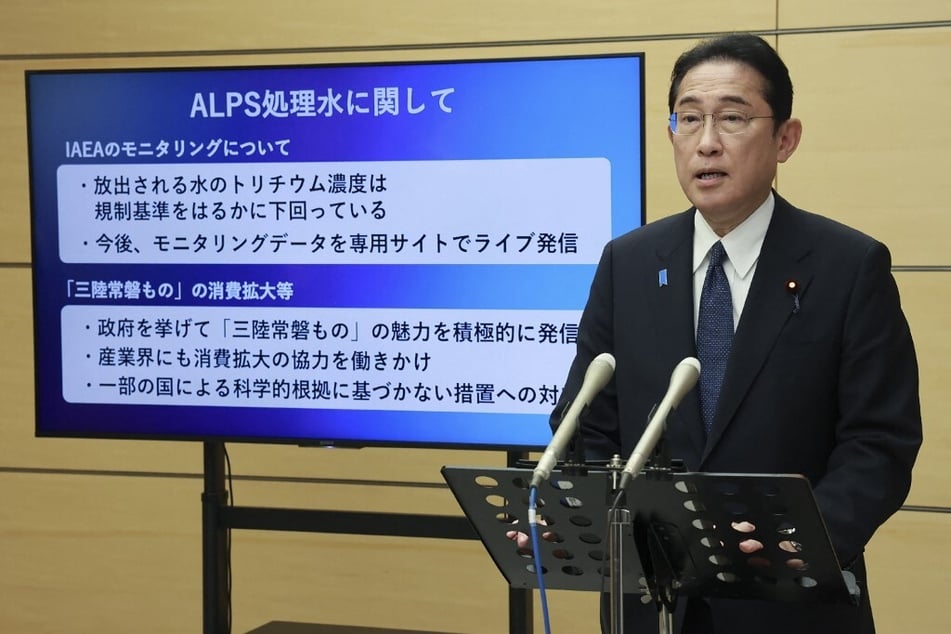
Japan has stoked controversy with its recent decision to release radioactive water from its Fukushima Daiichi Nuclear Power Plant into the Pacific Ocean – just 12 years after the country experienced its worst-ever nuclear disaster following an earthquake and tsunami in 2011.
The Japanese government has already begun discharging the contaminated water. The release is set to take place in stages over 30 years, although experts warn it could take even longer.
The International Atomic Energy Agency has stated that the process meets safety standards and that the effects on people and the environment will be „negligible,“ but many scientists and impacted communities disagree. They argue there has not been enough research made available to assess the potential consequences.
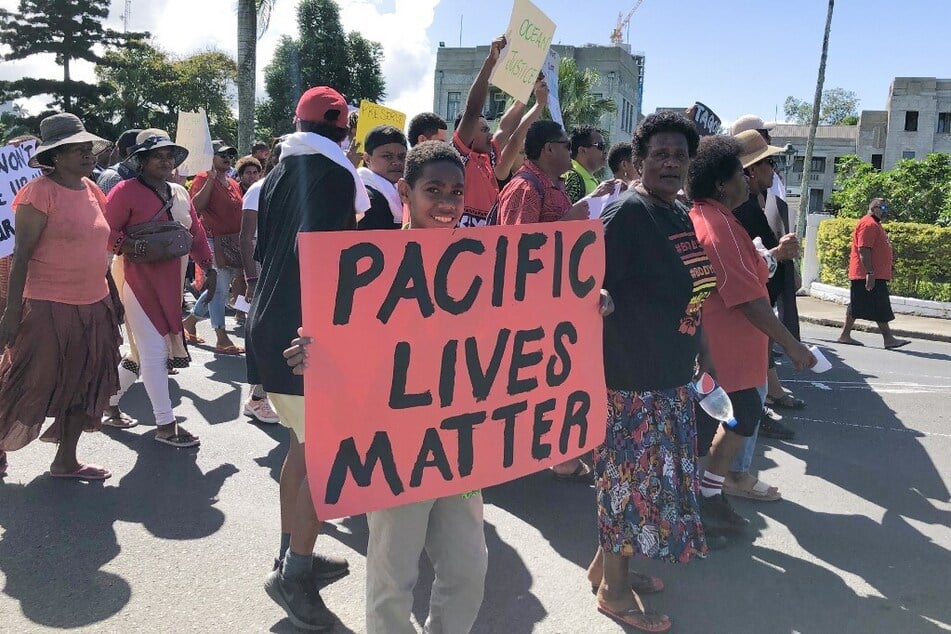
Among those raising concerns are Hawaiian nationals and Indigenous Alaskans, who fear that ocean currents will carry the radioactive material to their waters and wreak havoc on local ecosystems and subsistence lifestyles.
„As protectors of this ocean, as the people who have lived here for millennia, we do not accept this kind of offhand declaration without any real proof or evidence that this is safe,“ His Excellency Leon Kaulahao Siu, foreign minister of the Hawaiian Kingdom, said during a Friday news conference at the Geneva Press Club.
„We just are outraged that this discharge of this contaminated water is going to affect all of us. It may be small at first, but it is going to affect all of us.“
US colonialism drives environmental exploitation in Alaska and Hawaii
The potential devastation the Fukushima wastewater could unleash in Alaska and Hawaii would exacerbate conditions wrought by decades of United States occupation.
Alaska has been under US colonial rule ever since the government „purchased“ the territory from the Russian Empire in 1867, despite Russia having no claim over the land. The US went on to impose an apartheid regime which has deprived generations of Indigenous Peoples their right to self-determination.
The Hawaiian Kingdom, an independent nation still recognized in formal treaties with over 170 countries, saw its rightful government overthrown in an unlawful, US military-backed coup in 1893.
The United Nations (UN) recognized Alaska and Hawaii as territories under US colonial occupation until 1959.
Their designations only changed after illegitimate statehood referendums in both places which allowed white colonists and US military members to vote, in violation of international standards.
Today, Indigenous Alaskans and Hawaiian nationals are marginalized on their own lands and suffer stark racial disparities in wealth, housing, health, food access, and the criminal legal system.
Indigenous Alaskans and Hawaiian nationals fear further contamination
Longstanding racist policies have left Native peoples more vulnerable to the ravages of the climate crisis, as the US government and American businesses continue to extract Alaska and the Hawaiian Islands‘ rich natural resources for their own profit.
Fossil fuel production, the commercial fishing industry, and US nuclear weapons testing have led to gross levels of environmental destruction in Alaska and made it hard for many Indigenous Peoples to maintain their traditional subsistence activities.
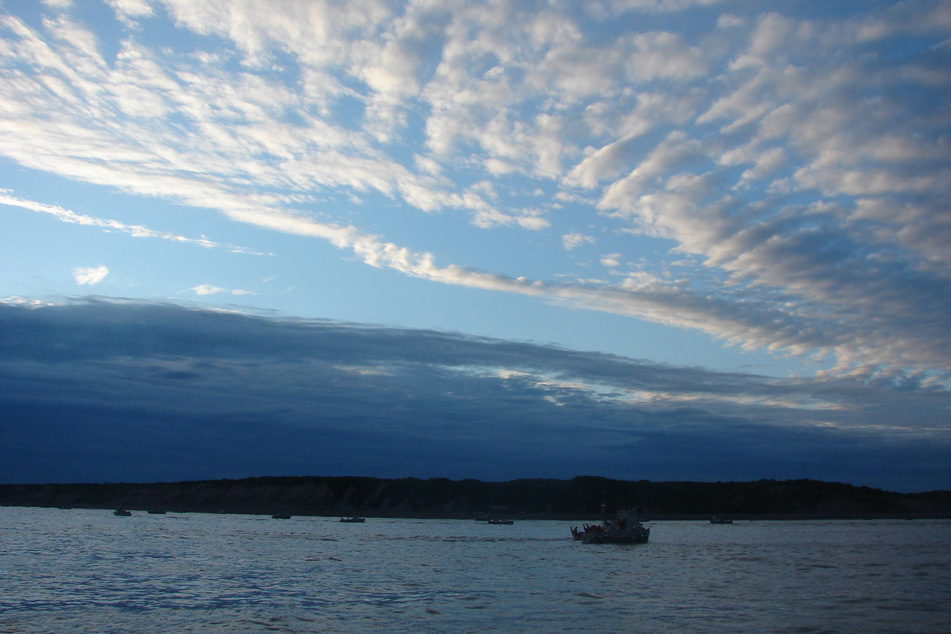
Ambassador Ronald Barnes, the official representative of Indigenous Alaskans at the UN, recalled how a 1971 underground nuclear blast on Amchitka Island resulted in higher cancer levels in his Bristol Bay fishing community and mysterious holes and sores in the salmon.
Barnes said analyses show ocean currents will carry the Fukushima wastewater from Japan to Alaska before it moves out into the Pacific. He worries that nuclear contamination could once again hurt whales, wild-stock salmon, and other traditional food sources and have negative health effects for Indigenous Peoples.
Hawaii, meanwhile, has seen US commercial agriculture businesses gobble up enormous swaths of terrain for sugar and pineapple plantations, leveling forests and poisoning the stolen land with harmful herbicides and pesticides. Today, Hawaii imports around 90% of its food, which is both unsustainable and unnecessary given how fertile the ground is.
On Oahu, activities on US military facilities – which occupy 22% of the island – have left drinking water contaminated, all while endangering the national security of the Hawaiian people. The mega-tourism and real estate industries have only made matters worse across the islands.
The influx of wastewater from Fukushima is raising fears of increased damage to Hawaii’s beaches and marine wildlife as well as the health of its people.
Lack of scientific data raises concerns over potential environmental harms
Long victim to environmental exploitation by foreign occupiers, Hawaiian nationals and Indigenous Alaskans are now being told to trust the Japanese government’s Fukushima safety assessment – without substantive evidence to back it up.
Many scientists and human rights experts have joined Alaskan and Hawaiian representatives in sounding the alarm.
„Our concern with Fukushima and the discharge of contaminated water is that we don’t know exactly what is going to happen,“ said Alfred-Maurice de Zayas, the first UN Independent Expert on the promotion of a democratic and equitable international order.
De Zayas noted that under the Convention on the Law of the Sea, Japan and other states have the obligation not only to avoid irreparable harm to the oceans but also to take proactive measures to protect and preserve marine environments.
Releasing potentially unsafe, radioactive water into the Pacific could have disastrous results for people and wildlife. Waiting to prosecute crimes of ecocide after the fact isn’t good enough, de Zayas added, because by then, „the damage is already done.“
Hisashi Saito, who represents the sustainable development educational organization iuventum at the UN, also expressed concerns about the scientific difficulties in determining whether future environmental harms trace their roots to the Fukushima wastewater. This could make it even harder to hold those responsible accountable for the damage.
„They do this because they know it won’t be traced so easily,“ Saito explained. „In the future, they will dump worse and worse nuclear fraction from Fukushima, and they will dump worse and worse stuff from other nuclear facilities – and not just Japan, but the entire world.“
„As a Japanese citizen, I feel ashamed that this happened, and I really have to say sorry,“ he added.
Indigenous Alaskans and Hawaiian nationals demand a seat at the table
The real dangers posed to Indigenous Alaskans, Hawaiian nationals, and Pacific Islanders make it all the more urgent that they have a say in deciding whether or not to release the radioactive wastewater.
„We just really stand in solidarity with the rest of the Pacific, and we are making an appeal to Japan to stop the discharge of the water until there is actual proof – verifiable proof – that the water is actually safe,“ Siu said. „Without that, we oppose the discharge of these contaminated waters in the Pacific Ocean.“
Representatives of Indigenous Alaskans and the Hawaiian Kingdom are working together to win proper recognition at the UN as sovereign peoples under illegal colonial occupation.
Doing so is ultimately an existential fight, as the threat of ecocide looms from powerful nations that do not take seriously the health and safety of Native communities.
„This is a deep concern to us,“ Barnes insisted. „That’s why we assert that we need to be sitting at the table equally as high-contracting parties. We need to be in the decision-making process, and we do not need hegemonic, gun-boat diplomacy […] where they tell us what’s good for us whether we like it or not.“
„We want more data. We want more input. We want to have our scientists say what is right or wrong.„
I examine here and set out for your consideration a proposal of a truly national security system for the Hawaiian nation. This national security system is not merely a military plan addressing the issues of armed combat, but a total system of national security.
We are continually haunted by an unexplored fear of foreign attack and believe that the safest place to be is under the armpit of the biggest of all bullies. This is partly the result of propaganda during the pre-Statehood period following the Japan attack of the U.S. in Hawaii in 1941. As a result, we have failed to really understand the structure of national security and the appropriate role of a military force.
Let us step away from that old paradigm of national security being big guns, large number of soldiers, huge ships, and ABC weapons (Atomic, Biological and Chemical). Let us keep an open mind and drop the stumbling blocks of false loyalties to a rogue state which is in constant violation of international law.
We really do not need the U.S. military. In fact, we are far better off without them in Hawaii. What does the U.S. military represent? A target. A bait in the Pacific for others to look at with disdain.
The U.S. military has used Hawaii to fulfill its tactic of “out basing”, i.e. find bases outside its internal borders to place troops and to attract an attack, or as an early warning system. Perfect example, Japan’s attack on Dec. 7, 1941!
For the sake of Hawaii’s security, it would be far better that we had no U.S. military in Hawaii. We can survive in a defensive defense mode with the Hawaii National Guard and by adopting policies of simply protecting Hawaii from aggression but having no capability to aggress against another.
While we move to a different system of national security, what happens with the U.S. Military?
Under an independent nation status, the U.S. military would exist in Hawaii, if at all, upon Hawaii’s terms. That is not the case today. Presently the U.S. military has taken up such a gigantic portion of our lands and pay almost nothing for it. ($1 for 65 years for the Valleys of Makua and Kahanahaiki, nothing for Kaho`olawe, nothing for Lualualei, Schofield, Wheeler, Hickam-Pearl Harbor, Ka`ena, Pohakuloa, etc.) They have been polluting our waters and land such that Lualualei ammunition depot was listed as the most polluted of the U.S. military lands in the world, followed soon after by Pearl Harbor! Now they also pollute our aquifer at Red Hill, in flagrant disregard to our Board of Water Supply! How is this protecting us, or does it mean protecting the U.S. and to hell with the Hawaiian people?
The U.S. military is said to bring in lots of Federal spending into Hawai, but the numbers are manipulated by politicians and bankers tied into the military propaganda. The measure used is the amount of Federal taxes paid by Hawaii residents compared to the amount spent by the Federal government in Hawaii, to a large extent for military service.
This is a bogus equation. All Federal dollars spent by the military, including for civilian services, goes for goods and services for the military. Those transaction cancel each other out! It’s a “quid pro quo.” They pay for services or goods and they receive them. It is never a gift or a hand-out.
Federal spending for highways should also consider the fuel taxes paid by Hawaii highway users, and by Hawaii residents paying in Federal tax dollars. In return, the U.S. government can use Hawaii’s airports, road systems and seaports and lanes as part of the U.S. national defense system. There’s no gift or windfall here from the Federal government!
U.S. military personnel spends a lot of money in Hawaii. True. But they get the goods and services they pay for. Meanwhile, they also avoid State income taxes, avoid State General Excise Tax when they purchase from the military commissaries. They contribute to the cost of educating military dependents, true. But the cost of such contribution is between 40-60% of the true cost for the State to educate them. And they bring in the brown tree snake and the Covid 19 Virus while Hawaii has no oversight!
The U.S. colonizers, including the Federal and State governments, politicians, bankers, real estate developers, economists who works for them, and major business entities have been feeding the Hawaii public with a bogus equation of value received by the Federal government compared with costs to Hawaii. But they are the folks with the sharp pencil and calculators. More important, they design the economic equations to spew out their colonial tainted results.
What should a balanced equation look like?
It would include the value of the stolen lands currently used by the U.S. and State governments, originally the property owned by the Hawaiian Nation and its citizens. These are the lands considered “ceded” by those governments, land to a large extent, the Hawaii State government has refused to give an accounting to the Office of Hawaiian Affairs. These include the ocean waters between these islands and should be considered to include the 200 miles designated exclusive economic zone by the Law of the Seas Convention. This would also include the land and sea area around other islands along the Hawaiian archipelago as well as Kalama atoll, Christmas islands and all other territories considered part of the Hawaiian nation prior to the U.S. invasion in 1893.
Into that equation should be added the past usage of these lands and waters since 1898 in which Hawaii was declared by the U.S. an American territory. Those many years in which Hawaiian assets were in the hands of the U.S. or its colonial place holders, the Territory of Hawaii and the State of Hawai, should be accounted for and a payment plan should be drawn up so that within 1 generation (about 25 years), the back debt would be caught up. The rent is overdue.
That equation should also consider the hijack cost assessed against the people of Hawaii. That is the cost of Federal taxation and State taxation, called a “voluntary system” but followed by threats of imprisonment, confiscation of various properties, and limited liberties should one choose not to volunteer parts of their assets to the government trough. These were payments wrought out of the hands or the accounts of the people of Hawaii, largely unwillingly, and paid over to the U.S. or its colonial creation.
But what of the benefits and values one received in return by the U.S. presence in Hawaii, one would ask? Was there no value there? There may have been value while the U.S. remained colonizers, but it cannot be properly accounted for because such “values” were part and parcel of the U.S. colonization. It is remarkably like a comparison to slavery and the argument by the slave owner that the slave received value while under slavery! Slavery and colonization is so grand a violation of human rights.
A people under colonization, like a people under slavery, cannot be charged for “value” they received if these people had no control over their colonization or their slavery. As long as the colonizer or the slave master controlled the equation, and held the pencil and computer to account for the “value” received, there will be no accurate accounting and the only response is to treat the colonizer/slave owner’s account as a trustee who co-mingled his assets with that of the beneficiary under his trust. (Note that the U.S. undertook a “sacred trust” obligation to bring the people of Hawaii to self-government under U.N. Charter Chapter XI, Article 73 with respect to non-self- governing territories.) The trustee is to lose the full amount of his claimed benefit!
Let us now turn our attention to the design of a national security system based on peace by peaceful means, an aloha security plan built on respect for ourselves and others, on life affirming attitudes, on cultural strength, on openness, and on friendship building.
We must be far wiser in our plans for National Security than simply military force. I suggest we create a four- part front for Hawaii’s National Security, each one being an integral part of the overall program. These parts are 1) Defensive Defense, 2) Outer Usefulness, 3) Inner Strength and 4) Non-Alliance with international “defense” pacts. I credit Professor Emeritus of Peace Studies, Johan Galtung, for introducing this approach of national security to me. He has been a scholar in the field and has consulted with many countries as well as the United Nations. He had been a guest on my radio shows both at Hawaii Public Radio (A Second Glance) and KWAI (Hawaiian Potpourri) as well as on several of my `Olelo T.V. programs. We both taught together at the University of Hawaii in International Relations.
1. Defensive Defense: In an earlier day, the U.S. had called it the War Department since 1789, a name aptly identifying the department’s nature and purpose. In 1824, the Bureau of Indian Affairs was formed in the War Department to battle the Indians, switching over to the Department of the Interior in 1849. Its name was converted to the Department of Defense in 1949. The name changed, the posture of the Department did not.
In the area of military operations, there are a variety of postures a military can take. They should be divided into two general categories, Offense and Defense. To undertake a defensive posture, a country would not be the aggressor, nor the instigator of a war. Its posture should essentially be one of defending its borders and territories if attacked. We could call this a Defensive – Defense posture.
The second posture is one in which the nation takes an attitude that in order to remain in a Defensive posture, we need to keep our enemies at bay, and assure that the enemies will not aggress against us. Therefore, we need to be pro-active in our defense. In fact, we need to go into other territories surreptitiously, to be certain that no other country is preparing to aggress against us. This mentality begins to unwind itself into that “slippery slope” of aggression under a concept of offensive defense, i.e. the only reason we are invading other countries is to be able to defend ourselves. Soon that excuse becomes one of defending our “national interest” or our nationals. A “sneak attack” now changes into a “pre-emptive strike.” We find very rapidly, this type of “silly talk” get out of hand.
Under that offensive defense posture, we find a plethora (over 600 bases overseas, over 5,000 bases total) of U.S. military bases across the world threatening every corner of the world not only with troops and spies but with the delivery capacity of ABC (Atomic, Biological and Chemical) weapons.
This type of military in Hawaii does not give us any greater assurance of security. It only increases the tension simply because other nations can act in kind. They develop approaches of being offensive to the U.S. and its military bases in Hawaii. They too can turn their ABC weapons toward Hawaii as their defensive measure. Who wins? Nobody. Who loses? Us in Hawaii. Is this really security?
Hawaii’s military posture should instead be one of strictly Defensive Defense. Our position should be, “WE WILL NOT ATTACK ANY OTHER COUNTRY. WE WILL ONLY DEFEND OUR TERRITORY FROM ALL ATTACKS.’ We should build up a limited National Guard with the same high efficiency as the current National Guard to effectuate this policy.
As part of this defensive posture, we should also say, “WE WILL REMOVE ALL STRIKE CAPACITY BEYOND A PROTECTIVE UMBRELLA OF 200 MILES FROM OUR SHORES. BUT WE WILL HAVE NO CAPACITY TO EXTEND WITH OFFENSIVE WEAPONS BEYOND THAT RANGE. We should extend an invitation to all nations to visit and verify our weapons capability. We could expect not only verification but the turning away of other countries weapons pointed at Hawaii.
We should take all savings from excessive military spending and use this peace dividend for peace purposes in the other three areas:
2. OUTER USEFULNESS. As a central aspect of Hawaii’s national security, Hawaii should create itself into a place of usefulness to the rest of the world, a special or even a sacred place where other nations would not want to attack Hawaii. Just as Switzerland has demonstrated its outer usefulness by acting as the hub of international financial transactions as well as the home of international organizations such as the WTO, WHO, ILO, World Council of Churches, International Red Crescent/Cross, and the United Nations, such that it would be a national shame for another nation to attempt to invade this neutral country.
For Hawaii, outer usefulness could be achieved in a number of areas:
-Education centers of the world’s present and future leaders in peace development, in cultural understanding, in science, technology. medicine, oceanography, navigation, astronomy, etc. We could showcase the extensive cultures of Asia, the Middle East, of Europe, of Africa, of the Pacific
-Entertainment in which the exhibitions of cultures of the world could be showcased here in Hawaii operating under well controlled management, catering to an international audience from around the world, not only limited to an audience controlled by U.S. immigration policies.
-Food production developing high quality and nutritious food sources which carry the distinction of being made in Hawaii, such as Hawaii’s poi, so nutritious that it can be used to feed babies when they are unable to even take their mother’s milk! Hawaii could be exporters of many other food products, just as we had once been. The specialty food we produced should be aimed at targeted audiences so that we do not enter simply an agriculture production market where we would be overrun by other large national agricultural products. Hawaii’s products should aim at the specialty markets.
– Center for religious tolerance, accepting as it does today of all religious faiths, giving us a unique ability to demonstrate a society of aloha in which not only are there the existence of many religious practices as well as a wide variety of cultural practices within a particular religion as well as the practice of multiple religions within a person, family or cultural group. For example, a family of multiple generations may have a mother ordained a Zen Buddhist priest while daughter is a lay minister of a Christian Pentecostal church and the grand-father who tolerates all but follows no practice as preferred above another. Yet the family remains whole, functional, supportive of one-another and thriving.
There could be many other aspects of Hawaii’s “outer usefulness” characteristic. The purpose here is not to attempt to define how the Hawaii society is to operate but how it may demonstrate to the world its usefulness as an example of world peace. Through such demonstration, Hawaii would build its “strength” around its moral-cultural-tolerance character and becomes highly respected by other nations, far more than if it attempts to develop into an aggressive militarized nation.
3) INNER STRENGTH. Hawaii’s inner strength is exhibited not necessarily in its military strength, although it’s national guard will be, as the State’s current national guard system is today, a highly efficient, technologically most proficient, and effective in the military defense of the nation. This inner strength will be exhibited in the sense of the society’s understanding of civil service and how its society could be turned into an efficient operational defense force in the event of military invasion or by groups or individuals who threaten the health or welfare of the society. Very similar to Switzerland, the Hawaii society would be organized in a structure where each household and each able-bodied person would have a role in this inner strength, each person having been properly trained physically, mentally, and emotionally for that role and to be able to see the overall community role of self-defense.
The core of the development of this inner strength for Hawaii is built around pride and protection. This is formed by a high degree of cultural pride among the people, often a multiple sense of cultural pride melded into a common core of identity. We already see much of this in our local society in which a family of mixed ethnicity takes pride in each of their inheritance, and willing to defend the integrity of that inheritance.
One example is the role Hula has been transformed into today. It is still an especially important expression of spirituality which reaches far into Hawaii’s past. But it is also a unifying identity with Hawaii, today open to participants from all ethnicities, religious beliefs, cultural practices, economic levels, or educational training. It is that same cultural pride which adds to the discipline, mental development, and regimentation which is also transferrable to individual as well as organized self-defense, ready to be turned on at any time against an invading force.
There is a wealth of many other forms of cultural expressions which contain those ingredients which the art of Hula has. There is Lua, huna, karate, jujitsu, tai chi, hopkido, boxing, wrestling, swimming, aikido and a multitude of other forms which have excelled at various times in Hawaii. As one’s age or interest changes or matures, the art form may also change or mature. But the period of engagement would be extended throughout one’s life. The “book end” generations, the elders and the very young would also be actively engaged, each interacting with the other to assure an exchange of generational conversation and preservation of knowledge in these arts and in life.
Economic and resource strength of Hawaii speaks not of the military strength but points out even further the inner strength of Hawaii. As a fundamental part of Hawaii’s national security, Hawaii would have a strong and self-sufficient economy. That is achieved by the protection, preservation, reclamation and increase of its agriculture and aquaculture base. Hawaii’s economy would transform itself to a state of being able to meet all its essential needs such as food, clothing, health care, from within. In this way, Hawaii will not be susceptible to economic embargoes or other trade pressures by other nations, often a form of invasion of Hawaii’s independence stature.
4. NON-ALLIANCE There are “defense” pacts tying and locking nations into a “security” agreement which works its way into giving away one’s control over its own security. Generally, the largest, most powerful military nation controls such pacts and determines what a member nation’s contribution and use of its military is to be, according to the alliance’s decision. For example, the North Atlantic Treaty Organization obligates all nations which are part of NATO to defend a member country, even if that country is the aggressor into a third nation. The direction of NATO is essentially determined by one of the many countries of that pact, the United States of America, and that direction has been driven not by the protection and defense of the member countries but for the protection of the American interest, translated as oil and multi-national corporations.
NATO is just an example of such war pacts. In the Pacific, there is RIMPAC, a gathering of military forces from various nations in coordinated exercises around the Rim of the Pacific, supposedly acting as a defense training but actually working its way into threatening the waters of other countries, such as in the China Seas, the North Korean waters, etc. These trainings have flooded small nations including Guam, Hawaii, Okinawa, and other places, using these islands as bombing targets and other abuse of local cultures and historic sites
Becoming a member of a war alliance opens the Hawaii society to all of the enemies of other members of such an alliance. Hawaii would then be subject to various attacks, not only militarily, but in the form of trade, business relations, migration practices, etc.
A far better policy would be to join no military alliance which commits Hawaii to engage in a war to help an “ally’ out. Such alliance can become that slippery slope which pulls us into a fight rather than keep us out. The only alliances we should join are in trade or assistance in natural disasters or in the exporting of medical aid, food, and education.
CONCLUSION:
Hawaii’s security should rest not on military armament operated by the United State whose first and only objective is to assure the furtherance of the interest of the United States. Instead, Hawaii should convert to a four-part national security system which incorporates Defensive Defense (and a promise of non-aggression), Outer Usefulness in which Hawaii shows itself useful and worthy of the good graces of other nation, Inner Strength in the development of a civil society which will commit to the protection of our shores, with a strong economy, healthy environment, and a pride in self, and Non-alignment pacts to keep out of other countries’ wars.
The benefits of this converted system of national security will reward Hawaii not only by a measure of its security, but would enrich our natural environment, increase our economic value for all of our lands and oceans, uplift the cultural and education treasures that still persist in Hawaii, and return a sense of self-control over our future of Hawaii.
The first step toward this vision is to question our self-doubt about the need for the U.S. military in Hawaii and begin the planning and structuring of this four-part national security system that is far more representative of our character and more inclusive in all sectors of Hawaii. This is our Aloha national security plan for Hawai`i.


 Tales of Hawai'i