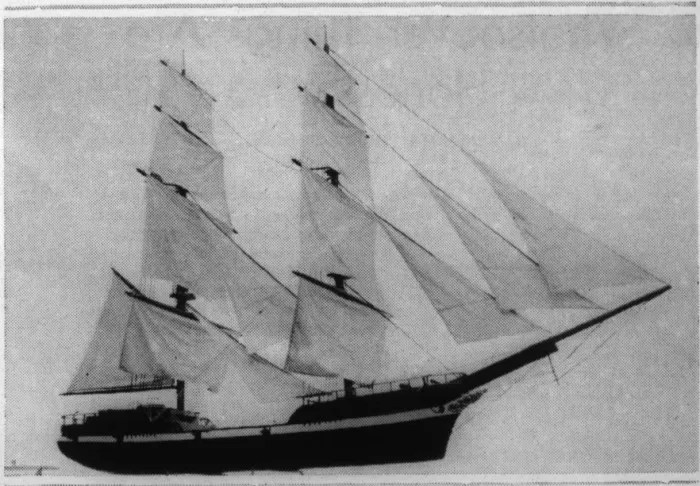
In 1820, the first Protestant missionaries from the USA, led by Reverend Hiram Bingham, arrived in Hawaii aboard the ship Thaddeus. These missionaries were part of the American Board of Commissioners for Foreign Missions (ABCFM), an organization based in Boston. On their first mission, after a long sea voyage starting southward from Boston, through the wild and stormy Cape Horn, which had been first described to the expedition of the Dutch East India Company by the Dutch navigator Willem Cornelisz Schouten on January 29, 1616, and was therefore named in honor of the council of his birthplace Capo Hoorn, the missionaries arrived weakened at Kealakekua on the west coast of Hawaii.
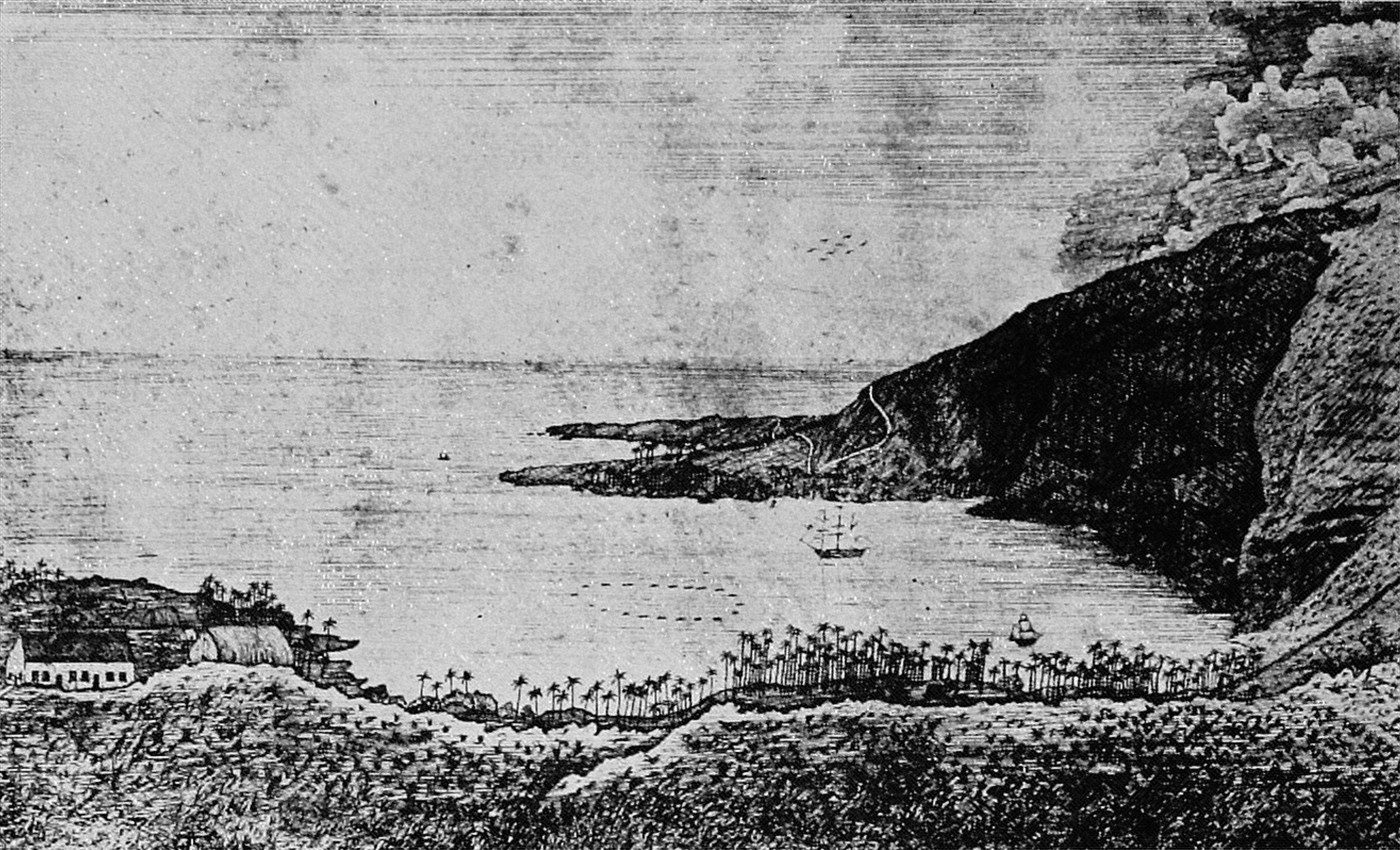

The arrival of the Protestant missionaries occurred shortly after King Liholiho, the son of Kamehameha, had abolished the old kapu system. The background and goal were for the missionaries to convert the Hawaiian population to Christianity and to introduce the „rules“ of Western culture. The missionaries successfully spread across the Hawaiian Islands and were successful in their conversions. They established a lasting relationship with the Hawaiian monarchy and had a significant influence on the islands. These missionaries married the beautiful indigenous Hawaiian women, who later became very wealthy landowners through their descendants.
Later in the 1840s, more and more American citizens emigrated to Hawaii with the dream of quickly becoming a wealthy landowner as well as a successful businessman.
During this time, Americans had the vision of a continental expansion. In rapid succession came the annexation of Texas in 1845, the settlement of the border dispute over Oregon with Great Britain in 1846, and the Treaty of Guadalupe Hidalgo, which ended the Mexican-American War in February 1848.
 Within three years, the United States expanded its territory by more than a million square miles, reaching almost its current size between Canada and Mexico. This remarkable national expansion was widely welcomed.This pursuit of U.S. enlargement also had an impact in the Pacific. Their aim was to secure their influence in Hawaii to prevent a colonial takeover of Hawaii by European powers such as England or France. On August 12, 1849, a French invasion broke out in Honolulu under Admiral Louis Tromelin with the corvette Gassendi and the frigate La Poursuivante. L. Tromelin had been sent on behalf of the French king to address the grievances, unrest, and personal hostilities of the French consul Dillon towards American Protestant missionaries, as well as towards England and the native Hawaiians.
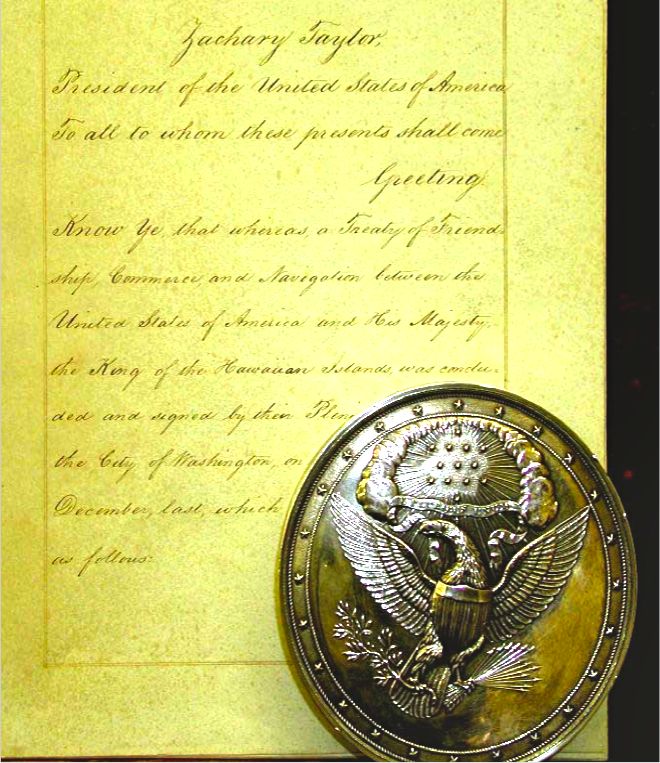
To prevent such European colonization of Hawaii, one of the main reasons for the USA was to conclude the Treaty of Friendship, Commerce, Navigation, and Extradition with the Kingdom of Hawaii. This treaty established a formal basis for relations and granted the USA protective rights and trade privileges, while Hawaii was recognized as an independent yet protected state.
Another background for the USA in this treaty was the securing of strategic interests. The USA recognized Hawaii’s strategic importance as a stopover for ships, especially whaling fleets, and wanted to ensure that it was not controlled by other powers. Another reason was economic relations. With this treaty, the U.S. market was secured for Hawaiian sugar producers, who were mostly Americans themselves, and trade with the USA was promoted. A very important background of the treaty was that it was intended to establish the basis for American influence. Even though Hawaii was recognized as an independent state, the treaty laid the foundation for the growing influence of the USA, which in the long term led to a demand for annexation. The impact of the agreement on the Kingdom of Hawaii included, among other things, a new distribution of power. The treaty established a „protectorate“ of the USA, which allowed Hawaii a certain degree of autonomy but also placed it under the influence of the more powerful partner. Increased settler activity emerged. More and more American settlers took root in Hawaii, and to protect their business interests, they also began to establish a more favorable government. This was also the cornerstone for the annexation plans. The contractual agreements contributed in the long term to the erosion of Hawaiian sovereignty and paved the way for the later annexation of Hawaii in 1898.
To the Treaty
Treaty signed at Washington December 20, 1849
More INFOrmations
- Hiram Bingham III is born
- Bingham Tablet (1905)
- The Children’s Missionary Vessel
- Thaddeus at Kawaihae
- The breakdown of the Kapu-System
- Chronological List of Vessels
- Hawaii’s Annexation & Legal Status
- Hawaii-Territorium
How the map of the USA has changed since 1789
 Tales of Hawai'i