go to:
– Treaty Hamburg 1848 – Treaty Hamburg 1878
– The signers
– more Information
Hamburg fights for the right to vote.
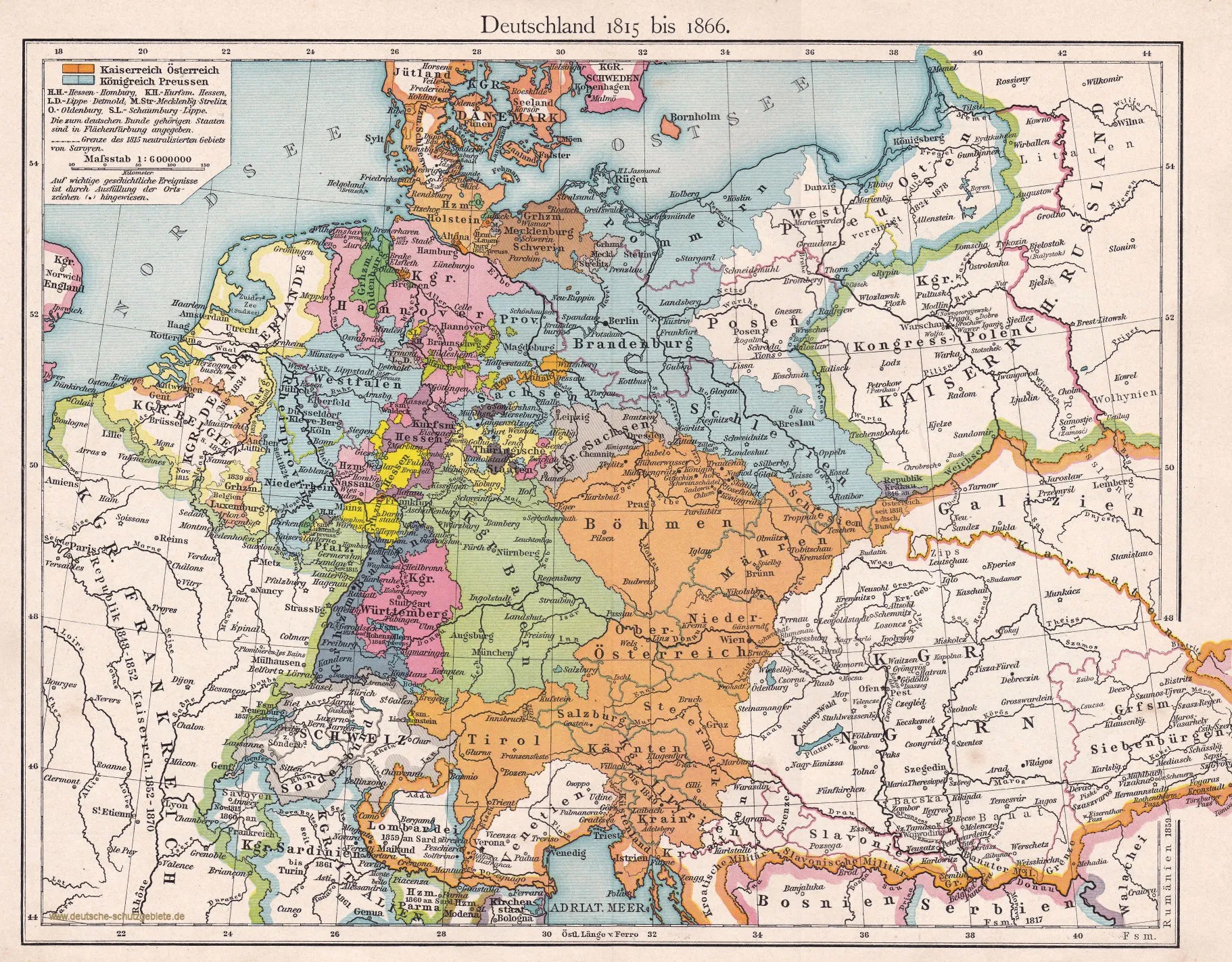
 The year 1848 was the year of revolution and uprisings throughout Europe, including in the federal states of Germany, which consisted of several kingdoms. A week earlier, during the French uprisings in Paris, King Louis-Philippe I had been exiled to emigrate. In Germany, for example, people were afraid that this spark would jump over to them.
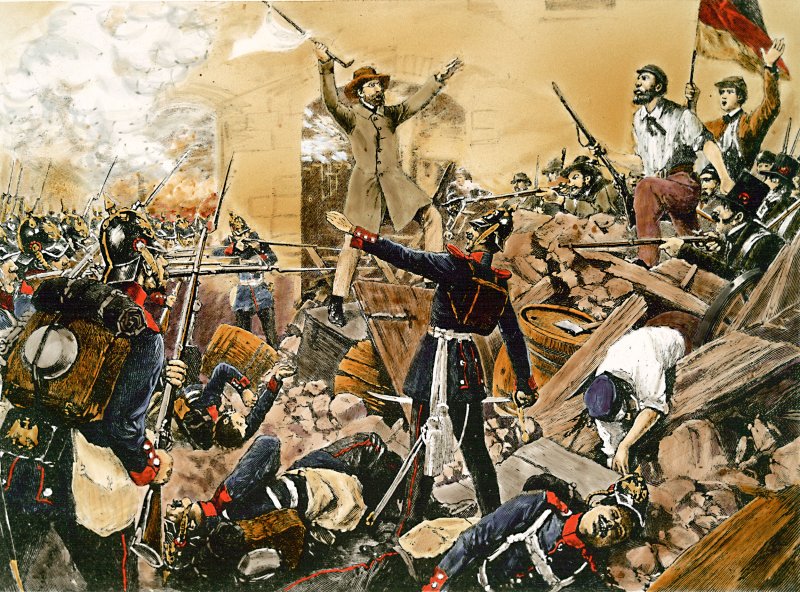
As in the rest of Europe, the citizens of Hamburg were deeply dissatisfied. The 150,000 inhabitants, who lived in inhumane conditions and unimaginably bad hygienic conditions, had no right to express themselves politically or to have a say in their future. Only the rich had the right to political co-determination, namely the 3,000 „hereditary citizens“, i.e. those who owned property within Hamburg’s ramparts. The residents of Hamburg were seething with displeasure, which led to an explosion and uprising on Friday, March 3, 1848. Citizens no longer accepted that the rich alone call the shots. The senators of Hamburg felt the tumult at their magnificent villas, the windows of which were smashed with stones by the poor people. The citizen military had to intervene to bring the riots under control and contain them. On the same evening of March 3, 1848, a council meeting was convened in Hamburg to discuss how the people could be reassured. The proposal was to introduce freedom of the press to meet the opposition’s main demand.
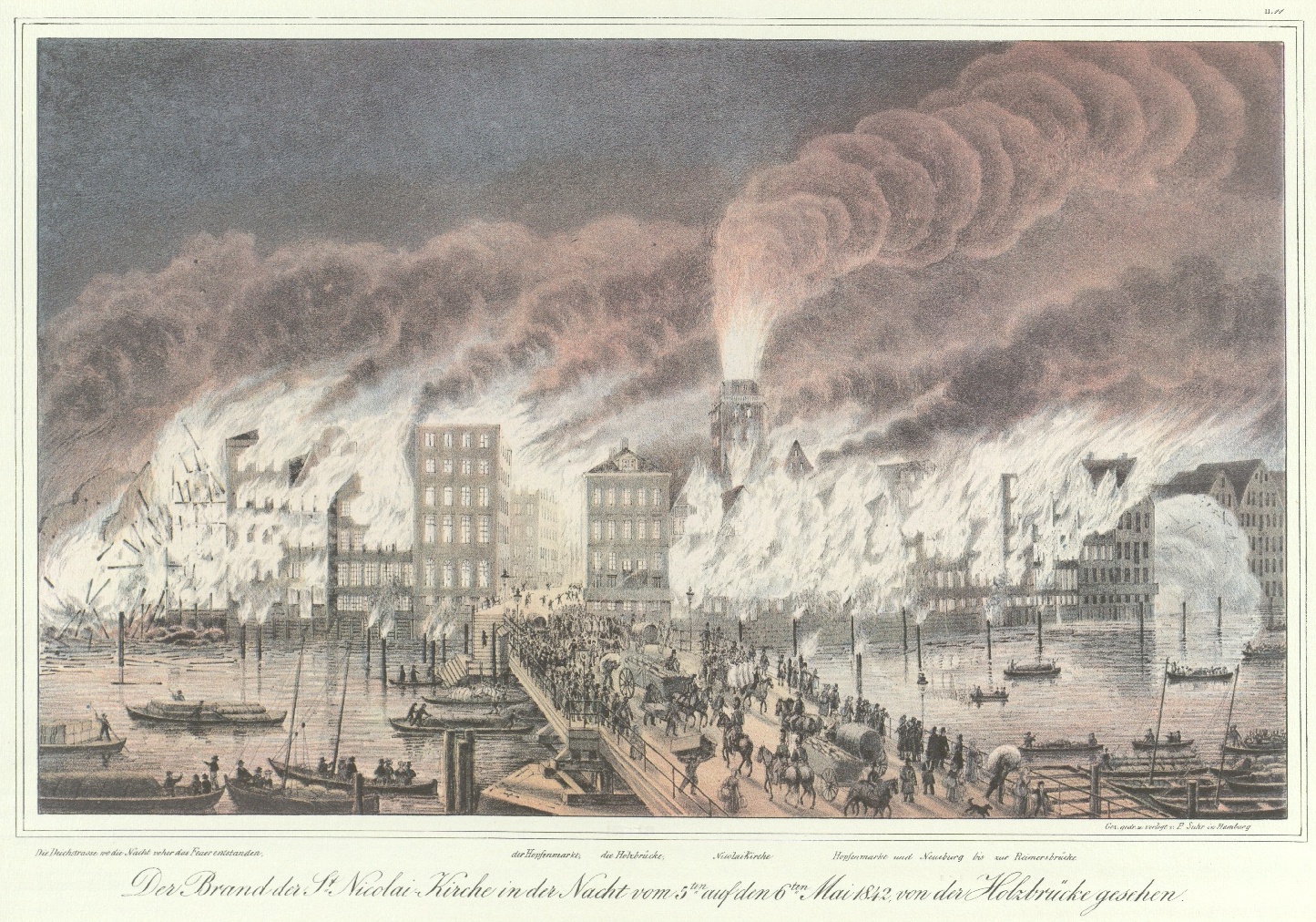
Adding to this inequality, the poor have suffered the hardest since 1842. At that time, a large part of the city of Hamburg burned down to rubble and ashes. In order to finance the reconstruction of the burnt part of the city, the tax on basic foodstuffs was increased. An opposition has formed from the population, but has split into two groups. The first group were Liberals, who would have been satisfied with just a few reforms and then the Democrats, who wanted to discard the old order and start anew with a catalog of 12 demands that put the right to vote first. On March 13, 1848, the city council elects a reform deputation because the Senate is delaying the whole story and, with the composition for suggestions for improvement, also sees that the Senate shows no interest in changing. In turn, there were almost exclusively „heritage citizens“, but hardly any members of the opposition. The actions of the senators are not hidden from the poor citizens of the city, who in turn feel badly betrayed. On the same evening, riots, demonstrations, clashes with the civilian military began, which did not end for a very long time.
On June 9, 1848, they set the stone gate on fire, which was only opened in the evening for a fee during this troubled time.


In the summer of 1848 it looked as if the revolution had triumphed. For the first time, citizens were allowed to go to the ballot box to vote on the composition of a constituent assembly. A year later, in July 1849, the constitution was finally written down on paper. However, in the meantime, Prussian troops have occupied Hamburg and are restoring the old order before the new constitution. Another 10 years determine the „Erbsessene Bürgerschaft“, the club of the super rich in the city of Hamburg. In 1859 the citizenship is finally elected – but only a few are allowed to participate. The electorate can only choose 84 of 192 MPs. 108 seats continue to be occupied by the „legacy“.
Hamburg and the struggle against Danish supremacy
In the spring of 1848, Denmark was not spared from the revolutions that were breaking out all over Europe. All the European citizens fought for the same thing, for democratic reform and for national unity. The Danish King Friedrich VII is in personal union duke and thus sovereign of Schleswig and Holstein. The duchies are thus part of the Danish state as a whole, which also includes Iceland, Greenland and overseas colonies.
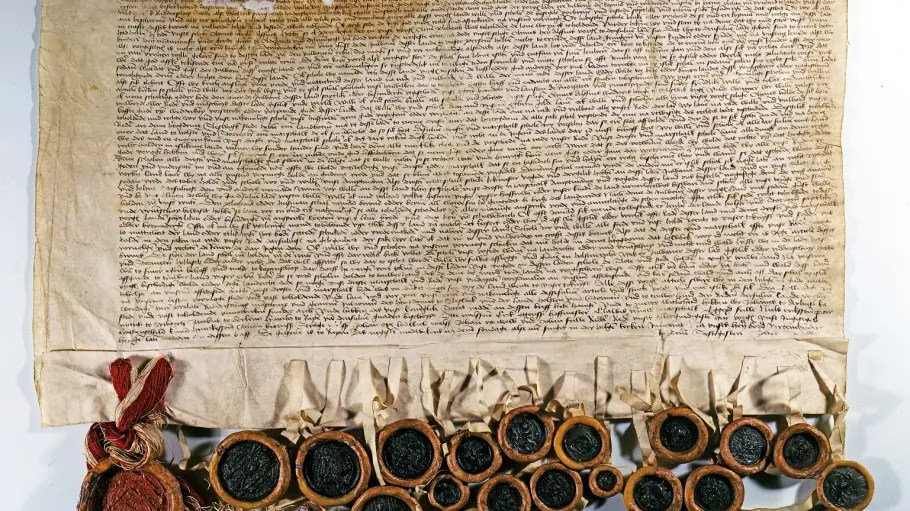
Since the Treaty of Ripen in 1460, the duchies have been considered „ewich tosamende ungened“. Politicians are now coming to power in Copenhagen, whose idea and goal is to found a Danish nation state in which the Duchy of Schleswig is also to be incorporated. In this duchy was a large proportion of Danish population. On the other hand, on the Holstein side, the so-called Eider Danes did not want to move the Danish southern border to the Eider river. they renounced. The German-leaning Schleswig-Holsteiners are protesting against the impending division and are now also in rebellion against the central government in Copenhagen against the Danish king Duke Frederick VII, the last Oldenburg on the Danish throne, and the new politicians. For their part, they wanted Schleswig to join the German Confederation, to which Holstein had belonged for a long time. The so-called Schleswig-Holstein question threatens to tear the country apart. When the Danish King Frederick VII approved the government program of the Eiderdanes, there was great unrest on March 24, 1848 in Kiel, which was under Danish government. The Danish city commander is removed from power and replaced by a provisional government. A day later, the new Minister of War, Prince Friedrich von Noer, took the Rendsburg fortress by surprise with a voluntary troop and expelled the Danish garrison.

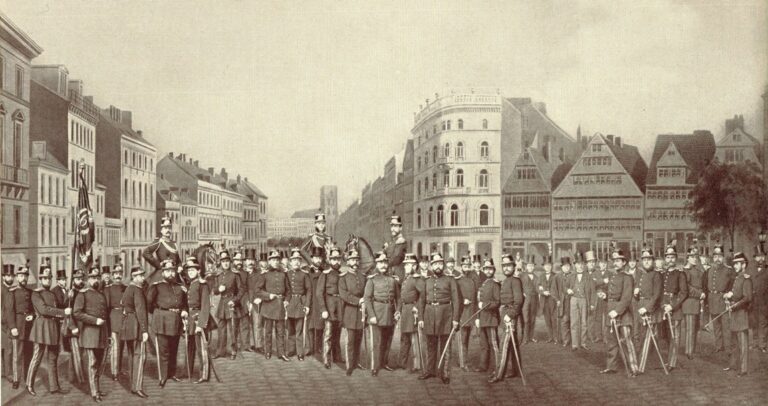
On April 9, 1848, the first German-Danish military conflict of the modern era broke out near Flensburg, which is also known as the „Schleswigscher War“ or „Schleswig-Holsteinische Uprising“. On this day, about 5,000 poorly equipped soldiers and volunteer fighters from students and gymnasts of the Schleswig-Holstein troops near Flensburg await a deployment against 11,000 well-trained Guards Hussars, Dragoons, Jägerkorps and infantry of the Danes. The Danes have marched in, equipped with several heavy guns, and five Danish warships with several gunboats are anchored off the coast of Förde. However, the Schleswig-Holsteinisch volunteers and insurgents were no match for the well-equipped Danes in the battle and after a few hours of fighting had to retreat to the Rendsburg fortress. Part of the troops fell into Danish captivity. The Danes thus occupied the Duchy of Schleswig up to the Eider.
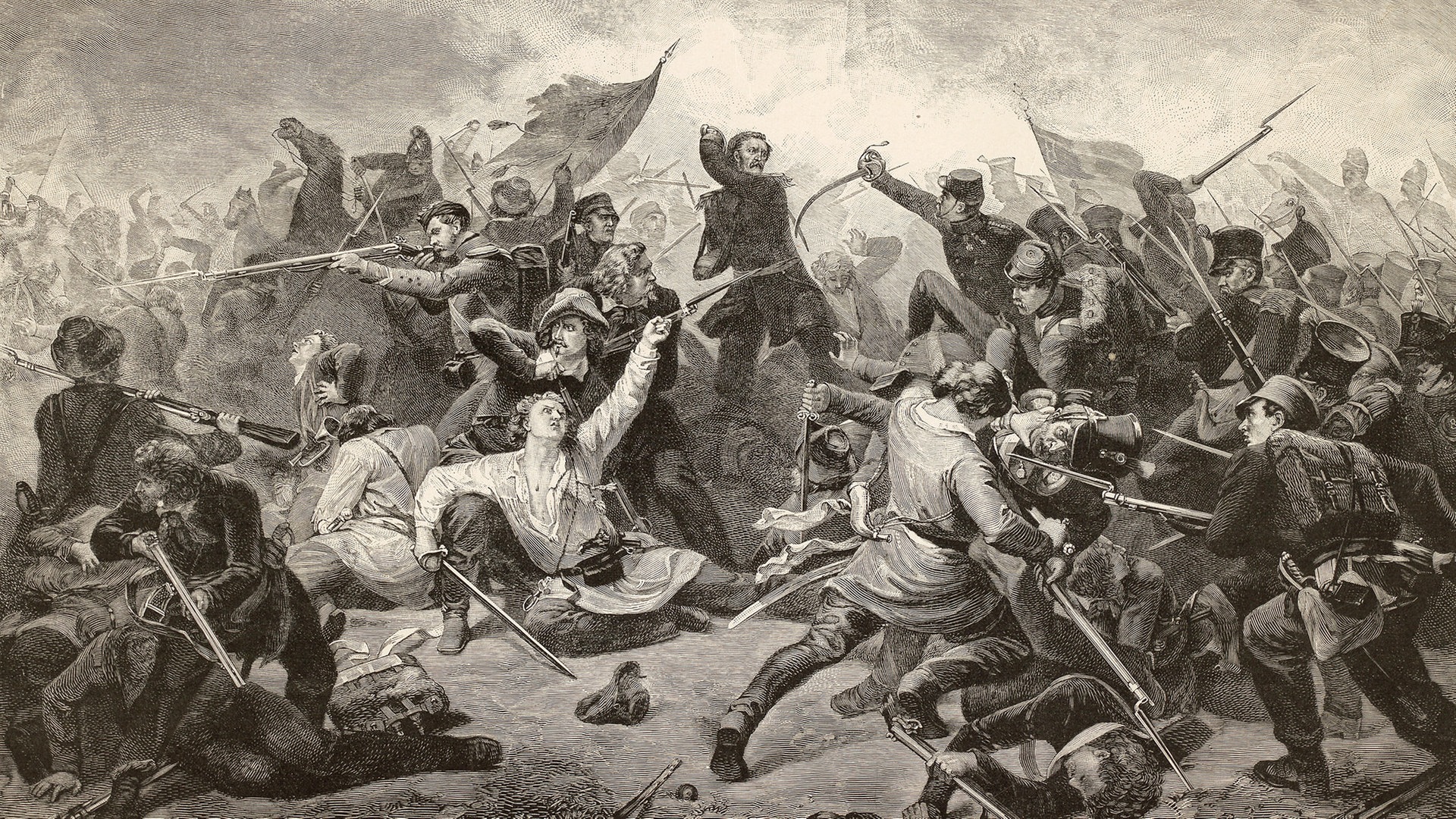
In many places in Germany, Schleswig and Holstein receive statements of solidarity, after which many volunteers stream north to fight with the Schleswig-Holstein units. The Bundestag in Frankfurt decides to defend Holstein’s rights to unity with Schleswig and sends out the federal army. The strongest German army, the Prussians, take the lead. The uprising in the north has now turned into a German-Danish war. On April 23, 1848, the Prussian troops attacked the Danes, where they were taken by surprise and lost with heavy losses. However, the great powers France, Great Britain, Sweden and Russia saw the European balance threatened when the federal army under Prussian leadership crossed the border into the Kingdom of Denmark and invaded Jutland. They feared a German expansion to Öresund and forced the federal troops to withdraw. After a few skirmishes, the war largely comes to a standstill at the Düppeler Schanzen in June. The Great Powers are pushing for an armistice, which was signed in Malmö on August 26, 1848. However, this contract was only made between Denmark and Prussia, but not with the Schleswig-Holsteiners. The Schleswig-Holstein question, however, remains unresolved.
Free and Hanseatic City of Hamburg
Europe and its statesmen and economists are still oriented towards the oriental, Eurasian market, where the main trade also takes place, while in the west, such as Central and South America, they achieved their independence. Hawaii and the South Seas were no longer just interesting for explorers, but now also for global trading partners as the islands have developed into a progressive, independent state. New Zealand and Australia have meanwhile been settled more and more by white people. China had to open its ports in 1843 due to the opium wars, which were carried out by the great power England. In the case of the Japanese Empire, on the other hand, one wondered how much longer Japan could maintain its isolation from the world.

Germany is governed by backward principalities, resulting in mass poverty. Due to hardship and political oppression, Germans set off overseas for the New World in order to get new opportunities in life. These people were embarked in Bremen and Hamburg, where a journey of up to 100 days in small wooden ships across the Atlantic began, where for thousands of Germans it was only a stopover for the Pacific. Like the other major European powers of Spain, the United Kingdom, the Netherlands, France, the USA and Chile, the German Empire expanded and built colonies in the Pacific at the beginning of the 19th century. Among other things, Germany engaged in trade between the USA and China. Since Hamburg was a free and Hanseatic city, it was free to decide what trade it would engage in with its port. So it happened that Hamburg participated in the financially well-paid whaling around Hawaii as well as the trade between the USA and Asia. For this latter trade route, Hawaii was geographically well-placed as a stopover point to pick up provisions and water for the ships for the long crossing. So it came about that the Hanseatic City of Hamburg signed a friendship and shipping treaty with the Kingdom of Hawaii.

The signers
E. A. Süwerkrop Consul of the Free and Hanseatic City of Hamburg
The Suverkrop Letters, 1842-1887
R. C. Wyllie; Minster of Foreign Relations for Hawaiian’s King

 Robert Crichton Wyllie was born on October 13, 1798 in Dunlop, East Ayrshire, Scotland. He studied medicine at Glasgow University and later opened a medical practice in Valparaíso, Chile, which he gave up after a few years. He then devoted himself to trading as a partner in a trading company. Wyllie also made a voyage to Calcutta on his yacht, after which he returned to England in 1830. There Robert C. Wyllie met his former friend William Miller, who had just been appointed British Consul to the Hawaii Kingdom and had to travel there. Miller persuaded Wyllie to come to Honolulu, where the two arrived in 1844 aboard HMS Hazard. Miller continued on to Tahiti, after which Wyllie took over the work of the British consular in this absence. He did the job so well that King Kamehameha III asked R.C. Wyllie, selected as Secretary of State for Foreign Affairs. Wyllie endured a difficult period as Secretary of Foreign Affairs, both during the American Civil War, where he declared Hawaii a neutral, and was loyal to the royal house during the annexation. On October 19, 1865, Robert Crichton Wyllie died in Honolulu, where he was buried in the Royal Cemetery.
Cambridge University; 4 Records found of Wyllie, Robert Crichton
House of Representatives of the Hawaiian Kingdom
GALLERY: HAMBURG
Gallery: German protected areas in the South Seas
More Information:
-
- Hamburger History *1
- Hometown Hamburg
- Geschichte des Hamburger Hafens *1
- Deutsche Revolution 1848/1849 *1
- Restauration & Reform *1
- Reovolution *1
- Kampf gegen dänische Vorherrschaft *1
- Schleswig-Holsteinische Erhebung *1
- Deutsch – Dänischer Krieg
- Deutsche Schutzgebiete in der Südsee *1
- Gallery of German protected areas
- Auswandern nach Amerika – von Hamburg in die „Neue Welt“ *1
- Hapag und die Welt *1
- House of Represenatives of the Hawaiian Kingdom (Statement of R.C. Wyllie)
*1 = german only
 Tales of Hawai'i